


India’s position remains consistent with Modi’s repeated assertion that this is not an era of war and that disputes must be resolved through dialogue and diplomacy
 KRC TIMES Desk
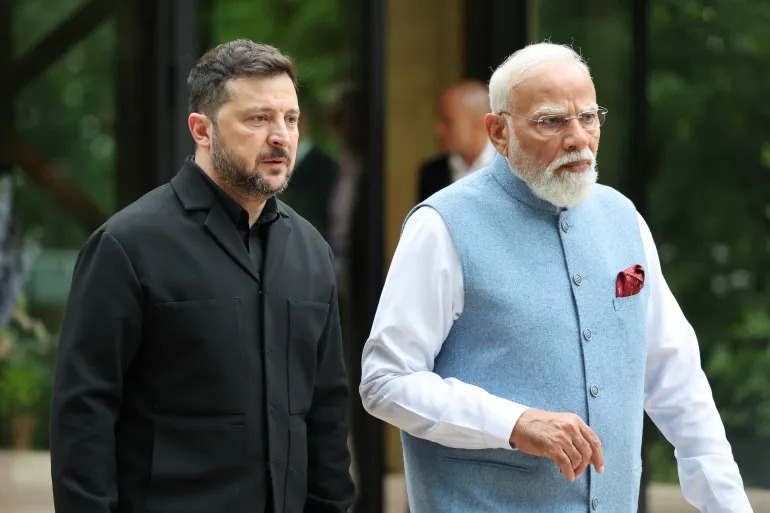
With renewed outreach to Moscow and Kyiv, India is signalling its willingness to contribute to ending the war. But its ability to bring the two sides closer will depend on engaging Washington and Europe while pursuing practical, limited agreements on food security, maritime safety and energy infrastructure.
The Russia-Ukraine war has become a prolonged conflict with no clear end in sight. Despite repeated diplomatic initiatives, neither side has been able to secure a decisive outcome, while efforts by global leaders to broker a ceasefire have produced little tangible progress. US President Donald Trump, who had promised during his election campaign to end the war, has also failed to deliver a breakthrough so far. The inability of major powers and international institutions to stop the fighting has exposed the limitations of the existing global diplomatic framework.
Against this backdrop, India’s renewed engagement with both Moscow and Kyiv deserves attention. Prime Minister Narendra Modi recently spoke with Ukrainian President Volodymyr Zelenskyy and reiterated India’s willingness to contribute to a peaceful resolution of the conflict. Around the same time, External Affairs Minister S Jaishankar held a telephone conversation with Russian Foreign Minister Sergey Lavrov, during which the Ukraine war and ongoing diplomatic efforts were discussed.
India’s position remains consistent with Modi’s repeated assertion that this is not an era of war and that disputes must be resolved through dialogue and diplomacy. New Delhi has maintained close relations with Moscow while keeping communication channels open with Kyiv. Modi’s personal engagement with both Russian President Vladimir Putin and Zelenskyy could provide India with a diplomatic opening, although personal rapport alone cannot guarantee progress.
The immediate challenge is to translate diplomatic goodwill into practical outcomes. Rather than attempting to resolve every political and territorial dispute at once, India could begin by identifying areas where both sides have an immediate interest in reaching an understanding.

Food security, the safety of commercial shipping and sailors, the restoration of grain exports through the Black Sea, and protection of energy infrastructure offer possible starting points. These issues are not merely regional concerns. Disruptions to Ukrainian grain exports affect food supplies and prices across Asia and Africa, while attacks on energy infrastructure have consequences for civilians and economic stability.
Zelenskyy has reportedly welcomed India’s willingness to help facilitate food corridors, expressing hope that such efforts would continue. This could provide New Delhi with an opportunity to pursue a limited but meaningful diplomatic initiative.
Food corridors are particularly suitable for an initial agreement because they are directly linked to humanitarian needs rather than questions of territorial control or military alliances. Ensuring the safe movement of grain, protecting civilian shipping and reducing attacks on critical infrastructure could create a measure of confidence between the warring parties.
Such limited arrangements may appear modest in comparison with the ambition of a comprehensive peace agreement. Yet they can establish habits of cooperation and demonstrate that negotiated commitments are possible even amid deep political disagreements. In many conflicts, meaningful progress begins not with a final peace treaty but with smaller humanitarian and security-related understandings.
However, India’s potential role will face important diplomatic challenges.
The first concerns the United States. President Trump has already sought to position himself at the centre of efforts to end the Ukraine war. Although those efforts have yet to produce a breakthrough, Washington may not readily surrender its leadership of the peace process. India would therefore find it difficult to pursue an effective initiative while keeping the US administration at a distance.
Jaishankar’s statement that India remains in contact with the American administration on peace efforts is encouraging. New Delhi will need to maintain that engagement and ensure that its initiative is viewed as complementary to, rather than competitive with, Washington’s diplomatic efforts.
Europe is the second indispensable stakeholder. The war is taking place on European soil, and its consequences are directly linked to the continent’s security, economy and political future. The European Union and NATO member countries cannot be excluded from any credible effort to establish lasting peace.
India must reassure European leaders that its engagement with Moscow is not intended to undermine their security concerns. Instead, New Delhi could use its longstanding relationship with Russia to facilitate communication where existing diplomatic channels remain constrained. Its role would be more effective if it complemented the broader international effort.
There are also fundamental principles that must guide any serious peace process.
First, meaningful negotiations require an environment in which military operations are brought under control. A sustained ceasefire would provide the necessary space for dialogue. Continued attacks and casualties make it difficult to establish the trust required for compromise.
Second, both Russia and Ukraine must recognise that external assistance may be necessary to end a conflict they have been unable to resolve independently. International involvement should not automatically be viewed as interference, provided the process respects the sovereignty and legitimate concerns of the parties.

Third, negotiations must be based on consent and international law. Territorial questions, border security, military alliances and the political rights of affected populations will inevitably remain central to the dispute. These issues cannot be settled through force alone. Any lasting arrangement must take account of international legal principles and the interests of the people directly affected.
Fourth, the peace process must be treated as a sustained exercise rather than a one-time diplomatic event. Questions relating to territorial control, security guarantees, sanctions, reconstruction and the future European security architecture will require prolonged and detailed negotiations.
The negotiating environment will also need careful management. Provocative statements, misinformation, political ego and mutual suspicion can quickly undermine diplomatic progress. There may also be vested interests in prolonging the conflict, including sections of the arms and energy industries. Their influence on the political and economic calculations surrounding the war cannot be ignored.
India’s diplomatic strength lies in its ability to maintain relationships across competing geopolitical blocs. Its historical partnership with Russia, expanding engagement with Western countries and close ties with the developing world give it a distinctive position. But turning that position into effective mediation will require patience, sustained coordination and a reputation for engaging all sides without prejudging the outcome.
India’s success should not be measured only by whether it can broker a comprehensive peace treaty. Securing safe grain shipments through the Black Sea, protecting commercial vessels and sailors, or facilitating an understanding to prevent attacks on critical energy infrastructure would themselves represent meaningful progress.
At a time when major global powers have struggled to find a workable path towards peace, India has an opportunity to contribute to the diplomatic process. But goodwill alone will not be enough. New Delhi will need to combine strategic patience with practical initiatives, bring key international stakeholders on board and earn the confidence of both Moscow and Kyiv.
The real test of India’s peace initiative will lie not in the declarations it makes, but in whether it can turn dialogue into verifiable agreements and create conditions for a wider political settlement.

