From new urban local bodies and land allocation for agricultural research to higher honorariums for elected panchayat representatives, the November 19 Cabinet decisions signal a wider push to reshape local governance and rural administration
 KRC TIMES Assam Bureau
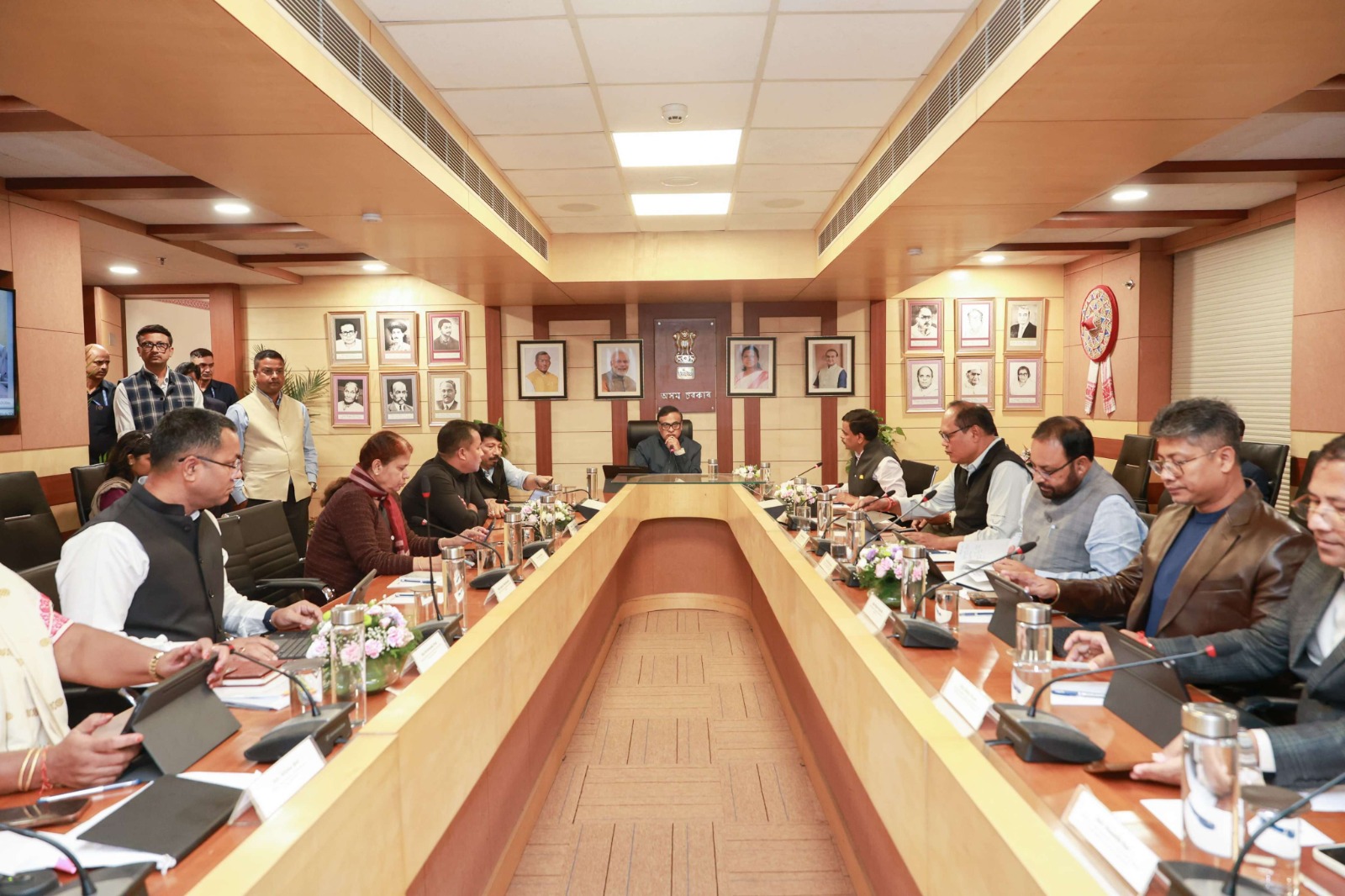
Guwahati | The Assam government has cleared a series of measures aimed at expanding urban administration, strengthening agricultural infrastructure and revising the financial benefits of elected rural representatives, with the state Cabinet approving six new municipal boards and higher monthly remuneration for Panchayati Raj Institution members.
At its meeting on November 19, the Cabinet also approved amendments to three autonomous council laws to facilitate elections to their general councils without political party affiliations.
Six new municipal boards, expansion of 23 urban bodies
The six new municipal boards will be established at Laluk, Harmutty-Banderdewa, Ghilamara, Majuli, Udharbond and Mirza-Bijoynagar.
The Cabinet also approved the expansion of municipal areas and ward delimitation in 23 existing urban local bodies. The municipalities covered include Sonai, Badarpur, Barpeta, North Lakhimpur, Palashbari, Rangia, Biswanath Chariali, Gohpur, Sonari, Moran, Patacharkuchi, Golaghat, Sarupathar, Kampur, Nalbari, Tihu, Sivasagar, Amguri, Nazira, Simaluguri, Dhubri, Gauripur and Golakganj.
The decisions are expected to bring additional areas under urban administrative structures and facilitate the reorganisation of municipal wards.
Autonomous council elections to be non-political
In another significant decision, the Cabinet approved amendments to the Matak Autonomous Council Act, 2020, the Kamatapur Autonomous Council Act, 2020, and the Moran Autonomous Council Act, 2020. The proposed amendments will enable elections to the general councils of these three autonomous councils to be conducted on a non-political party basis.

Higher remuneration for panchayat representatives
The Cabinet also approved an increase in the monthly remuneration of elected representatives at all three levels of the Panchayati Raj system. Under the revised structure, Zilla Parishad presidents will receive Rs 15,000 per month, while vice-presidents will get Rs 10,000 and members Rs 5,500.
At the Anchalik Panchayat level, the monthly remuneration has been fixed at Rs 10,000 for presidents, Rs 7,000 for vice-presidents and Rs 6,000 for members. Gaon Panchayat presidents will receive Rs 6,500, vice-presidents Rs 4,000 and members Rs 2,600 per month.
Land for agricultural research and defence
The Cabinet approved the allotment of 1,568 bighas of government land in Dhemaji for establishing the Indian Agricultural Research Institute (IARI). It also cleared the transfer of 74 bighas of land in Sonitpur district to the Ministry of Defence.
Under Mission Basundhara 4.0, the Cabinet further approved a provision to classify areas as urban only up to one kilometre from existing town limits, facilitating larger land allotments for indigenous communities. The provision will not apply to Kamrup Metropolitan and Kamrup districts.
Agricultural machinery at 75 per cent subsidy
To promote agricultural diversification and mechanisation, the government approved the distribution of 2,313 agricultural machines across the state with a 75 per cent government subsidy. The move is intended to improve access to farm equipment and encourage farmers to diversify agricultural activities.
Startup policy for higher education institutions
The Cabinet also approved the enactment of the Innovation and Startup Policy in Higher Educational Institutes. The policy seeks to develop educational institutions as centres of excellence and create an ecosystem where ideas generated by students, faculty members, alumni and aspiring entrepreneurs can be converted into commercially viable products and ventures.
Self-certification for low-risk measuring equipment
In a move aimed at simplifying regulatory procedures, the Cabinet approved the Assam Legal Metrology (Enforcement) (Second Amendment) Rules, 2026. The amendment will allow verification and stamping of low-risk weights and measures through a self-certification mechanism. The decisions were announced following the state Cabinet meeting held on November 19.