State-level consultation calls for collective action against child marriage and child sexual exploitation; special focus on vulnerable and conflict-affected children
 KRC TIMES Manipur Bureau
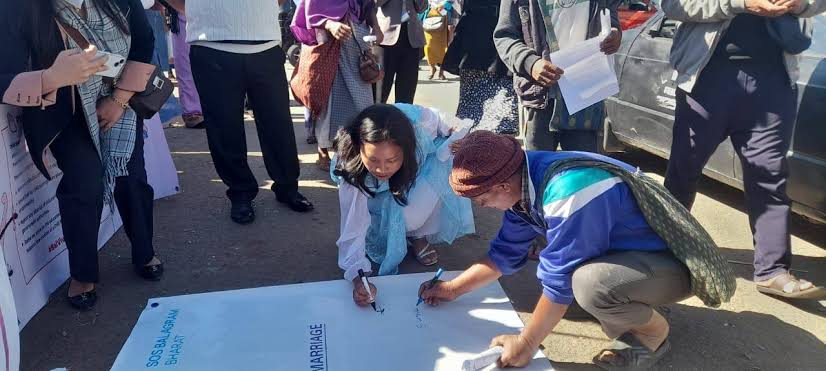
Imphal | Manipur has set an ambitious target of becoming a child marriage-free state by 2030, with the government and child rights organisations adopting a joint declaration to strengthen child protection and intensify efforts against child marriage and sexual exploitation.
The declaration was adopted at a State-Level Consultation on Ending Child Marriage and Combating Child Sexual Exploitation and Abuse Material (CSEAM), held at the City Convention Centre in Imphal.
The resolution, adopted by the Manipur Commission for Protection of Child Rights (MCPCR), the Social Welfare Department and Just Rights for Children, calls upon citizens not to organise, participate in, support or encourage child marriages. It also urges people to report such cases and take lawful steps to prevent marriages involving minors.
The initiative aims to make every village, ward, district and institution in Manipur child-friendly and free from child marriage, with particular attention to children and families facing displacement, insecurity and other vulnerabilities. MCPCR Chairperson Keisam Pradipkumar said child marriage was often treated as a family matter or customary practice, despite being a serious violation of children’s rights and the law.
He pointed out that the practice undermines children’s dignity, freedom, education, health and future prospects, with girls disproportionately affected. “In Manipur, where children are already experiencing complex social, economic and humanitarian vulnerabilities, we cannot allow poverty, displacement, insecurity or social conventions to become excuses for child marriage,” Pradipkumar said.

Just Rights for Children National Secretary Rishikant referred to the National Family Health Survey-5 (NFHS-5), which found that 16.3 per cent of women aged 20-24 in Manipur had been married before reaching the legal age.
He stressed that ending child marriage would require sustained public participation alongside government intervention. Effective action in every reported case and better coordination among Child Marriage Prohibition Officers (CMPOs), District Child Protection Units (DCPUs), district administrations and civil society organisations were essential, he said.
Referring to the Centre’s 100-day campaign against child marriage, Rishikant called for coordinated efforts to ensure that children were protected from exploitation and harmful social practices.
Focus shifts to digital child protection
Beyond child marriage, the consultation placed considerable emphasis on emerging threats to children in the digital environment, particularly the creation and circulation of child sexual abuse material using artificial intelligence and online platforms. Pradipkumar called for a comprehensive State Child Protection Policy covering both conventional forms of abuse and newer risks associated with social media, digital platforms and artificial intelligence.
He recommended age-appropriate digital safety education in schools and stronger safeguards against AI-generated child sexual abuse material, online impersonation and the misuse of children’s photographs and personal information. He also stressed the need for effective mechanisms to report harmful online content, ensure its prompt removal, preserve digital evidence and coordinate with cybercrime authorities and technology platforms.
Strengthening the Cyber Crime Unit and establishing a coordinated response involving police, DCPUs, Child Welfare Committees (CWCs), educational institutions and child protection agencies were among his other recommendations. Manipur Police Training College Assistant Director Victoria Yengkhom described child sexual exploitation and abuse material as an emerging concern. She emphasised the need to equip law enforcement personnel with specialised skills while educating children about online exploitation and abuse.
The consultation was organised by the MCPCR and Social Welfare Department in collaboration with India Child Protection and Just Rights for Children, a national civil society network working on child protection. Social Welfare Department Deputy Director Konsan Saroja Devi, government officials and civil society representatives also attended the programme.
The declaration marks a renewed commitment to child protection in Manipur, although achieving the 2030 target will depend on effective enforcement, institutional coordination, community participation and sustained support for children in vulnerable and conflict-affected communities.