

The question is, why three times an agreement had to be signed for a single issue of a region
 KRC TIMES Desk
Rwngwra Narzary
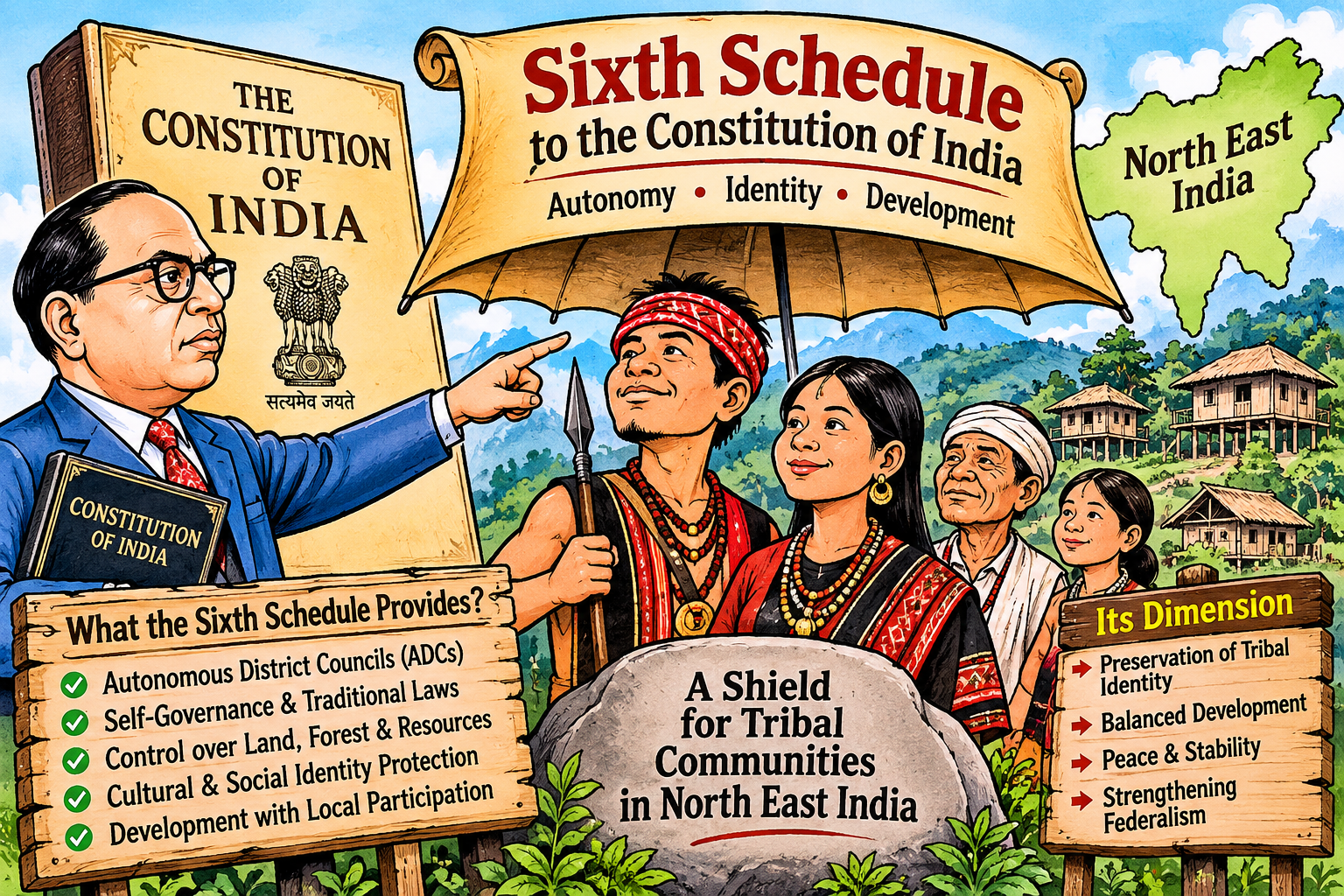
The constitution of India, the largest written constitution of the world having 12 schedules, provides unique provisions for administering tribal areas in most states in the fifth and sixth schedule of the constitution. Fifth schedule provides a special framework for the administration of tribal areas of the ten states across India other than North-eastern states whereas the sixth schedule provides a special framework for administering the tribal areas in the north-eastern states of India viz: Assam, Meghalaya, Mizoram and Tripura.
There are tenth numbers of sixth schedule autonomous council in the North-east, first created in the year1951 as Karbi-Anglong Autonomous Council and the last tenth number was created in 2003 as Bodoland Territorial Areas District (BTAD)in Assam with a view to make solution to the Bodoland issue.
The Government of India for the first time after 68 years of formation of sixth schedule council (1951) initiated to strengthen the administration of sixth schedule council through the 125th constitution amendment Bill, 2019 which was introduced in the parliament was a virtuous initiative and need of the hour.
Creation of Sixth schedule council in 1951, taking initiative for enhancement of power and function after 68 years through the introduction of 125th amendment Bill in 2019, sending it to standing committee and submission of reports in the parliament and thereafter kept in freeze signifies the half-hearted approach for the development of the tribals of Northeastern region.
The 125th constitution amendment Bill, 2019 once again came out in limelight with Bodoland Territorial Region (BTR) Accord, 2020. The BTR Accord, 2020 was also assured to be implemented through the amendment of article 280 and 125th constitution amendment bill, 2019 by bringing legislation in the parliament.
The BTR accord set an example of winding up the conflict between the movement organizations and the government, ensuring a lasting solution to the Bodoland movement impacting several organizations of the north-eastern region to enter into agreement. More than ten thousand members of various arms organizations had surrendered and joined in the mainstream leading to establishment of peace and harmony in the region.
It is noteworthy to mention that, in the name of Solution to the Bodo issue three times agreement in between Government and the Bodo leaders have been made creating Bodoland Autonomous Council (BAC) under state act in 1993, Bodoland Territorial Areas District (BTAD) under sixth schedule of the constitution of India in 2003 and Bodoland Territorial Region (BTR) enhancing area and power and function of BTAD in 2020.

The question is, why three times an agreement had to be signed for a single issue of a region. Understanding is clear that the BAC Accord of 1993 was denounced by the Bodo leaders because of non-workable of BAC with no boundary settlement leading to another movement for a separate state of Bodoland.
The 2003 BTAD accord was signed with Bodo Liberation Tigers( BLT) creating Bodoland Territorial Council ( BTC ) under Sixth Schedule provision of the constitution with the commitment of upholding peace and development of BTAD in exchange for a separate state of Bodoland. But one of the armed groups i.e National Democratic Front of Bodoland (NDFB) which was demanding sovereign Bodoland was not included in the process of solution rather the group remained active demanding solution of the issue.
In the meantime, several separate states like Uttarakhand, Chhattisgarh, and Jharkhand and then Telangana were created sidelining the Bodoland that triggered the movement for Bodoland afresh and consequently the third Bodo Accord, 2020 was signed with the commitment of full-fledged implementation of the accord.
The main soul of the BTR accord, 2020 lays in the few clauses of the MoS viz: clause 2(i) to augment area and power of BTC and streamline its functioning and Clause 4.3 amendment to the article 280 and the sixth schedule to the constitution as per the constitution (125th amendment) Bill, 2019 to improve the financial resources and administrative powers of BTC has been initiated. The constitution amendment Bill was introduced in the parliament in January 2019.
The Bodo peace accord,2020 will be meaningful only when its main clauses pertaining to amendment of the article 280 and 125th constitution amendment Bill,2019 are constitutionally approved by parliament as assured in the accord. This accord is also elapsing 6 years and the file of implementation is snoozing in the bed room of the government with no sign of awakening. It creates a question mark among the signatories in the will of the government.
In my few years of experiences in the parliament, I have learned to observe and understand that the honorable members either from treasury benches or opposition during the debate and discussion expresses their concern and advocate seamlessly on the upliftment of tribals, dalits, downtrodden societies in their speeches. I have received a blurry response while trying to raise the issue of accord implementation in the parliament.
There is no doubt that the Government of India under the dynamic leadership of the Prime Minister Narendra Modi and the vibrant home minister Amit Shah jee have been taking a substantial care in bringing peace, stability and development of Northeastern region particularly for the state of Assam.
The creation of BTC under the Sixth Schedule provision of the constitution was a brainchild of the BJP led NDA government in the Centre. The Chief Minister of Assam Dr. Himanta Biswa Sarma is effectively managing the governance through dynamic approach for the solution of Bodo issue which is appreciable. The NDA government rather has suitable numbers of MPs for rolling out the 125th amendment Bill, 2019 in the parliament and of course the will power of the Government matters.
The people of BTR of Assam with their full faith in the leadership of the NDA government expect the passing out of the 125th Amendment, 2019 Bill in the coming winter session in 2026. The rolling out the 125th Amendment Bill,2019 in the Parliament will be a robust initiative to connect the Sixth Schedule Council with the process of sustainable peace and development of the nation viz-a-viz “Vikshit Bharat”.
Rwngwra Narzary,Member of Parliament, Rajya Sabha