


The traditional roti-beti relationship remains valuable, but it must now evolve into a partnership capable of addressing the aspirations of a new generation
 KRC TIMES Desk
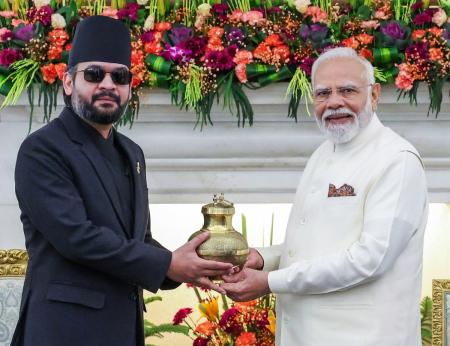
Nepal Prime Minister Balen Shah’s November 22-23, 2026, visit to India carries significance far beyond the usual formalities of diplomatic engagement. His decision to make India the destination of his first bilateral foreign visit since assuming office in March sends an important political and diplomatic message: despite occasional differences and shifting geopolitical equations, India remains central to Nepal’s foreign policy calculations.
The visit also presents an opportunity to give India-Nepal relations a fresh direction. For years, the relationship has rested on historical, cultural, religious and social connections. The open border, shared traditions, family ties and centuries-old civilisational links have created a bond that few neighbouring countries enjoy. From Janakpur and Ayodhya to Pashupatinath and Kashi, and from Lumbini to India’s Buddhist heritage, the two countries share a cultural landscape that transcends political boundaries.
However, history alone cannot sustain a modern strategic partnership. In an increasingly competitive geopolitical environment, friendship must be reinforced by economic cooperation, infrastructure development, energy security, technological collaboration and mutual trust. The traditional roti-beti relationship remains valuable, but it must now evolve into a partnership capable of addressing the aspirations of a new generation.
The challenge of rebuilding strategic trust
India-Nepal relations have experienced considerable fluctuations in recent years. Political disagreements, border disputes, trade-related concerns and Nepal’s growing engagement with China have occasionally strained bilateral ties. Some of Balen Shah’s earlier remarks concerning India had also generated diplomatic unease.
Yet, Nepal’s decision to prioritise India for its first bilateral engagement suggests that Kathmandu recognises the importance of maintaining a constructive relationship with New Delhi. This should be welcomed as an opportunity rather than interpreted as a geopolitical victory over China.
Nepal has every right to pursue an independent foreign policy and maintain economic relations with both its powerful neighbours. Its geographical position makes such a balancing act inevitable. India, therefore, must avoid viewing Nepal’s engagement with China exclusively through the lens of strategic rivalry.

The real test of Indian diplomacy lies in convincing Kathmandu that a closer partnership with New Delhi will expand Nepal’s development opportunities rather than restrict its choices. India must be a dependable partner, not a demanding neighbour.
From financial assistance to economic partnership
Nepal’s reported request for nearly $2 billion in grants and concessional assistance during Balen Shah’s visit highlights the economic expectations attached to this engagement. India’s positive response to Nepal’s development proposals is encouraging, but financial assistance alone cannot transform the relationship.
What Nepal needs is sustained investment, technology transfer, employment generation, infrastructure development and greater access to regional markets. India, with its economic scale and technological capabilities, is well placed to support these aspirations.
Hydropower offers perhaps the strongest foundation for such cooperation. Nepal has enormous untapped hydropower potential, while India’s demand for clean and renewable energy continues to rise. A mutually beneficial arrangement can help Nepal generate revenue, attract investment and strengthen its economy, while India secures a reliable source of clean electricity.
The long-term target of electricity trade of up to 10,000 MW between the two countries represents an important step. However, projects such as Pancheshwar and Lower Arun, along with cross-border transmission infrastructure, must move beyond prolonged negotiations and administrative delays.
Energy cooperation should become the cornerstone of a new India-Nepal economic partnership. Both governments must demonstrate the political will to resolve outstanding differences and accelerate implementation.
Connectivity must become the next priority
Geographical proximity has not always translated into seamless connectivity between India and Nepal. Better railway networks, roads, air links, pipelines and digital infrastructure are essential for unlocking the economic potential of the two countries.
The proposed Raxaul-Kathmandu railway, expanded integrated check posts and improved trade corridors could significantly reduce transportation costs and strengthen cross-border commerce. Similarly, the development of the Ayodhya-Janakpur connection can deepen religious tourism and people-to-people contact.
Nepal’s demand for additional air routes for airports such as Bhairahawa and Pokhara also deserves constructive consideration. Security and technical requirements must be respected, but practical solutions should be found through sustained dialogue.
Connectivity is not merely about transporting passengers and goods. It is about creating economic interdependence, generating employment and bringing communities closer. India must recognise that infrastructure cooperation with Nepal is an investment in long-term regional stability.
Unresolved disputes must not overshadow cooperation
Despite the positive atmosphere surrounding the visit, several sensitive issues remain unresolved. The Kalapani, Lipulekh and Limpiyadhura boundary disputes continue to cast a shadow over bilateral relations. Nepal’s demand for a review of the 1950 Treaty of Peace and Friendship, the Gorkha recruitment issue, trade imbalance and disagreements over major infrastructure projects have also contributed to periodic tensions.
These concerns cannot be brushed aside in the name of historic friendship. Nor should they be allowed to dominate the entire relationship.
Both countries must demonstrate political maturity and a willingness to engage in transparent negotiations. Territorial sensitivities require respect, historical disagreements require factual examination, and bilateral treaties must remain open to constructive discussion where necessary.
A strong relationship is not one without disagreements; it is one that possesses the institutional capacity and political confidence to resolve them.
China factor and India’s diplomatic responsibility
China’s expanding economic and infrastructure engagement with Nepal is an important consideration in the evolving regional equation. Kathmandu has been exploring cooperation with Beijing in connectivity, energy and other development sectors, including projects associated with the Belt and Road Initiative.
India should not respond to this development with insecurity or political pressure. Nepal’s development choices must be respected. Instead, New Delhi should strengthen its own partnership by delivering projects efficiently, ensuring reliable trade access and expanding cooperation in education, healthcare, technology, employment and renewable energy.
The most effective answer to China’s growing influence is not confrontation but performance. If India can consistently deliver on its commitments, its geographical proximity, economic strength and deep social connections will remain significant advantages.
Trust is built through conduct, not declarations. Nepal must have confidence that India will stand by its commitments regardless of political changes in either country.
A wider vision for South Asian cooperation
Balen Shah’s visit also provides an opportunity to think beyond the bilateral framework. India’s Neighbourhood First policy needs to develop into a more ambitious regional vision based on shared economic growth and human security.
India, Nepal, Bhutan, Bangladesh, Sri Lanka and the Maldives could explore a flexible framework for cooperation in renewable energy, regional connectivity, disaster management, public health, education, digital infrastructure and trade. Such an arrangement need not become a military or political alliance. It could function as a practical platform for development-oriented cooperation among willing neighbours.

A regional economic corridor linking the Himalayan countries with the Bay of Bengal could be particularly transformative. Nepal’s hydropower resources, India’s vast consumer market and Bangladesh’s growing energy requirements offer considerable scope for mutually beneficial economic integration.
Such cooperation would also strengthen regional resilience against natural disasters, climate-related challenges and economic uncertainties.
A relationship that must look towards the future
India and Nepal share something more valuable than geographical proximity: a deep-rooted historical relationship and an enormous opportunity for future cooperation. But goodwill must translate into tangible outcomes. Development projects must be completed, trade barriers reduced, energy agreements implemented and unresolved political questions addressed through dialogue.
Balen Shah’s visit should therefore be viewed not simply as an opportunity to reset bilateral relations but as a chance to redefine their strategic direction.
India must understand that a prosperous, politically stable and economically independent Nepal is in its own long-term interest. Similarly, Nepal must recognise that a cooperative relationship with India offers substantial opportunities for trade, investment, employment and regional integration.
The future of South Asia will depend considerably on how its neighbouring countries manage their differences and combine their economic strengths. India and Nepal have the opportunity to demonstrate that historical friendship can evolve into a modern partnership based on equality, mutual respect and shared prosperity.
The message from New Delhi to Kathmandu should be clear: the strength of this relationship will not be measured by diplomatic statements or ceremonial visits, but by the opportunities it creates for ordinary people on both sides of the border.
The time has come to move beyond the legacy of friendship and build a partnership for the future.