


Beyond centuries-old maritime ties, the India-Oman trade pact offers New Delhi an opportunity to expand exports, reduce trade imbalances and strengthen its economic and strategic presence in a region vital to energy security and global commerce
 KRC TIMES Desk
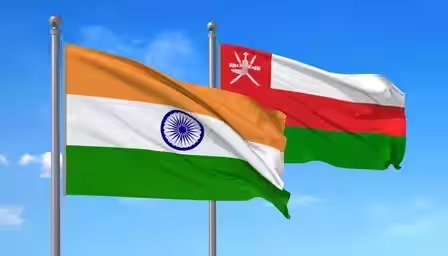
India’s engagement with the Gulf is entering a more consequential phase, and Oman is emerging as one of its most important partners. At a time when geopolitical uncertainties, energy security concerns and shifting global trade patterns are reshaping international relationships, New Delhi cannot afford to view Muscat merely as another trading partner. Oman represents a strategic gateway connecting India with the Arabian Peninsula, the wider Middle East and vital international maritime routes.
The significance of this relationship lies in the combination of history, geography, economic opportunity and mutual trust. Few countries in the Gulf enjoy such a long-standing maritime and commercial relationship with India. Yet the challenge today is to transform that historical goodwill into a modern partnership capable of delivering tangible economic and strategic benefits.
The India-Oman Comprehensive Economic Partnership Agreement (CEPA), which came into force on June 1, 2026, provides an important opportunity to achieve that objective.
The agreement marks a substantial expansion of market access. Oman has offered zero-duty access on 98.08 per cent of its tariff lines, covering 99.38 per cent of Indian exports by value. Before the agreement, only 15.3 per cent of Indian exports entered the Omani market without customs duties, while goods worth approximately $3.64 billion faced a five per cent tariff.
This change could significantly improve the competitiveness of Indian products, particularly textiles, engineering goods, pharmaceuticals, gems and jewellery, processed food and automobiles. Equally important is Oman’s decision to open 127 services sub-sectors to Indian providers, creating opportunities beyond conventional merchandise trade.
However, signing a trade agreement is only the beginning. Its success will depend on how effectively Indian businesses, particularly small and medium enterprises, utilise the new opportunities. Complicated procedures, limited market information and logistical constraints can prevent exporters from benefiting fully even when tariff barriers are removed. The proposed review mechanism between the two countries must therefore focus on resolving practical difficulties rather than merely evaluating trade figures.
Correcting the imbalance in trade
The economic case for closer engagement becomes clearer when the existing trade relationship is examined. Bilateral trade reached $11.19 billion in 2025-26, but India’s exports stood at around $4 billion, while imports exceeded $7 billion, largely because of hydrocarbon purchases.
This imbalance highlights both the strength and the limitations of the relationship. India’s energy requirements make Oman an important supplier, but excessive dependence on a narrow range of commodities can leave bilateral trade vulnerable to fluctuations in international energy prices.

The CEPA offers an opportunity to broaden the economic relationship. India must use preferential access to increase exports of manufactured goods, pharmaceuticals, technology-based services, food products and industrial equipment. A more diversified trade structure would benefit both countries by creating stronger commercial interdependence.
For India, this is particularly important as it seeks to expand its manufacturing base and establish alternative markets amid growing uncertainty in global supply chains.
Geography makes Oman indispensable
Oman’s importance, however, extends well beyond trade statistics. Its geographical position near the Strait of Hormuz gives it considerable strategic significance in the movement of global energy supplies and maritime commerce.
The narrow waterway connects the Persian Gulf with the Gulf of Oman and the Arabian Sea. Any disruption in this region can have immediate consequences for oil prices, shipping costs and the economic stability of energy-importing countries, including India.
Oman’s location outside the Persian Gulf, combined with its access to the Arabian Sea, makes it particularly relevant to India’s maritime calculations. The Sultanate can serve as an important partner in maintaining secure sea routes, strengthening maritime cooperation and promoting regional stability.
At a time when geopolitical rivalries are increasingly influencing commercial shipping and energy flows, India’s relationship with Muscat provides an avenue for constructive engagement without unnecessary strategic confrontation.
New Delhi must therefore look beyond immediate commercial gains and deepen cooperation in maritime security, port connectivity, logistics and regional infrastructure.
The human foundation of the partnership
Perhaps the strongest foundation of India-Oman relations remains its people-to-people connection.
Nearly 677,000 Indians live in Oman, including around 520,000 working on employment visas. They are employed across healthcare, engineering, education, construction, finance, retail and other sectors. More than 6,000 Indian establishments operate in the Sultanate, while remittances sent home are estimated at approximately $2 billion annually.
These figures represent more than an expatriate workforce. They reflect decades of social and economic integration between the two countries.
Indian professionals and workers have contributed significantly to Oman’s development, while the Sultanate has provided employment, business opportunities and a welcoming environment for successive generations of Indians. Some Indian merchant families have maintained commercial links with Muscat for nearly two centuries.
This human connection gives the relationship a degree of continuity that cannot be created through diplomatic agreements alone. Protecting the welfare, rights and professional interests of Indian workers must remain a central component of New Delhi’s engagement with Oman.
The CEPA should also be used to facilitate greater professional mobility, expand educational cooperation and encourage investment partnerships involving Indian businesses and the expatriate community.
From historical friendship to strategic partnership
The symbolic voyage of INSV Kaundinya from Porbandar to Muscat in January 2026 offered a reminder of how deeply the two societies have been connected through maritime commerce. The traditional wooden vessel, constructed using ancient shipbuilding techniques and modelled on historical Indian designs, retraced a route once travelled by traders using the seasonal monsoon winds.
Such historical connections matter because they provide a foundation of trust. But contemporary diplomacy must be judged by its ability to translate that goodwill into economic resilience and strategic cooperation.
India must also recognise that competition for influence and investment in the Gulf is intensifying. Countries across the region are diversifying their economies, investing in logistics, technology, manufacturing and renewable energy. Oman is pursuing its own economic transformation, creating opportunities for Indian investment and technological collaboration.
Cooperation in green hydrogen, renewable energy, food security, digital services, infrastructure and advanced manufacturing could become important pillars of the next phase of the relationship.

For India, deeper engagement with Oman would also strengthen its wider outreach to West Asia and the Indian Ocean region.
The opportunity must not be wasted
The India-Oman partnership stands at a point where historical goodwill and contemporary economic interests can reinforce each other. But the real test will be whether the CEPA produces measurable improvements in trade, investment, employment and technological cooperation.
New Delhi must ensure that Indian exporters receive adequate institutional support, that procedural obstacles are addressed and that businesses are encouraged to explore opportunities beyond traditional sectors. Strategic dialogue should also continue to strengthen maritime security and protect shared economic interests in a volatile region.
Oman, meanwhile, has an opportunity to position itself as a preferred economic and logistical partner for India in the Gulf.
The relationship should not be reduced to energy imports, expatriate employment or occasional diplomatic exchanges. Its potential is considerably greater.
India’s engagement with Oman is ultimately about securing a more diversified economic future and strengthening its strategic presence in a region central to global commerce. Centuries ago, monsoon winds connected the ports of western India with Muscat. Today, trade agreements, maritime cooperation and investment can carry that relationship into a new era.
The historical bond has endured. The responsibility now lies with both governments to ensure that the economic and strategic partnership grows to match its promise.