


Nearly two years after Sheikh Hasina’s ouster, the exclusion of the Awami League, competing claims over national history and recurring political violence have raised questions about whether the 2024 uprising has delivered the democratic renewal it promised
 KRC TIMES Desk
By Col. Guru Saday Batabyal (Retd)
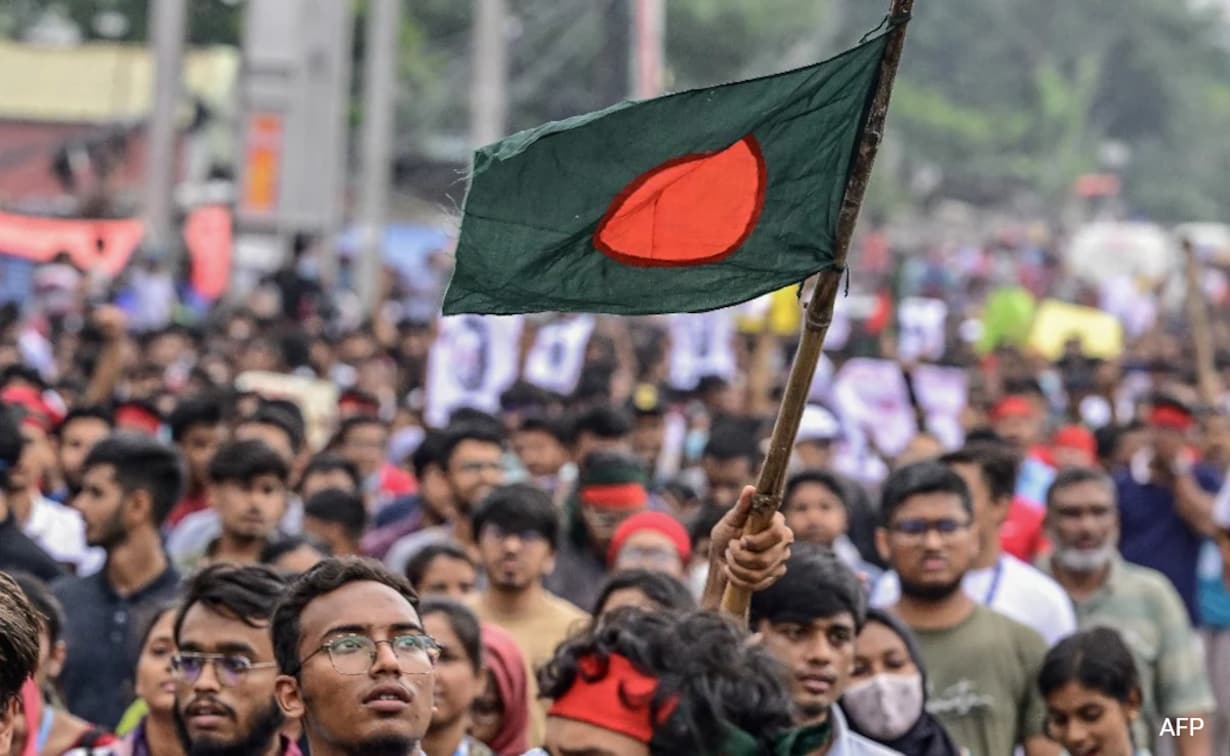
Revolutions often succeed in dismantling an existing political order but struggle to establish a stable and legitimate alternative. Bangladesh is confronting precisely this dilemma nearly two years after the 2024 mass uprising ended Sheikh Hasina’s 15-year rule.
What began as a student-led movement against political repression, governance failures and questions surrounding electoral credibility has evolved into a much wider contest over power, national identity and the future direction of the country. The central question is no longer simply who replaced the former government, but whether the emerging political arrangement enjoys sufficient public legitimacy to govern.
The developments since the uprising suggest that Bangladesh has yet to find a broadly accepted political settlement.
Political exclusion threatens democratic renewal
One of the most consequential developments during the transition under Muhammad Yunus has been the decision to ban Awami League activities and suspend the party’s electoral participation pending legal proceedings against its leadership.
Supporters of the move argue that accountability for alleged abuses and violence during Hasina’s tenure is essential to rebuilding public confidence in democratic institutions. However, the distinction between prosecuting alleged wrongdoing and excluding an entire political organisation remains fundamental.
Democracy requires accountability, but it also depends on political competition. When legal and administrative measures are perceived as instruments for removing a major political force from the electoral arena, questions arise about the impartiality of the transition itself.
The Awami League is not an ordinary political organisation in Bangladesh’s history. Its role in the Liberation War and the formation of the country gives it a distinctive place in the national political landscape. Millions of citizens continue to associate with its political legacy, irrespective of their views on Sheikh Hasina’s years in power.

Individual leaders must face investigation and judicial proceedings wherever credible allegations exist. But the political identity of millions cannot simply be erased through administrative decisions.
History repeatedly demonstrates that political constituencies do not disappear through prohibition. Exclusion often pushes political activity beyond institutional channels, creating conditions for confrontation and instability.
When political rivalry moves to the streets
The growing incidents of arson, bomb attacks, political clashes and intimidation point to the dangers of an increasingly polarised political environment.
The challenge is particularly serious when rival groups begin viewing one another not as legitimate political competitors but as enemies whose presence must be eliminated.
The destruction of Dhanmondi 32, attacks on Liberation War memorials and damage to symbols associated with Bangabandhu Sheikh Mujibur Rahman have added another dimension to the crisis.
These incidents are not merely disputes over public property or political symbolism. They reflect a deeper struggle over how Bangladesh remembers its past and defines its national identity.
For many citizens, the Liberation War remains the foundation of the country’s political existence. Attempts to dismantle or erase its associated historical symbols risk turning national memory into another arena of political confrontation.
The subsequent attacks on figures and institutions associated with the post-uprising administration, including the reported attack on Muhammad Yunus’s ancestral home, have further exposed the growing cycle of retaliation.
Although responsibility for individual incidents must be established through investigation, competing perceptions of victimhood are increasingly shaping political behaviour. One side’s assertion of justice is often viewed by the other as political revenge.
Such a cycle makes reconciliation considerably more difficult.
Has Bangladesh moved beyond Sheikh Hasina?
The unresolved future of Sheikh Hasina remains another major factor in the country’s political uncertainty.
Living in India since leaving Bangladesh, Hasina continues to influence political calculations despite her absence from the country. Speculation surrounding her possible return energises her supporters while generating concern among political opponents.
Her political future has therefore become closely linked to the legitimacy of the post-2024 arrangement.
The more fundamental question, however, is whether Bangladesh has genuinely moved beyond the Awami League as a political force or whether the party continues to command substantial support among sections of the population.
That question cannot be settled through political declarations, bans or street mobilisation. Ultimately, it requires a credible democratic process through which citizens can express their preferences.
The inability to establish such a process risks prolonging uncertainty and creating further opportunities for political confrontation.
Geopolitical concerns cannot replace domestic solutions
Bangladesh’s strategic location and its importance to regional connectivity, security and trade ensure that developments within the country attract considerable international attention.
India, in particular, has significant interests in Bangladesh’s political stability, given their shared border, economic links and security concerns. Other regional and global powers also have reasons to closely monitor the country’s transition.
Allegations of foreign involvement in the political changes, however, remain unproven and should not be treated as established explanations for the crisis.
The primary source of Bangladesh’s instability lies in its unresolved domestic political contest. External influence may become a subject of political debate, but it cannot explain away the fundamental questions surrounding democratic representation, institutional credibility and the rule of law.
A sustainable political settlement must emerge from within Bangladesh.
The road to legitimacy lies through elections
The greatest challenge before Bangladesh is to convert the political energy of the 2024 uprising into durable democratic institutions.
If the movement was genuinely intended to establish a more accountable and democratic political system, its success must eventually be measured by the institutions it creates rather than merely by the government it removed.
Independent investigations, impartial judicial proceedings and due process must form the foundation of accountability for alleged abuses. At the same time, political competition must remain open to all forces willing to operate within the constitutional framework and comply with the law.
The eventual restoration of political space for the Awami League, subject to legal requirements and due process, deserves consideration as part of a wider democratic settlement. Equally important is the need for a credible, competitive and internationally scrutinised election.
An election alone will not resolve every historical grievance or settle the debate over Hasina’s political legacy. Nor will it automatically restore trust between deeply divided political constituencies. But a genuinely competitive electoral process would provide the strongest available mechanism for determining where public support lies.
The electorate, rather than political organisations, street movements or administrative authorities, must have the final say in deciding who governs.
Bangladesh also needs to rebuild confidence in its institutions, protect historical sites and ensure that political differences do not translate into violence against individuals or communities.
An unfinished transition
The 2024 uprising created an opportunity for Bangladesh to renew its democratic foundations. That opportunity remains, but it is being tested by political exclusion, competing historical narratives and the absence of a settlement accepted across the political spectrum.
The country cannot build a stable future by permanently marginalising major political constituencies, just as it cannot achieve reconciliation by overlooking alleged abuses committed under the previous administration.
Justice and political inclusion are not mutually exclusive. Both are necessary for a functioning democracy.
The defining test of Bangladesh’s post-uprising leadership will therefore be its willingness to accept political competition, strengthen independent institutions and allow the people to determine the country’s future through credible elections.
The question is no longer how the old political order collapsed. It is whether the new one has enough confidence in its own democratic credentials to face the verdict of the electorate.
Until that happens, Bangladesh’s transition will remain incomplete. The revolution of 2024 may have changed the government, but its promise of democratic renewal remains unfulfilled.