

With its wild population at 172, the state animal’s greatest threat may be the gradual degradation of its only natural habitat
 Waari Singbul Network
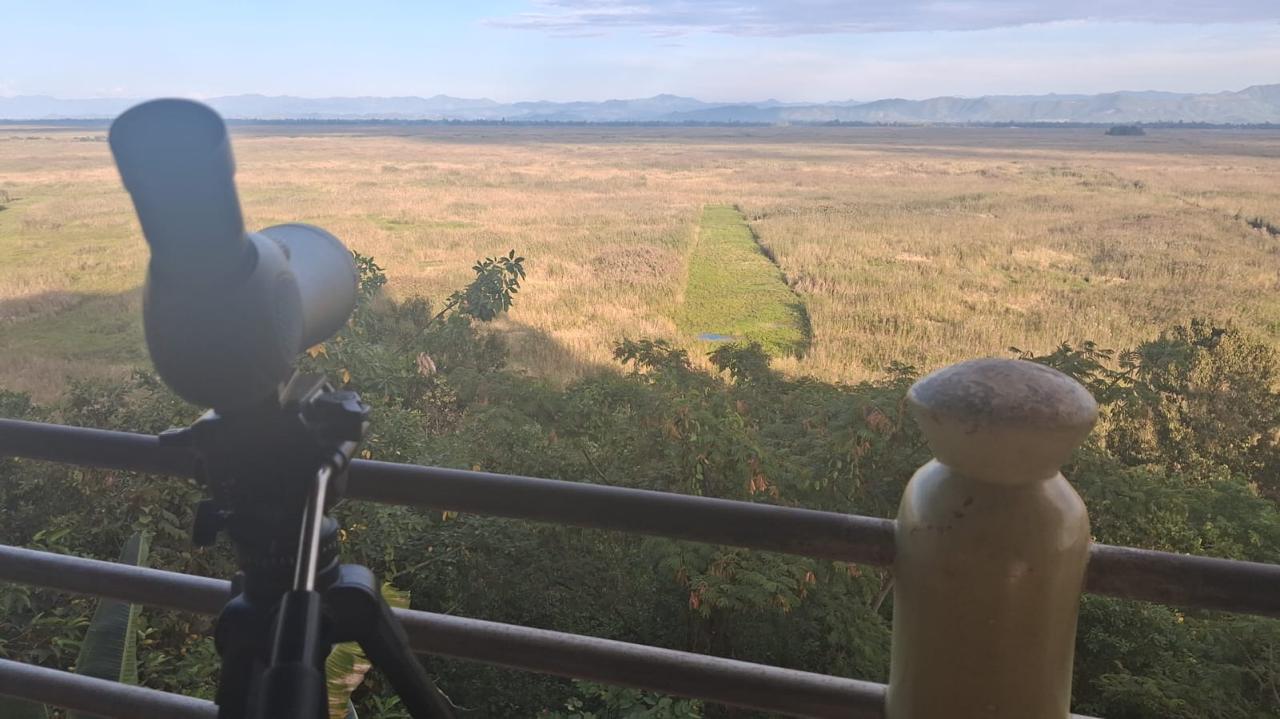
Imphal | Keibul Lamjao National Park, Manipur: For more than five decades, Manipur’s state animal, the Sangai, has survived against the odds. Once feared extinct, the rare brow-antlered deer was rediscovered in small numbers and gradually brought back from the edge. Yet today, with its population estimated at just 172 in the wild, still endangered and its future still remaining precarious.
The most concerning factor is not merely the dwindling number of deer. It is the deteriorating condition of the Sangai’s only natural habitat—Keibul Lamjao National Park itself.
The world’s only floating national park, Keibul Lamjao was declared a national park in 1977 to protect the Sangai and its unique ecosystem. Its floating landscape is formed by phumdis—masses of vegetation, soil and organic matter at different stages of decomposition. These floating meadows provide the deer with food, shelter and breeding grounds.
But the ecological foundation of this extraordinary habitat is gradually weakening.
When the lake lost its natural rhythm
The Sangai (Rucervus eldii eldii), also known as the Manipur brow-antlered deer, is listed as Endangered by the IUCN and protected under Schedule I of India’s Wildlife (Protection) Act, 1972. Its wild population is confined to Keibul Lamjao, making it particularly vulnerable to any serious deterioration of the park.
The health of the phumdis depends on the natural seasonal rhythm of Loktak Lake. Before the construction of Ithai Barrage, the lake’s water level rose and fell with the seasons. During the lean months, the phumdis settled on the lakebed. Their vegetation drew nutrients and minerals from the bottom, replenishing the biomass and helping maintain its thickness and strength. When the water rose during the monsoon, the phumdis floated again.
The commissioning of Ithai Barrage in 1983, as part of the Loktak Multipurpose Hydroelectric Project, altered that cycle. Water levels are now regulated and maintained at a relatively high level to support hydropower generation.
As a result, the phumdis remain afloat through much of the year and are denied the seasonal grounding that once allowed them to replenish their nutrients.
Research published in the Journal of Cleaner Production in 2023 found that the high-water levels have prevented phumdis from reaching the lakebed during the dry season, reducing their access to nutrients and contributing to the decline of vegetation. Earlier research has likewise identified the disruption of this natural cycle as a major cause of phumdi thinning.
The consequences are especially alarming for Keibul Lamjao. As the phumdis gradually lose thickness and structural strength, they become less capable of supporting the weight of the Sangai.
The park may continue to appear as a vast floating meadow, but beneath its green surface, the ecological system that sustains the deer is under strain.
From 14 survivors to 172
The Sangai’s recovery remains an important chapter in Manipur’s conservation history. After being feared extinct in the early 1950s, 14 animals were recorded in 1975. The park was declared a national park two years later.
Forest Department records put the population at 180 in 2003, 204 in 2013 and 260 in 2016. It declined to 251 in 2018, while the latest 2026 estimate stands at 172.
The figures must be interpreted alongside the survey methods and conditions of each census. Nevertheless, the latest estimate is a warning that decades of protection have not secured the species against the pressures affecting its habitat.
A local Sangai enthusiast, Ningthoujam Bhumeshor, recalls seeing the deer grazing beyond the floating meadows during the dry summer months in his childhood. He says they are no longer seen in those areas as they once were.
His recollection is not a substitute for systematic ecological monitoring, but it reflects a changing landscape that deserves closer scientific investigation.
The second homes of the Sangai
The Forest Department has also pursued captive breeding to safeguard the species
The Sangai “second home” at Langol was established in 1992 with six deer brought from Mysore and Delhi zoos.
According to Laishram Biramangol, Director of the Manipur Zoological Garden, the population at Langol increased to 13 over the years. Two pairs were shifted to the Manipur Zoological Garden at Eroisemba in 2019.
The Zoo currently houses 15 Sangai, in addition to four fawns, while eight deer—four males and four females—remain at the Langol second home, the director said.
The hilly terrain at Langol, however, is not considered ideal for the specialised habitat requirements of the Sangai.
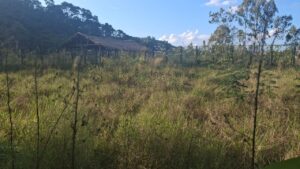
To strengthen the breeding programme, the state government has begun developing the Manipur Sangai Conservation Breeding Centre on seven hectares near Keibul Lamjao National Park.
Construction began in 2025, and ground levelling and fencing are under way. The facility is awaiting approval from the Central Zoo Authority of India.
The department plans to begin with three females and two males, a senior Forest Department official told Waari Singbul.
The centre is intended to maintain a healthy, genetically diverse population under controlled conditions. Its success will depend on scientific breeding, veterinary care, nutrition and careful genetic management.
Yet captive breeding, however necessary, cannot compensate indefinitely for a deteriorating natural habitat.
Isolation, competition and pollution
The Sangai’s confinement to one wild population creates risks of genetic isolation and inbreeding. Scientific studies have raised concerns about its limited genetic diversity and long-term demographic viability.
Competition with hog deer has also emerged as an ecological concern. Both species use overlapping habitat and feed on grasses and aquatic vegetation.
The 2026 census recorded 375 hog deer in Keibul Lamjao, compared with 172 Sangai. These figures alone do not establish the extent of competition, but they underline the need for studies on food availability, habitat use and carrying capacity before any intervention is considered.
Pollution adds another pressure. Research has identified deteriorating water quality, shrinking phumdis and habitat degradation among the threats facing the Keibul Lamjao ecosystem.

Conservationists have proposed exploring additional suitable habitats, including Phumlen Pat and Yawa Lamjao. A second viable wild population could reduce the danger of a single catastrophe wiping out the species. Any translocation, however, would require detailed ecological assessment, habitat preparation, disease management and long-term monitoring.
Conservation needs people too
Communities around Loktak Lake remain closely connected to its resources. Oinam Maipakchao, a resident of Thanga Ngaram Leikai in Bishnupur district who runs a homestay enterprise, believes conservation requires what he calls “social and emotional fencing”, not merely physical barriers.
He argues that people dependent on the lake must be given viable alternatives and a meaningful stake in conservation. Local employment, responsible tourism and conservation-linked livelihoods could help make communities partners in protecting the Sangai.
A Forest Department official, speaking anonymously, also expressed concern about staffing at the park. Contractual workers reportedly outnumber regular staff, while irregular payment of wages and honorariums affects morale. Protecting wildlife requires trained personnel, timely wages, equipment and sustained field support.
The real test of conservation
The new breeding centre offers hope. But its value will not be measured simply by the number of animals it houses.
The real test will be whether it strengthens the genetic health of the Sangai, contributes to a viable population in the wild and accompanies meaningful action to restore the phumdis, address the altered water regime, curb poaching and involve local communities.
The Sangai once returned from the edge with only 14 animals. Today, with its wild population estimated at 172, the challenge is to ensure that its survival does not remain permanently uncertain.
The new centre may become a gamechanger. But the Sangai’s lasting salvation depends on something larger: whether Manipur can restore the natural rhythm of Loktak Lake and save the floating world on which its dancing deer has depended for generations.
//