


The glut of poor-quality teas in the market has severely eroded Assam’s reputation, leading buyers and global packeteers to turn away
 KRC TIMES Assam Bureau
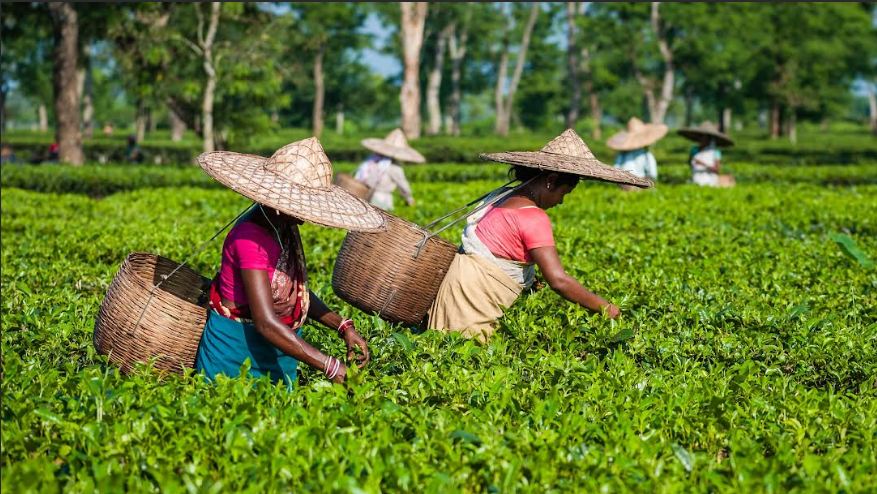
The Assam Tea Planters’ Association (ATPA), one of the oldest and most respected organisations representing the interests of indigenous tea planters in India’s North East, has sounded an alarm that the tea sector in Assam and North Bengal stands at a critical crossroads. Unless urgent reforms are undertaken, the industry-once regarded as the pride of India’s agricultural exports-risks sliding into long-term decline.
In a strongly worded press statement, Samudra P. Baruva, Chairman of the ATPA, emphasised that the very survival of the industry depends on a decisive shift toward quality-oriented production. He warned that continuing the current trajectory of unchecked quantity-based output, declining compliance with food safety norms, and collapsing price realisations could leave both large plantations and small growers in financial ruin.
A Legacy Industry in Crisis Founded in 1935 during the pre-Independence era by a group of indigenous Assamese tea planters, ATPA has historically represented the interests of communities who fought against colonial monopolies and established their rightful place in India’s tea economy.
Over the decades, Assam’s tea has built an enviable reputation worldwide for its strong liquor, briskness, and unmatched malty flavour. However, the recent crisis has shaken this legacy. The glut of poor-quality teas in the market has severely eroded Assam’s reputation, leading buyers and global packeteers to turn away.
According to Baruva, ex- cessive cropping in recent months has “flooded the market with substandard produce,” resulting in what he called “crippling price realisations” at auctions. The fixed costs of run- ning tea plantations-which include labour wages, hous- ing, healthcare, and welfare obligations-have made the current price crash particu- larly devastating for North Indian producers.
Unlike in some southern states, estates in Assam and West Bengal cannot easily scale down their workforce or reduce welfare expenditure, since statutory obligations bind them to long-term commitments. Food Safety Concerns and Buyer Exodus Compounding the price issue is a deeper structural problem: non-compliance with food safety standards.

Baruva cited findings from the Federation of All India Tea Traders’ Associations (FAITTA), which revealed that many teas listed at the Guwahati Tea Auction Centre (GTAC) and the Siliguri Tea Auction Centre (STAC) this year failed to meet Food Safety and Standards Authority of India (FSSAI) norms. This failure has had immediate repercussions.
Large packeteers, wary of legal liabilities, have reduced procurement from Assam and West Bengal, choosing instead to buy from South India or even import teas from Kenya, Rwanda, and other African producers. “The major packeteers are losing interest in Assam and West Bengal teas, which is an alarming trend,” Baruva warned.
The credibility of Assam tea-once a benchmark for quality-is thus under serious threat. Unless standards are enforced and maintained, the erosion of buyer confidence may become irreversible. The Call for Quality Over Quantity At the heart of ATPA’s recommendations is a sim- ple but urgent shift: focus on quality, not volume.
Baruva stressed that quality is not merely about taste but also about compliance with FSSAI standards and international expectations. “Quality is the only way forward,” he declared, noting that improving com- pliance would both restore market trust and secure better price realisations for growers. One of the central proposals is the introduction of a minimum price of ?
25 per kilogram for green leaf, provided the leaf contains at least 40 percent fine plucking. This benchmark would serve multiple purposes. It would ensure that growers are adequately compensated for producing high-quality leaf, while simultaneously discouraging the sale of coarse or immature plucking. At this price point, Bought Leaf Factories (BLFs)-which rely heavily on leaf sourced from small growers-would be compelled to reject poor-quality leaf, thus raising the overall standard of processed tea.
“If the system rewards quality, everyone will adapt,” Baruva argued. Mapping and Regulating Leaf Sources ATPA has also urged the Tea Board of India to intervene more decisively. In particular, Baruva highlighted the need for mapping and regulating the quality of green leaf being sourced from Arunachal Pradesh, Nagaland, and Bihar, regions whose unchecked expansion has contributed significantly to the supply of low-qualit teas.
By enforcing quality parameters across these emerging tea-growing belts, the Tea Board could help stabilise prices and protect the reputation of Assam and North Bengal teas, which often get diluted in blended consignments. Supporting Small Tea Growers While much of Assam’s tea comes from traditional estates, the role of Small Tea Growers (STGs) has expanded dramatically in recent decades.
Today, STGs account for nearly half of Assam’s production. However, without access to modern equipment and knowledge, many STGs continue to deliver leaf that compromises quality. ATPA has therefore recommended that the Tea Board prioritise funding for quality enhancement programmes targeting STGs. Subsidies for battery-operated plucking machines, training in best practices, and incentives for fine plucking could transform the sector’s grassroots.
“Supporting STGs is essential,” Baruva noted, “because they are now the backbone of Assam’s pro- duction.” The Export Imperative For over a century, tea exports were India’s pride, with Assam teas commanding premium value in London, Moscow, and the Middle East. But in recent years, Kenya, Sri Lanka, and even newer entrants like Rwanda have eaten into India’s market share by offering consistent quality at competitive prices.

Baruva has called for a renewed focus on exports, backed by government incentives. He suggested transport subsidies to reduce logistical costs from the North East, as well as enhancements in the Remission of Duties and Taxes on Exported Products (RODTEP) scheme. “Exports must be incentivised to protect India’s global market share,” he stressed. Without such support, Indian tea risks being edged out in markets where buyers are increasingly sensitive to both quality and price.
Tackling Imported Teas Another pressing con- cern is the influx of import- ed teas, ostensibly brought in for re-export but often diverted into the domestic market. This “leakage” un dermines local growers, as imported teas are typically cheaper and not always subject to the same compliance scrutiny.
ATPA has demanded that the government enforce stricter regulations on such imports, ensuring they are not allowed to distort domestic prices or erode the position of Indian teas in local markets. Promoting Indian Tea at Home and Abroad Beyond regulation, ATPA sees the need for a unified promotional strategy.
Baruva argued that the industry must do more to educate domestic consumers about the difference between premium quality teas and lower-grade products. “When consumers understand why premium teas cost more, they will be willing to pay for them,” he said.
Such campaigns could replicate the success of branding drives in other sectors, such as Darjeeling’s “Geographical Indication” (GI) status. Assam tea, with its global reputation, deserves a similar push that emphasises heritage, quality, and authenticity. Self-Regulation and Industry Reforms In defending recent reforms within the industry, Baruva pointed to measures such as 100 percent dust auctions and early season closures introduced last year.
Though controversial, he described them as necessary self-regulation mechanisms to improve quality and compliance. “These measures may face initial resistance,” he acknowledged, “but they are vital for the long-term health of the industry.” By aligning production cycles and auction practices with quality benchmarks, the industry can rebuild trust among buyers.
A Heritage at Stake The ATPA chairman ended his appeal with an emotional reminder that the tea industry is not merely an economic sector but also an integral part of Assam’s identity and heritage. Millions of livelihoods-spanning workers, small growers, estate owners, and ancillary industries-depend on tea.
“If we fail to act now, we are not just risking econom- ic losses; we are endanger- ing the cultural heritage of Assam,” Baruva said. He urged all stakeholders-gov- ernment agencies, growers, traders, and packers-to work in unison. The Road Ahead: Balancing Tradition and Change The debate triggered by ATPA’s statement highlights the difficult balance between tradition and change.
On one hand, Assam’s tea industry is steeped in a legacy that cannot be compromised. On the other, the sector must adapt to global market realities, stricter food safety norms, and the rise of new competitors. Experts believe that the path forward will require:
1.Strict enforcement of quality norms at both estate and small grower levels.
2.Economic incentives that reward compliance rather than quantity.
3.Greater investment in technology, from mechanised plucking to modern manufacturing units.
4.Unified marketing strategies that strengthen the Assam tea brand.
5.Policy support from both state and central governments to sustain exports and regulate imports. Only by aligning these elements can Assam reclaim its rightful place as the gold standard of global tea.
The Time to Act is Now The call from ATPA is both urgent and clear. Assam cannot afford to delay reforms any longer. With plummeting prices, wavering buyers, and growing global competition, the industry’s survival depends on decisive measures today.
For Assam, tea is more than an industry-it is the lifeblood of its economy, culture, and international identity. The future of millions hangs in the balance. As Baruva concluded, “This is not just about economics; it’s about pre- serving the identity and heritage of Assam. The time to act is now.”
Promotional | North East Integration Rally