


India’s past offers a rich and varied record of women who exercised intellectual influence, governed kingdoms, led armies and shaped public life
 KRC TIMES Desk
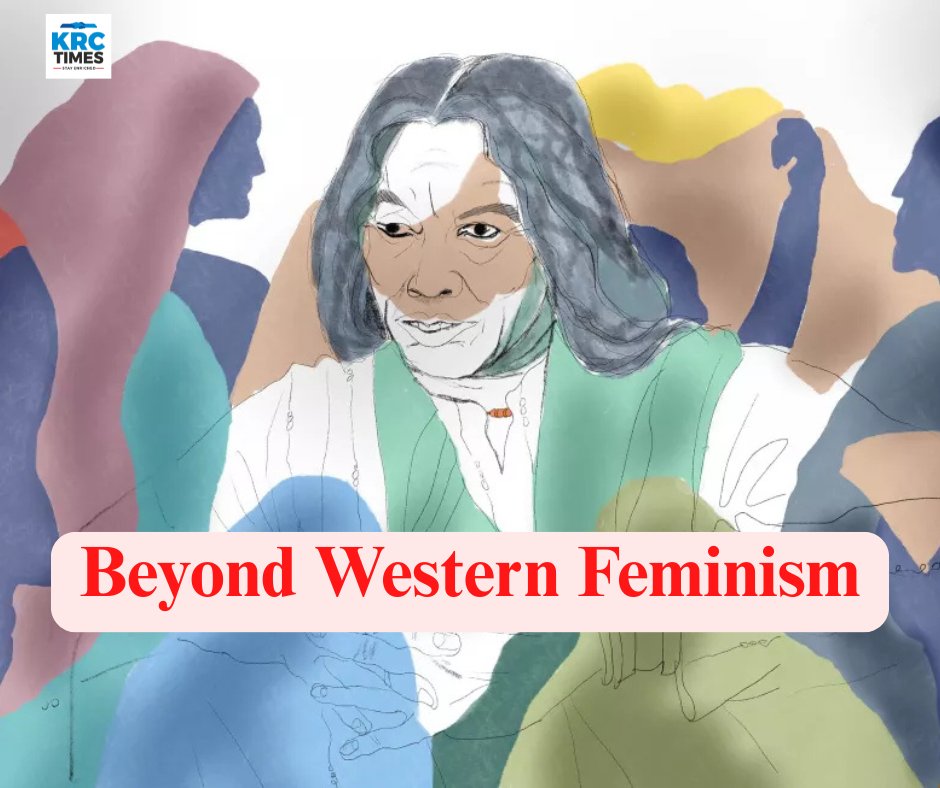
Simone de Beauvoir remains central to modern feminist thought, but women’s struggles and achievements cannot be understood through a single intellectual tradition. Ahilyabai Holkar’s life offers a compelling reminder that leadership, political authority and social responsibility have taken different forms across civilisations.
The history of feminism is often narrated through a familiar sequence of Western thinkers and movements-from Mary Wollstonecraft’s advocacy of women’s education to the suffragettes’ struggle for political rights and Simone de Beauvoir’s influential examination of how society constructs the condition of being a woman. Their contributions are indispensable. Yet, when this narrative becomes the principal framework for understanding women’s emancipation everywhere, it risks overlooking other histories of female authority, resistance and achievement.
India’s past offers a rich and varied record of women who exercised intellectual influence, governed kingdoms, led armies and shaped public life. The Vedic thinkers Lopamudra, Gargi, Maitreyi and Ghosha represent traditions of female intellectual engagement. Kashmir’s Didda and Kota Rani, Rudrama Devi of Warangal, Chand Bibi of Ahmednagar and Rani Abbakka of Ullal demonstrate different forms of political and military leadership.
Among these remarkable figures, Ahilyabai Holkar, the eighteenth-century ruler of Indore, deserves particular attention. Her life challenges the assumption that women’s power must always be understood through the language and categories of modern Western feminism. She did not leave behind a manifesto for gender equality. Instead, she demonstrated through governance, diplomacy, public welfare and personal conviction how a woman could exercise authority in a deeply hierarchical society.
Her example raises a larger question: should the history of women’s empowerment be confined to the intellectual traditions through which modern feminism developed, or should it also recognise the diverse ways women shaped their societies in different historical and cultural settings?
A woman who refused to surrender power
Born into a period of considerable political upheaval, Ahilyabai entered the Holkar household through marriage at a young age. Her father-in-law, Malhar Rao Holkar, recognised her intelligence and ensured that she received an education unusual for women of her time. Alongside religious learning, she acquired knowledge of administration, accounting, warfare and statecraft.
These skills became crucial when personal tragedy altered the course of her life. Her husband, Khande Rao Holkar, died in battle, leaving her widowed at the age of 21. At a time when the practice of sati continued to exert a powerful social influence, Ahilyabai did not follow her husband’s other wives, who reportedly chose to die on his funeral pyre. Malhar Rao recognised her capabilities and supported her continued role in the affairs of the state.
Following his death, her son Male Rao succeeded him but died within a year. The Holkar kingdom was left facing a succession crisis, and the question of whether a woman could rule in her own right became a political test.

Her minister, Gangadhar Yashwant Chandrachur, advised her to adopt a male heir. Ahilyabai refused to allow her authority to be reduced to a question of dynastic convenience. Raghunath Rao, uncle of the Peshwa, reportedly considered military action against her.
According to historical accounts, Ahilyabai sought the support of other Maratha chiefs and prepared to defend her position. She is also said to have assembled and trained a contingent of approximately 500 women, declaring her readiness to lead them into battle if necessary. Her message to Raghunath Rao challenged the political and moral legitimacy of attacking a woman ruler. The confrontation did not develop into the anticipated invasion.
The episode reveals something important about the nature of her authority. Ahilyabai did not merely seek acceptance within an established political order. She demonstrated that competence, strategic alliances and the ability to defend the state could establish a woman’s claim to power even when prevailing conventions favoured male succession.
Her achievement was not a rejection of every tradition of her time. Rather, she worked within the political and cultural structures available to her, while refusing to let those structures determine the limits of her leadership.
Governance as a moral responsibility
Ahilyabai’s significance extends far beyond her struggle to secure the throne. During nearly three decades of rule, she developed a reputation for conscientious administration, accessibility and concern for the welfare of her subjects.
Historical accounts describe a ruler who regularly heard grievances, maintained a comparatively moderate approach to taxation and sought to protect individual property rights. Accounts of her administration also record instances in which property appropriated from widows was restored to them. At a time when a woman’s economic security could be severely weakened by the death of her husband, such interventions carried considerable significance.
These practices deserve attention because they connect political authority with social responsibility. Ahilyabai’s legacy was not simply that a woman governed successfully. It was that she understood governance as an obligation to protect livelihoods, resolve disputes and ensure that power served purposes beyond the preservation of a dynasty.
Her religious convictions informed this understanding of duty. She regarded herself as accountable to a higher moral authority for the manner in which she exercised power. Accounts of her daily life also describe concern for animals and birds, the provision of water for travellers, the planting of shade trees along roads and the construction of wells.
Such measures may appear modest when compared with military victories or territorial expansion. Yet they illustrate a conception of leadership in which the welfare of ordinary people formed an essential part of the ruler’s responsibilities.
There is a lesson here for contemporary political thought. Leadership need not be measured exclusively by the ability to command, dominate or defeat rivals. Its enduring value can also lie in the institutions it builds, the grievances it addresses and the dignity it affords those with limited access to power.
Building a cultural geography across India
Ahilyabai’s public works extended well beyond the boundaries of her kingdom. She supported the construction and restoration of temples, pilgrimage facilities, river ghats and rest houses at numerous religious centres across the subcontinent. Her patronage is associated with places including Kashi, Somnath, Omkareshwar, Rameswaram, Kedarnath, Badrinath and other important pilgrimage destinations.
These projects helped sustain networks of pilgrimage and religious exchange that connected distant regions. They also reflected a form of cultural influence that did not depend primarily on territorial conquest.
Ahilyabai’s approach to patronage was especially significant in an eighteenth century marked by political fragmentation, military competition and the expansion of European power. Where rulers frequently pursued influence through warfare, she also relied on negotiation, patronage and diplomacy to secure resources and land for public and religious works.
Claims about the precise extent of her construction and restoration activities vary across historical accounts, and individual projects require careful documentation. Nevertheless, her broad contribution to India’s religious and architectural landscape is well established.
Her patronage also had an economic dimension. By encouraging artisans and weavers to settle in Maheshwar, she helped strengthen a local tradition of textile production. Maheshwari saris subsequently became closely associated with the town’s cultural identity. This connection between patronage, livelihoods and craftsmanship shows how cultural investment can support economic activity as well as preserve heritage.
Ahilyabai’s work therefore cannot be reduced to religious devotion alone. It combined cultural patronage with public infrastructure, economic encouragement and the cultivation of relationships across regions and political boundaries.
Why one definition of feminism is not enough
It would be tempting to describe Ahilyabai as a feminist in the modern sense. But such a label, applied without qualification, risks obscuring the historical circumstances in which she lived.
Modern feminism encompasses diverse traditions, including struggles for legal equality, political representation, economic independence, bodily autonomy and freedom from patriarchal restrictions. Simone de Beauvoir’s The Second Sex remains a landmark in understanding how social structures shape women’s lives and identities.
Ahilyabai did not formulate a comparable theory of women’s emancipation. Nor did she lead a movement seeking equal rights for all women. Her achievements were shaped by eighteenth-century political institutions, religious beliefs, dynastic responsibilities and the specific opportunities available to a capable woman within the Holkar state.
Recognising these differences does not diminish her achievements. It makes their historical significance clearer.
A woman need not have articulated a modern feminist programme to demonstrate female agency or challenge gendered assumptions about authority. Equally, the success of an exceptional woman ruler should not be mistaken for proof that women generally enjoyed equality in her society.
Both distinctions matter. Historical admiration must not become romanticisation, and the recovery of overlooked women must not lead to the denial of the structural restrictions faced by women in their own times.
The more productive approach is to examine the particular ways in which women negotiated power, expanded their room for action and shaped institutions within the circumstances they inherited.
Ahilyabai’s example belongs within this broader history. Her authority rested on administrative competence, political judgement, moral conviction and the ability to build alliances. Her achievements demonstrate that women’s power has never been expressed through a single universal model.
Recovering history without creating new exclusions
The argument for recognising India’s histories of women’s leadership should not become an exercise in replacing one narrow canon with another. Western feminist thinkers made important contributions to debates about equality, freedom and social structures. Their ideas continue to offer valuable analytical tools for understanding gender relations across the world.

The limitation arises when one intellectual tradition is treated as the exclusive measure of women’s historical experience. Civilisations have developed different political institutions, ethical frameworks and social arrangements. Women have acted within these environments in ways that cannot always be adequately described through categories developed in another historical setting.
A genuinely global history of women’s power must therefore be comparative rather than competitive. It should examine similarities as well as differences, acknowledge achievements without concealing inequalities and allow historical figures to be understood in their own contexts.
Ahilyabai’s continuing presence in the cultural memory of Maheshwar illustrates the durability of her legacy. Traditions associated with her name, her patronage and her public works have preserved a connection between historical memory and everyday religious and cultural life. Such remembrance is not merely an exercise in celebrating the past; it also reflects how communities understand the relationship between leadership, duty and public service.
Her life also invites contemporary societies to reconsider what empowerment means. Access to formal political rights remains essential, but women’s agency can also be expressed through institution-building, economic stewardship, cultural preservation and the exercise of public responsibility. These dimensions do not replace demands for equality. They broaden our understanding of the historical forms through which women have exercised influence.
A wider history of women’s power
The significance of Ahilyabai Holkar lies neither in proving that India had no need for feminism nor in establishing that its past was free from gender inequality. Neither conclusion would withstand serious historical scrutiny.
Her importance lies in showing that women’s leadership has emerged in different forms, often under circumstances that differed sharply from those associated with the modern Western feminist movement. She governed without a modern feminist manifesto, exercised authority in a male-dominated political world and left a legacy extending across administration, infrastructure, religious patronage and local economic life.
Simone de Beauvoir remains essential to understanding modern feminism. But she need not be the sole intellectual gateway through which the histories of women are interpreted.
The task is not to find a Western label for Ahilyabai Holkar, nor to turn her into a symbol for every contemporary political argument. It is to understand her on her own terms, examine the historical conditions that shaped her choices and recognise the distinctive contribution she made.
Women’s history becomes richer when it moves beyond a single geographical or ideological framework. Ahilyabai’s life reminds us that the story of women’s power is not one story at all. It is a collection of histories-sometimes intersecting, sometimes divergent-whose full significance emerges only when each is allowed to speak in its own voice.

