


The question is no longer simply how quickly India can develop alternative trade routes, but whether it can protect its strategic interests from the competing priorities of global powers
 KRC TIMES Desk
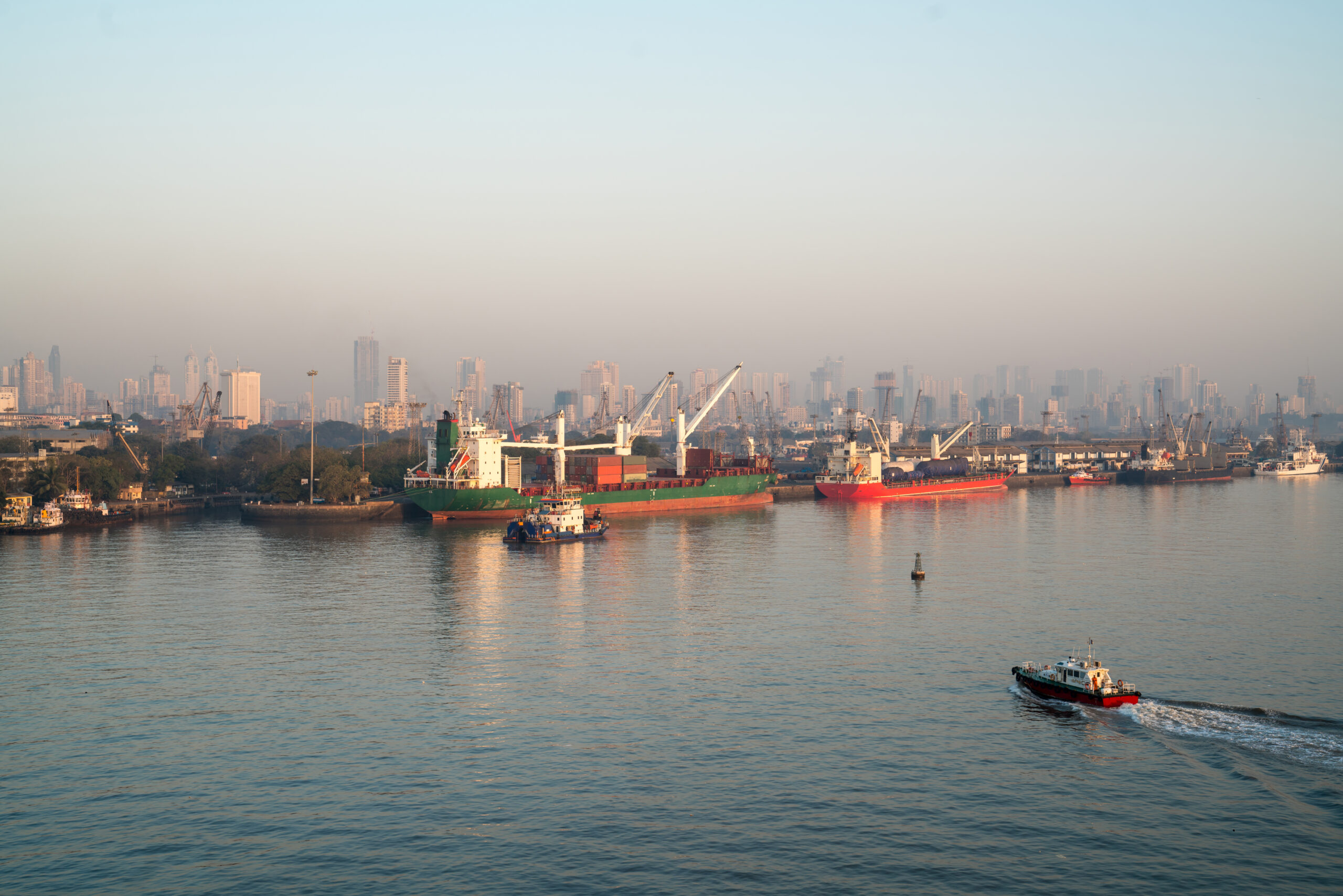
India’s ambitious infrastructure and connectivity plans are once again confronting an uncomfortable reality: geopolitical rivalries can undermine even the most strategically important projects. Iran’s Chabahar port, which New Delhi has long viewed as a gateway to Afghanistan, Central Asia and beyond, has become a casualty of Washington’s sanctions policy and the deepening conflict in West Asia. The question is no longer simply how quickly India can develop alternative trade routes, but whether it can protect its strategic interests from the competing priorities of global powers.
For India, Chabahar is far more than a commercial port. It offers a vital route to landlocked Afghanistan and the resource-rich markets of Central Asia without depending on Pakistan. Islamabad has consistently denied India transit access through its territory, making alternative connectivity routes essential to New Delhi’s regional ambitions. A fully operational Chabahar corridor could reduce this dependence, expand India’s commercial reach and strengthen its influence across its extended neighbourhood.
Yet, despite its strategic importance, the project remains constrained by American sanctions against Iran. India has invested in developing the Shahid Beheshti terminal at Chabahar, recognising the port’s potential to reshape regional trade. However, the expiry of the US sanctions waiver on April 26 this year, without a further extension, has created fresh uncertainty. Faced with the prospect of American penalties, India has been forced to withdraw from operating the terminal.
This is a serious setback, not merely for a bilateral infrastructure project but for India’s broader foreign policy ambitions. New Delhi has repeatedly emphasised strategic autonomy and the importance of maintaining independent partnerships. Yet the Chabahar experience demonstrates how difficult it is to translate those principles into practice when Washington can impose substantial economic costs on countries pursuing relationships it opposes.

The contradiction in American policy deserves scrutiny. Washington expects India to be a major partner in maintaining regional stability and strengthening economic connectivity, but its sanctions against Tehran restrict India’s ability to pursue precisely those objectives. India’s engagement with Iran is not inherently incompatible with its partnerships with the United States. A mature international order should allow countries to maintain relationships with multiple partners without being compelled to choose sides in every geopolitical dispute.
American pressure over India’s purchase of Russian oil has raised similar questions about the extent to which Washington is prepared to accommodate New Delhi’s independent foreign policy choices. If India’s strategic autonomy is to mean anything, it must extend beyond diplomatic declarations to decisions involving energy security, trade and regional infrastructure.
The stakes surrounding Chabahar have grown even higher amid the escalating confrontation involving Iran, the United States and Israel. Tensions around the Strait of Hormuz, one of the world’s most critical energy and shipping corridors, have exposed the vulnerability of international commerce to military confrontation. Chabahar, located near the Gulf of Oman with access to the Indian Ocean, could provide an important alternative gateway for regional trade. But a port situated in a conflict-prone region cannot become a reliable commercial hub unless its operations are protected from sanctions, military escalation and political uncertainty.
Recent progress on Iran’s railway infrastructure offers a reminder of what remains possible. The Chabahar-Iranshahr rail link forms part of a planned 630-kilometre corridor extending to Zahedan, near the Afghan border. Iran has indicated that the entire railway could be completed by January next year. Designed to carry 7.7 million tonnes of freight and 2.2 million passengers annually, the route could significantly improve the movement of goods and people across the region.
But infrastructure alone cannot guarantee connectivity. A railway may be completed, a terminal developed and investment committed, yet the commercial benefits will remain limited if sanctions prevent international partners from using the network. The disconnect between physical infrastructure and political access is at the heart of India’s Chabahar dilemma.
The port also carries strategic significance because of its proximity to Pakistan’s Gwadar port, developed with Chinese assistance. Located around 140 kilometres away, Gwadar has become an important component of Beijing’s regional connectivity ambitions. India has legitimate reasons to monitor the expansion of Chinese influence in the region. Chabahar offers New Delhi an opportunity to strengthen its own presence and prevent regional connectivity from becoming dominated by a single strategic rival.

However, India must avoid reducing Chabahar to a contest with China. The project’s long-term value lies in its capacity to generate trade, improve access to new markets and create durable economic partnerships. Strategic competition may provide the initial impetus, but commercial viability and political stability will determine whether the port can deliver lasting benefits.
The same challenge confronts the International North-South Transport Corridor (INSTC), which India, Iran and Russia have sought to develop as a multimodal trade network linking the Indian Ocean region with Russia and markets beyond. The corridor could shorten transport routes, diversify supply chains and expand India’s access to Eurasian economies. Yet the Russia-Ukraine war, deteriorating relations between Moscow and Western capitals, and instability in West Asia have complicated its prospects.
India’s response must therefore go beyond waiting for geopolitical circumstances to improve. New Delhi should intensify diplomatic engagement with Washington to seek a workable sanctions arrangement while maintaining communication with Tehran. It must also explore alternative financing, insurance and logistics mechanisms wherever legally possible, and strengthen other routes to Central Asia so that its regional ambitions do not depend excessively on a single corridor.
Strategic patience remains necessary, but patience cannot become a substitute for strategic planning. India must recognise the risks of overdependence on infrastructure whose operation can be disrupted by decisions taken in distant capitals. Diversifying trade routes, building resilient supply chains and developing stronger regional partnerships should be central to its approach.
Abandoning Chabahar would undermine India’s long-term interests. Yet continuing to invest without addressing the political and financial risks would be equally unwise. The challenge is to preserve the project’s strategic value while ensuring that India’s economic interests are not exposed unnecessarily to external pressure.
Ultimately, the future of Chabahar will depend as much on diplomacy as on ports, railways and investment. India’s regional ambitions cannot be realised through infrastructure alone; they require the political space to use it. If New Delhi is serious about strategic autonomy, it must develop the diplomatic leverage and economic resilience needed to ensure that its long-term development priorities are not repeatedly held hostage to the geopolitical calculations of other powers.