


The obvious question is: why has India performed so poorly when several other major markets have held up remarkably well?
 KRC TIMES Desk
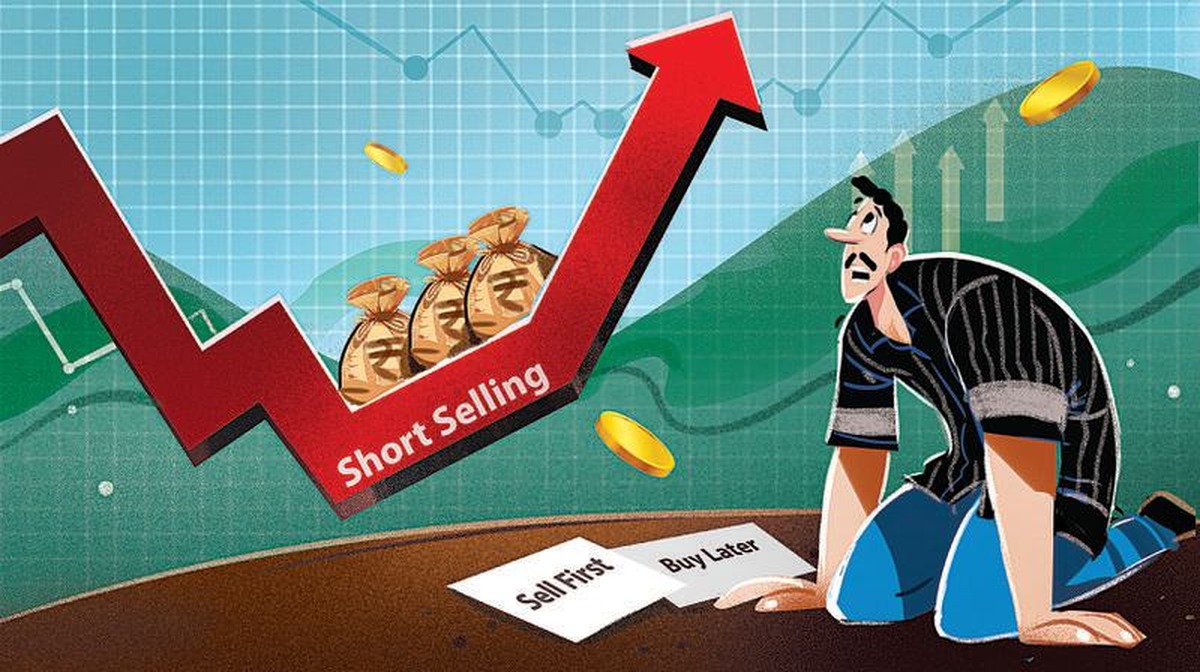
India’s economy may be growing faster than most major economies, but its stock market is telling a far less reassuring story. The disconnect between economic growth and investor confidence has become too large to ignore.
The numbers, at first glance, appear impressive. India’s economy grew 7.8 per cent in the April-June quarter, while profits of the country’s 50 largest listed companies rose about 18 per cent. Yet the Sensex has suffered eight consecutive weeks of losses, its longest losing streak since the Covid-19 crisis of 2020.
Since August 5, the index has shed nearly 6,700 points, or about 8.5 per cent. By a rough estimate, between ?30 lakh crore and ?40 lakh crore in market capitalisation has disappeared. These are not merely numbers on a trading screen. Behind them are millions of households whose savings are increasingly tied to the financial markets.
A salaried employee in Kanpur, a nurse in Kochi or a young professional in Guwahati who puts a few thousand rupees into a monthly SIP does not experience a market crash as an abstract correction. The erosion happens quietly, month after month, as the value of accumulated savings declines.
The obvious question is: why has India performed so poorly when several other major markets have held up remarkably well?
The answer cannot be found in global conditions alone. Oil prices, geopolitical tensions, high US bond yields and monetary tightening have affected all emerging markets. Yet South Korea, Japan and the United States have continued to attract substantial investor interest.
India, by contrast, has been left behind.
The first vulnerability is energy. India remains heavily dependent on imported crude. Any sustained increase in global oil prices immediately widens the import bill, puts pressure on the rupee and raises inflationary risks. The consequences spread quickly across transport, manufacturing and consumer demand.
The second vulnerability is technological.

The global investment story is increasingly being shaped by artificial intelligence, semiconductors, data centres and the enormous infrastructure required to power them. Countries such as South Korea have benefited directly from the boom in memory chips and semiconductor exports. Japan, too, is positioning itself to capture new technology-led investment.
India has strengths of its own, particularly in software and services. But the rise of AI also threatens to disrupt many of the very services on which India’s technology industry has traditionally depended. Investors are therefore asking a difficult question: where exactly is India’s place in the next phase of the global technology cycle?
That uncertainty matters.
Stock markets do not merely price today’s economic performance. They price expectations about tomorrow. Strong GDP growth can therefore coexist with a falling stock market if investors believe that growth will slow, corporate earnings will weaken or external risks will intensify.
This is where the recent market decline becomes a warning rather than merely a correction. Foreign investors have been pulling money out of Indian equities, but domestic investors have provided an important cushion. In the final week of September, foreign investors reportedly sold around ?11,500 crore worth of equities, while domestic institutional investors bought about ?16,400 crore.
That resilience is one of India’s greatest strengths. A deepening domestic savings pool means the Indian market is less dependent than before on foreign capital. But domestic investors cannot permanently substitute for a loss of confidence among global investors.
India therefore needs to address the underlying concerns rather than attempt to engineer a short-term market recovery.
The first priority must be domestic demand. A large consumer market remains India’s biggest structural advantage. But that advantage works only when households have the income and confidence to spend. Stronger employment, rising household incomes and relief from persistent cost pressures are therefore not merely social objectives; they are essential to sustaining economic growth and corporate earnings.
The second priority is investment in the industries that will define the next decade. Infrastructure spending must increasingly be complemented by investment in renewable energy, energy storage, electric mobility, semiconductors, electronics and data centres.
Reducing dependence on imported oil would make India less vulnerable to geopolitical shocks. Building domestic capacity in high-technology manufacturing would give international investors a reason to put money into India beyond the traditional services story.
The third requirement is perhaps the most difficult: policy stability. Capital dislikes surprises. Sudden changes in taxation, regulation or trade policy can quickly increase the risk premium attached to an economy. Investors making decisions over five or ten years need predictability, not policy uncertainty.
Stable taxation, faster trade agreements, clearer industrial policy and consistent economic reforms would do more for investor confidence than any short-term attempt to prop up stock prices. India has repeatedly presented itself as the world’s next great growth market. That promise cannot rest on GDP statistics alone.
A strong economy and a strong stock market are not synonymous. The first can be measured through production, investment and consumption. The second ultimately depends on expectations-and expectations depend on trust.
The recent market sell-off should therefore not be dismissed as the inevitable consequence of global turbulence. Nor should it be treated as proof that India’s economic story has collapsed.
It is something more useful: a warning.
India’s economy may still be among the world’s fastest-growing. But investors are asking whether that growth is sufficiently broad, resilient and future-ready to withstand an era of expensive energy, geopolitical instability and technological disruption.
The government cannot control oil prices or Wall Street sentiment. It can, however, control the quality and predictability of India’s economic policy. The objective should not be to make the market rise artificially. It should be to make India an economy in which investors naturally want to stay.
The market has delivered its verdict for now. The task before India is to give investors a reason to change it.