

The campaign should invite the country to reflect on what the Tricolour actually demands of its citizens
 KRC TIMES Desk
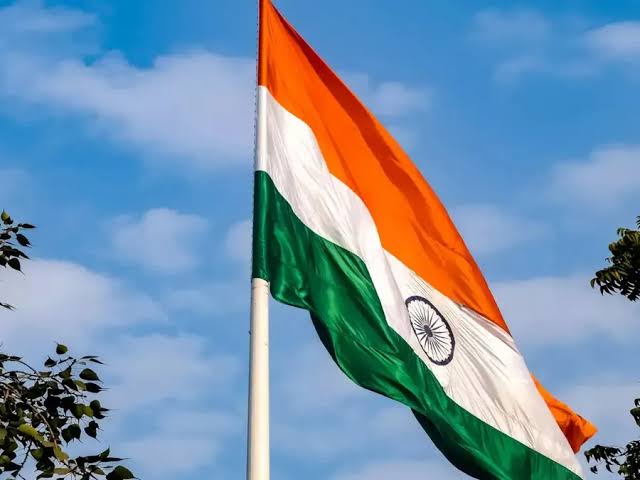
The Tricolour will once again rise across India as the nation observes Har Ghar Tiranga from August 9 to 17, 2026, alongside the commemoration of 150 years of Vande Mataram. Tiranga Yatras, exhibitions, concerts and a range of public activities will mark the occasion.
Such celebrations are important. A nation needs symbols that bring its people together, and few symbols possess the emotional power of the Indian Tricolour. But the deeper significance of Har Ghar Tiranga lies beyond the act of putting a flag on a rooftop, balcony or vehicle.
The campaign should invite the country to reflect on what the Tricolour actually demands of its citizens. A flag can unite a nation visually. Only shared values can unite it meaningfully.
The Tricolour is India’s most recognisable symbol of collective identity. It rises above differences of language, religion, region, culture and tradition and reminds citizens that diversity does not have to be a source of division. India’s strength has always rested on its ability to accommodate extraordinary differences within a common national framework.
That idea deserves renewed emphasis at a time when public life can often appear sharply polarised. The phrase “Har Ghar Tiranga” should therefore mean more than a flag in every household. It should mean the values of the republic finding a place in every household.
The national flag carries a powerful historical memory. It recalls a freedom struggle in which ordinary men and women, from different regions and communities, contributed to the making of an independent India. The freedom enjoyed today was not inherited without cost. It was secured through courage, sacrifice, perseverance and an unwavering belief in India’s ability to govern itself.

Every time the Tricolour is raised, that history is brought back into public consciousness. But remembering the freedom struggle cannot be reduced to remembering its heroes alone. It also requires understanding the ideals for which generations of Indians struggled.
The Tricolour’s three colours and the Ashoka Chakra embody a larger national message. Saffron evokes courage and sacrifice; white represents peace and truth; and green signifies growth, prosperity and the richness of the land. At the centre, the Ashoka Chakra, with its 24 spokes, represents movement, righteousness and the continuous journey of progress.
Together, these elements represent an India that must be courageous without becoming intolerant, peaceful without becoming passive, prosperous without becoming exclusionary and progressive without forgetting its responsibilities.
This is where Har Ghar Tiranga acquires its real significance. The campaign can become an opportunity to remind citizens that patriotism is not simply an emotion. It is also a responsibility. A citizen who proudly hoists the national flag but disregards public property, refuses to follow basic civic norms, discriminates against fellow citizens or spreads hatred cannot claim to have fully understood what the flag represents.
National pride must be accompanied by civic responsibility.
The Tricolour should therefore inspire citizens to ask difficult but necessary questions. Are we respecting the rights of fellow citizens? Are we protecting public spaces? Are we treating people with dignity? Are we obeying the law? Are we contributing to the welfare of our communities? Are we leaving behind a better country for the next generation?
These are also acts of patriotism.
India’s unity cannot be sustained by slogans alone. It requires everyday behaviour that reinforces trust and fraternity. The Tricolour is particularly significant because it belongs to everyone. No political party, organisation, community or ideology owns it. It is the national flag of every Indian.
That distinction is important.
National symbols should unite rather than become instruments of political or social competition. The strength of the Tricolour lies precisely in its ability to rise above partisan identities.
Har Ghar Tiranga should therefore be a people’s movement rather than merely another government programme. Its success should not be measured only by the number of flags displayed, photographs uploaded or events organised. Its real success should be measured by whether the campaign encourages citizens-particularly young Indians-to think more deeply about citizenship.
For India’s younger generation, patriotism must be made relevant to contemporary realities.
The freedom fighters of the past fought colonialism. Today’s generation faces a different set of challenges: unemployment, inequality, environmental degradation, misinformation, technological disruption, social polarisation and the pressures of an increasingly competitive global order.
Serving the nation today therefore requires different forms of courage.
It means acquiring knowledge and skills. It means respecting democratic institutions. It means rejecting misinformation. It means treating people of different backgrounds with dignity. It means protecting the environment. It means paying taxes honestly, obeying laws and performing one’s duties even when nobody is watching.
The freedom secured by previous generations places an obligation on the present generation to preserve it. This is why the commemoration of 150 years of Vande Mataram alongside Har Ghar Tiranga can provide an additional opportunity for reflection. Songs, symbols and patriotic literature acquire meaning when they connect citizens with the history and aspirations of the nation rather than becoming empty rituals.
The objective should not be merely to create an atmosphere of patriotic celebration for a few days. It should be to cultivate a durable sense of belonging. India is too diverse to be held together by uniformity. Its unity must come from a deeper understanding that different identities can coexist within one constitutional and national framework.
The Tricolour represents precisely that possibility.
When it flies over a village home in Assam, a school in Nagaland, a shop in Delhi, a government office in Kerala or a house in Kashmir, the geographical and cultural differences remain. What changes is the recognition of a shared national identity.

That is the quiet power of a national flag.
At a time when social media can amplify division within minutes, symbols of shared belonging acquire even greater importance. But symbols work only when the values behind them are respected. The real test of Har Ghar Tiranga will therefore begin after August 17.
Will the spirit of unity survive after the flags are lowered? Will citizens continue to respect one another despite differences of opinion? Will young people understand that democracy requires both rights and responsibilities? Will national pride translate into greater civic discipline?
Will we remember that sovereignty and national strength ultimately depend upon social cohesion? These are the questions that should accompany the raising of the Tricolour.
A strong India is not merely a country with a powerful economy, modern infrastructure or advanced technology. It is a country whose citizens possess confidence in one another and in the institutions of the republic. National unity is not the absence of disagreement. It is the ability to disagree without destroying the bonds that hold society together.
The Tricolour should remind us of this.
It should remind us that India’s diversity is not an obstacle to national unity but one of its defining characteristics. Languages, cultures, traditions and faiths may differ, but the constitutional idea of India provides the common ground on which they can coexist.
Har Ghar Tiranga can therefore become more than a visual spectacle. It can become an annual civic reminder-a moment when every citizen pauses to remember the sacrifices that created independent India and considers the responsibilities required to preserve it.
The flag demands respect, but it also demands reflection.
When we raise the Tricolour, we honour the freedom fighters who sacrificed their present for the future. But we also accept responsibility for ensuring that the future they imagined remains worthy of their sacrifice.
That responsibility belongs to every Indian.
As millions of Tricolours rise across the country, the message should be simple yet profound: remember the sacrifices of the past, protect the unity of the present and build confidently for the future. Har Ghar Tiranga should not merely put the national flag on every roof. It should put the idea of India in every heart-and the responsibility of citizenship in every home.
The Tricolour is our identity, our pride and our shared promise.
Hamara Tiranga. Hamari Pehchaan.