


India cannot afford to become excessively reliant on Chinese supplies in sectors critical to national security and industrial resilience
 KRC TIMES Desk
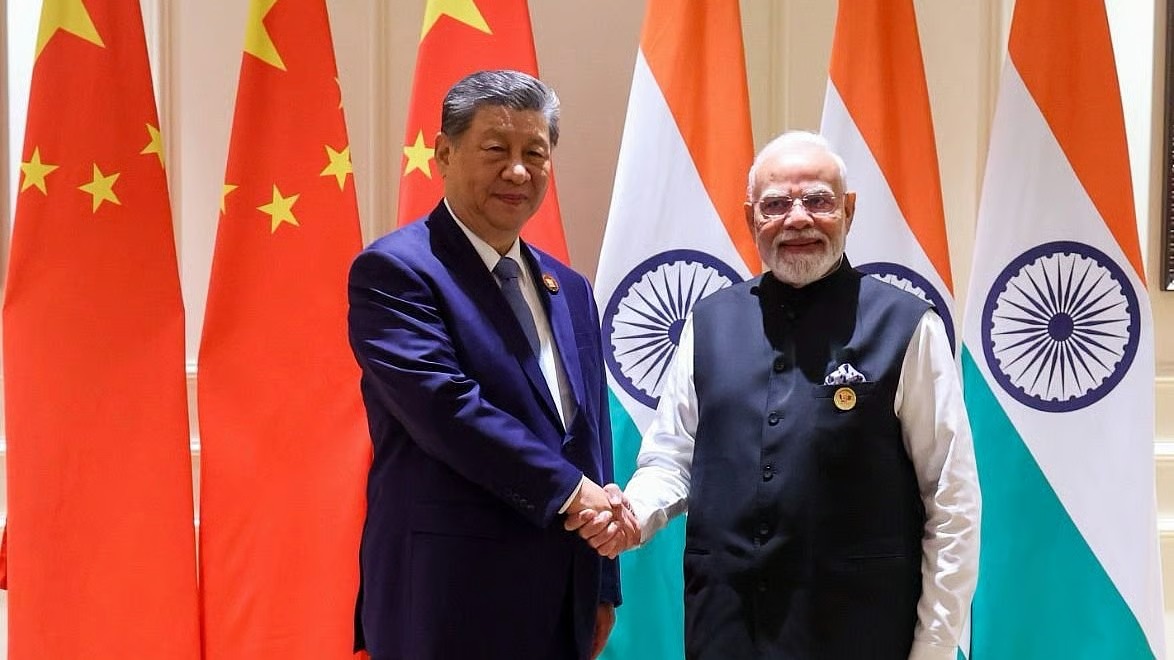
Geography has imposed on India and China a relationship that neither country can escape. The two Asian powers share a long and contested Himalayan frontier, command enormous economic weight and influence the security and prosperity of much of the region. Their relationship, therefore, cannot be reduced to either strategic rivalry or economic partnership. It is a difficult combination of both-and managing that contradiction will remain one of India’s most consequential foreign-policy challenges.
The case for engagement is compelling. China is a manufacturing and technological giant with a commanding position in critical supply chains, including rare earths and advanced industrial components. India, meanwhile, possesses one of the world’s largest consumer markets, a growing manufacturing base and a young workforce. Their economic relationship, despite its substantial imbalance in China’s favour, demonstrates that interdependence already exists. The sensible objective for New Delhi is not to dismantle that relationship but to make it more balanced, resilient and beneficial to Indian industry.
That requires a distinction between economic engagement and strategic dependence. India cannot afford to become excessively reliant on Chinese supplies in sectors critical to national security and industrial resilience. At the same time, completely shutting out Chinese trade and investment would impose costs on Indian consumers and manufacturers. Diversification of supply chains, greater domestic manufacturing and carefully negotiated market access offer a more sustainable response than indiscriminate economic disengagement.
The changing international environment makes this balance even more important. Trade tensions, tariff disputes, wars and growing fragmentation of the global economy are forcing countries to reduce excessive dependence on any single power. India’s engagement with BRICS and other platforms reflects its preference for a multipolar international order. China has similar interests in reducing strategic vulnerability. Yet the credibility of such cooperation will remain limited if India and China cannot manage their own bilateral tensions.

There are signs that both sides understand the need for stabilisation. The resumption of direct flights, the return of the Kailash Mansarovar pilgrimage and the reopening of some channels of border trade point towards a cautious restoration of normal ties. High-level diplomatic engagement, including talks between National Security Adviser Ajit Doval and Chinese Foreign Minister Wang Yi and the meeting between Prime Minister Narendra Modi and President Xi Jinping, has also created space for sustained dialogue.
These developments are welcome, but they should not be confused with a settlement.
The boundary dispute remains the central obstacle to genuine trust. Large stretches of the India-China border remain contested, and developments along the Line of Actual Control can rapidly undo diplomatic progress. For India, the lesson of the 2020 crisis remains particularly important: economic interdependence cannot substitute for strategic preparedness, military vigilance or clear political signalling.
This is why cooperation with China must be pursued from a position of confidence rather than complacency. India needs strong border infrastructure, credible deterrence and diversified supply chains even as it seeks dialogue. Engagement is not a concession; nor is vigilance an act of hostility. The two can and must coexist.
China, for its part, has an interest in demonstrating that stabilising relations with India is more valuable than tactical pressure along the frontier. A relationship based on mutual sensitivity cannot work if one side repeatedly believes that the other is attempting to alter the status quo through pressure. Durable cooperation requires predictability, respect for existing understandings and a genuine effort to reduce the sources of confrontation.
There is also a larger Asian dimension. India and China are not merely neighbouring states; their decisions affect South Asia, the Indian Ocean, the Himalayan region and the wider developing world. Both countries have repeatedly spoken of a more representative and multipolar global order. Such an order will have little credibility if Asia’s two largest powers remain trapped in a cycle of distrust.
The objective, therefore, should not be an artificial friendship. Nor should India pursue confrontation for its own sake. The realistic goal is a stable competition with sufficient cooperation to prevent rivalry from becoming conflict.
That will require patience. Border negotiations may take years. Trade imbalances will not disappear overnight. Strategic mistrust cannot be erased by a few high-level meetings. But communication, restored economic links, people-to-people exchanges and regular diplomatic engagement can create habits of restraint.
India should neither romanticise cooperation with China nor fear it. It should approach Beijing with clarity about its interests, confidence in its capabilities and an equally clear understanding of the costs of prolonged confrontation.
For two nuclear-armed neighbours sharing a contested frontier, dialogue is not a sign of weakness. It is an instrument of national interest. The challenge for both governments is to ensure that competition remains manageable and that cooperation, where interests converge, is not sacrificed to suspicion. In the India-China relationship, peace need not mean agreement-and cooperation need not mean trust without verification. What matters is building enough stability to keep disagreement from becoming conflict.