


New Delhi and Kathmandu have opened a promising chapter in bilateral relations, but the real measure of this diplomatic engagement will lie in resolving longstanding disputes, accelerating connectivity and building trust on equal terms
 KRC TIMES Desk
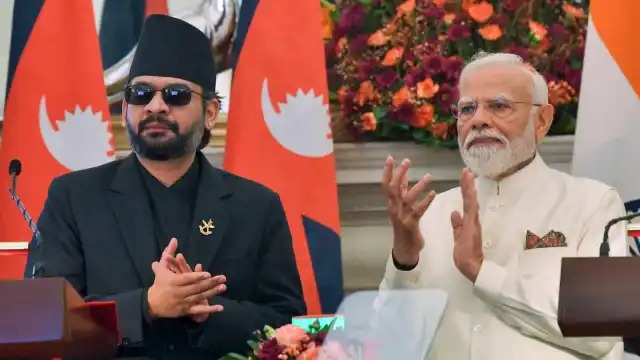
The first bilateral foreign visit of Nepal’s newly elected Prime Minister Balendra Shah to India carries significance beyond diplomatic protocol. At a time when Kathmandu could have chosen to signal a shift in its foreign policy priorities, Shah’s decision to make New Delhi his first destination reflects an understanding that Nepal’s relationship with India remains central to its economic future, regional stability and strategic interests. The outcome of his talks with Prime Minister Narendra Modi offers an opportunity to redefine a relationship that has experienced both deep cooperation and recurring mistrust.
The visit has produced an ambitious package of financial assistance, infrastructure commitments and sectoral agreements. India’s development assistance of NPR 24,000 crore, including grants for earthquake reconstruction and infrastructure development and a line of credit for energy projects, signals a substantial commitment. Eight agreements covering health, forensic sciences, sustainable urban development and fisheries, alongside the vision document titled ‘Viksit Bharat and Samunnat Nepal’, outline a broad framework for cooperation in trade, energy, water resources, climate resilience, technology and public services.
Yet the significance of this engagement should not be measured merely by the financial scale of the announcements. India and Nepal have signed agreements and announced ambitious projects in the past. Their relationship has frequently suffered not from a shortage of diplomatic declarations but from delays in implementation, political disagreements and an inability to address sensitive issues with sufficient trust and transparency. The present engagement must therefore be judged by what it delivers on the ground.
Connectivity has emerged as one of the most promising areas of cooperation. The launch of the Saryu-Kamala Express between Ayodhya and Janakpur carries religious and cultural symbolism, while also offering opportunities to strengthen cross-border tourism and people-to-people exchanges. Plans to develop Buddhist and Shiv-Shakti pilgrimage circuits further recognise the shared cultural and historical connections between the two countries.
The proposed expansion of Nepal’s access to Indian ports, including Deendayal Port at Kandla and eventually Paradip, is equally important. For a landlocked country, reliable access to international trade routes is essential to economic growth. New integrated check posts, the Dharchula-Darchula cross-border bridge, the second phase of the Motihari-Amlekhgunj petroleum pipeline and the proposed terminal at Jhapa could strengthen commercial exchanges and reduce logistical constraints. These projects, however, will matter only when they become operational and deliver measurable benefits to businesses and ordinary citizens.
Energy cooperation represents an even larger opportunity. Nepal’s immense hydropower potential and India’s growing demand for clean electricity create a natural basis for a mutually beneficial partnership. Cross-border power trade can generate revenue for Nepal while supporting India’s energy transition. But cooperation in this sector must move beyond memoranda and project announcements. Investment certainty, transmission infrastructure, transparent pricing and long-term power purchase arrangements are essential if the Himalayan country’s energy resources are to become a genuine engine of development.

Water management must receive comparable attention. The rivers originating in the Himalayas sustain millions of people across Nepal and northern India, but they also bring recurring floods, erosion and ecological challenges. Climate change is making these vulnerabilities increasingly difficult to manage. Neither country can effectively address these problems in isolation. Joint planning for flood control, river management, irrigation and hydropower development must become a permanent feature of bilateral cooperation. Equitable sharing of benefits and responsibilities will be crucial to sustaining public confidence.
However, economic opportunities cannot permanently overshadow the political sensitivities that continue to complicate India-Nepal relations. The boundary disputes involving Kalapani, Limpiyadhura and Lipulekh, as well as the Susta area, remain unresolved. These disagreements carry considerable political and emotional weight in Nepal, where concerns over sovereignty and territorial integrity are deeply rooted. The memory of the 2015 border blockade also continues to influence public perceptions of India.
The decision by the two Prime Ministers to direct their foreign secretaries to pursue discussions on outstanding boundary issues is therefore a welcome step. It acknowledges that disagreements exist and that they cannot be wished away through expressions of friendship. Territorial disputes require patience, historical understanding and sustained diplomatic engagement. Neither side benefits from allowing them to become instruments of domestic political mobilisation.
India, for its part, must recognise that its relationship with Nepal cannot be sustained through geographical proximity or historical ties alone. Nepal is a sovereign country with its own political aspirations, national priorities and foreign policy choices. Its desire to diversify economic and diplomatic partnerships should not automatically be interpreted as a challenge to Indian interests. A relationship based on mutual respect will be far more durable than one shaped by expectations of unquestioned alignment.
China’s growing engagement with Nepal adds another dimension to the relationship. Through infrastructure investment and its Belt and Road Initiative, Beijing has sought to expand its economic and strategic presence in the Himalayan region. Kathmandu has legitimate reasons to explore multiple sources of investment and development assistance. At the same time, India’s concerns about strategic infrastructure near its sensitive northern frontier cannot simply be dismissed. The challenge for New Delhi is to remain Nepal’s preferred development partner through reliable delivery, competitive cooperation and respect for Kathmandu’s independence, rather than through geopolitical pressure.
The geographical realities of the two countries make cooperation indispensable. Nepal shares an open border with India and is connected to it through trade, employment, family relationships, cultural traditions and religious ties. Five Indian states border Nepal, making developments across the frontier directly relevant to India’s internal security and economic interests. These connections are not merely diplomatic assets; they are the foundations of a relationship that affects millions of people.

For India, a stable, prosperous and politically confident Nepal is a strategic advantage. For Nepal, constructive relations with India are essential for trade, transit, energy exports and access to wider markets. This interdependence should encourage both governments to approach disagreements with maturity rather than allowing temporary political tensions to undermine long-term interests.
The responsibility now rests with both governments to convert the diplomatic momentum into tangible outcomes. Infrastructure projects must meet deadlines, energy agreements must generate actual electricity trade, and transit arrangements must improve Nepal’s access to international markets. Equally important, regular political consultations must ensure that sensitive questions are addressed before they escalate into larger diplomatic crises.
Prime Minister Shah’s invitation to Modi to visit Nepal offers an opportunity to maintain the momentum. But the success of this strategic reset will ultimately depend on whether both countries can move beyond symbolism and establish a more predictable, transparent and balanced partnership.
India and Nepal do not need to agree on every issue to remain close partners. They need the political maturity to manage disagreements without sacrificing cooperation. The relationship must evolve from one sustained largely by geography and historical connections into one strengthened by economic interdependence, mutual respect and institutional trust.
A new diplomatic chapter may have opened. Its durability will depend not on the warmth of summit statements or the size of financial commitments, but on the willingness of New Delhi and Kathmandu to deliver on promises and respect each other’s legitimate concerns. That is the real test of an India-Nepal strategic reset.