


The court also found that genocidal intent was the only reasonable inference from the evidence before it
 KRC TIMES Desk
The International Court of Justice has delivered a historic judgment holding Myanmar responsible for genocide against the Rohingya. However, translating this legal victory into justice, accountability and the safe return of displaced people remains a formidable challenge.
The International Court of Justice (ICJ) has delivered a landmark judgment in the long struggle for justice for the Rohingya, bringing renewed international attention to one of the gravest humanitarian crises of recent times. The November 19 verdict, holding Myanmar responsible for genocide against the Rohingya community, marks a defining moment in international law. Yet, while the ruling establishes legal accountability, the more difficult question is whether it can bring meaningful changes to the lives of hundreds of thousands of victims still struggling for survival.
For nearly a decade, Myanmar’s military leadership maintained that its operations in northern Rakhine during 2016-17 were legitimate counter-insurgency measures. The international court’s findings have now dealt a serious blow to that defence. By a majority of nine to six, the ICJ concluded that Myanmar committed genocide against the Rohingya, citing mass killings, widespread sexual violence, extreme violence against children, measures intended to prevent births and the systematic destruction of villages.
The court also found that genocidal intent was the only reasonable inference from the evidence before it. This finding is particularly significant because it moves the Rohingya tragedy beyond competing political narratives and establishes state responsibility through a judicial process.

The judgment requires Myanmar to prevent further violations, prosecute those responsible, ensure that such crimes are not repeated and provide appropriate reparation. These obligations include creating conditions for the safe, voluntary and dignified return of Rohingya refugees, restoring property, locating missing persons and rehabilitating survivors. Although the question of compensation remains to be determined, the legal significance of the ruling is already substantial.
However, a judicial verdict does not automatically translate into justice on the ground. The ICJ does not possess an independent enforcement mechanism capable of compelling a military regime to implement its decisions. Its effectiveness will depend considerably on international diplomatic pressure, political engagement and the willingness of governments to translate legal obligations into concrete action.
Myanmar’s present political and security situation makes this challenge even more complicated. Min Aung Hlaing, who commanded the military operations in 2017, now occupies the presidency after a tightly controlled electoral process. Meanwhile, Rakhine State has undergone a significant shift in territorial control, with the Arakan Army controlling large parts of the region. Reports of forced labour, detention and forced recruitment involving Rohingya under both military and non-state authorities raise further concerns about the community’s security.
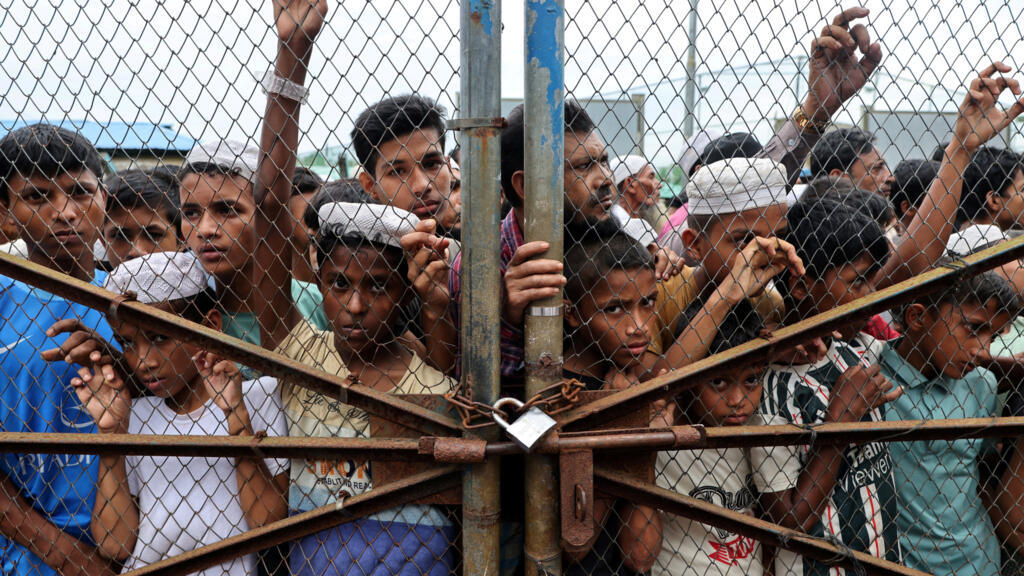
The humanitarian consequences remain devastating. Around 520,000 Rohingya are estimated to remain inside Myanmar, many living under severe restrictions, while nearly 1.2 million are sheltering in Bangladesh’s Cox’s Bazar refugee camps. Funding shortages and reductions in humanitarian assistance have added to the difficulties faced by displaced families. For a population that has endured years of persecution, displacement and statelessness, the prospect of returning home remains distant.
The ICJ verdict, nevertheless, has the potential to reshape the international response. It strengthens the legal basis for demanding accountability and makes it more difficult for Myanmar’s authorities to dismiss allegations of genocide as politically motivated accusations. It also places greater responsibility on countries maintaining diplomatic and economic relations with Naypyidaw to consider the consequences of their engagement.
For India, the judgment presents a particularly delicate diplomatic challenge. New Delhi has strategic and economic interests in Myanmar, especially through the Kaladan Multi-Modal Transit Transport Project, which connects India’s northeastern region with Myanmar’s Rakhine coast through the Sittwe port. Stability in the region is essential for India’s connectivity ambitions and its wider engagement with Southeast Asia.

At the same time, India is a party to the Genocide Convention and has a responsibility to uphold the broader principles of international law. Approximately 40,000 Rohingya are believed to be living in India, although their legal status and circumstances vary. Some have faced detention and the threat of deportation.
The ICJ judgment makes the question of their future particularly sensitive. Returning Rohingya refugees to a country that the court has held responsible for genocide against their community raises serious concerns about their safety and the principle of non-refoulement. India’s approach will therefore be closely examined, both domestically and internationally.
New Delhi does not necessarily have to choose between strategic interests and humanitarian considerations. It can use its diplomatic channels to encourage Myanmar’s compliance with the court’s judgment, engage relevant authorities and influential actors in Rakhine to secure protection for civilians, and work with Bangladesh and international organisations to strengthen humanitarian assistance for refugees.
Bangladesh, which has carried a disproportionate share of the humanitarian burden, also needs sustained international support. The refugee crisis cannot be treated as a temporary emergency indefinitely. Food security, healthcare, education and protection from trafficking and exploitation must remain central to international assistance.
Ultimately, the ICJ verdict is a significant milestone, but it is not the end of the Rohingya struggle. Legal recognition of genocide is an essential step towards justice; accountability, rehabilitation and the restoration of basic rights must follow.
The credibility of the international community will depend not simply on welcoming the judgment but on ensuring that its principles are respected. If the verdict remains confined to court records and diplomatic statements, the Rohingya will continue to pay the price of international inaction. The real test of this historic ruling will be whether it can help create conditions in which a displaced people can return home safely, recover their dignity and live without fear of persecution.