

Why Jorhat and Silchar Matter in Assam’s Digital Bet
 KRC TIMES Assam Bureau

For decades, industrial and technological development in Assam followed a familiar, lopsided script: major investments arrived in Guwahati, while Upper Assam and the Barak Valley waited patiently for the spillover. This week’s Memorandum of Understanding between the Assam government and Bharti Airtel to establish advanced data centres in Jorhat and Silchar signals a deliberate break from that pattern.
Paired with an ongoing 15 MW facility at Guwahati’s Bongora IT Park, the newly inked projects bring Airtel’s broader commitment in the state to roughly Rs.1,200 crore across three distinct geographical zones, delivering a combined capacity of 40 megawatts by 2028. Under the first phase, Silchar is slated to receive a 15 MW facility across roughly five acres with an initial outlay of Rs.255 crore, while Jorhat will host a 10 MW centre over four acres backed by Rs.200 crore.
While the projected 164 direct jobs across both sites may appear modest in terms of raw headcount, measuring data centres solely by direct employment misses their transformative regional value.
For the Barak Valley, long constrained by geographic bottlenecks and distance from the Brahmaputra Valley’s administrative core, a 15 MW tier-grade data centre in Silchar is a watershed moment. As the principal commercial hub of southern Assam—and a vital transit gateway connecting Mizoram, Tripura, and parts of Manipur—Silchar’s emergence as a high-capacity data node dramatically reduces digital latency across the southern Northeast.
Local banks, educational institutions, healthcare networks, and emerging digital enterprises in the Barak Valley will no longer have to route every byte of cloud traffic hundreds of kilometers away to Guwahati or Kolkata.

Simultaneously, Upper Assam stands to gain an overdue technological anchor in Jorhat. Historically defined by its tea estates, oilfields, and legacy research institutions, Upper Assam has watched younger generations migrate outward in search of white-collar tech careers.
Placing a 10 MW data centre in Jorhat injects modern digital infrastructure directly into the heart of the region. It provides the compute backbone needed to modernize traditional industries—from precision agriculture in tea gardens to digital logistics in the energy sector—while creating a localized ecosystem for engineering maintenance, cybersecurity, and IT services.
More importantly, these regional server farms do not exist in a vacuum. When viewed alongside the flagship semiconductor assembly and testing facility taking shape in Jagiroad—which will itself require dedicated data infrastructure—a decentralized industrial map begins to come into focus. Assam is attempting to leapfrog traditional manufacturing bottlenecks by anchoring all three of its primary sub-regions—Lower Assam, Upper Assam, and the Barak Valley—into India’s digital and hardware supply chains.
Of course, signing an MoU is only the starting gun. Data centres are notoriously power-hungry and require uninterrupted, high-grade electricity alongside resilient fiber-optic backhaul—particularly in regions like the Barak Valley, where monsoon weather and hilly terrain have historically tested physical connectivity.
Turning Silchar and Jorhat into genuine regional tech nodes will demand seamless execution from state utilities, timely infrastructure clearances, and targeted technical skilling in local engineering colleges so that the downstream opportunities stay with local youth.
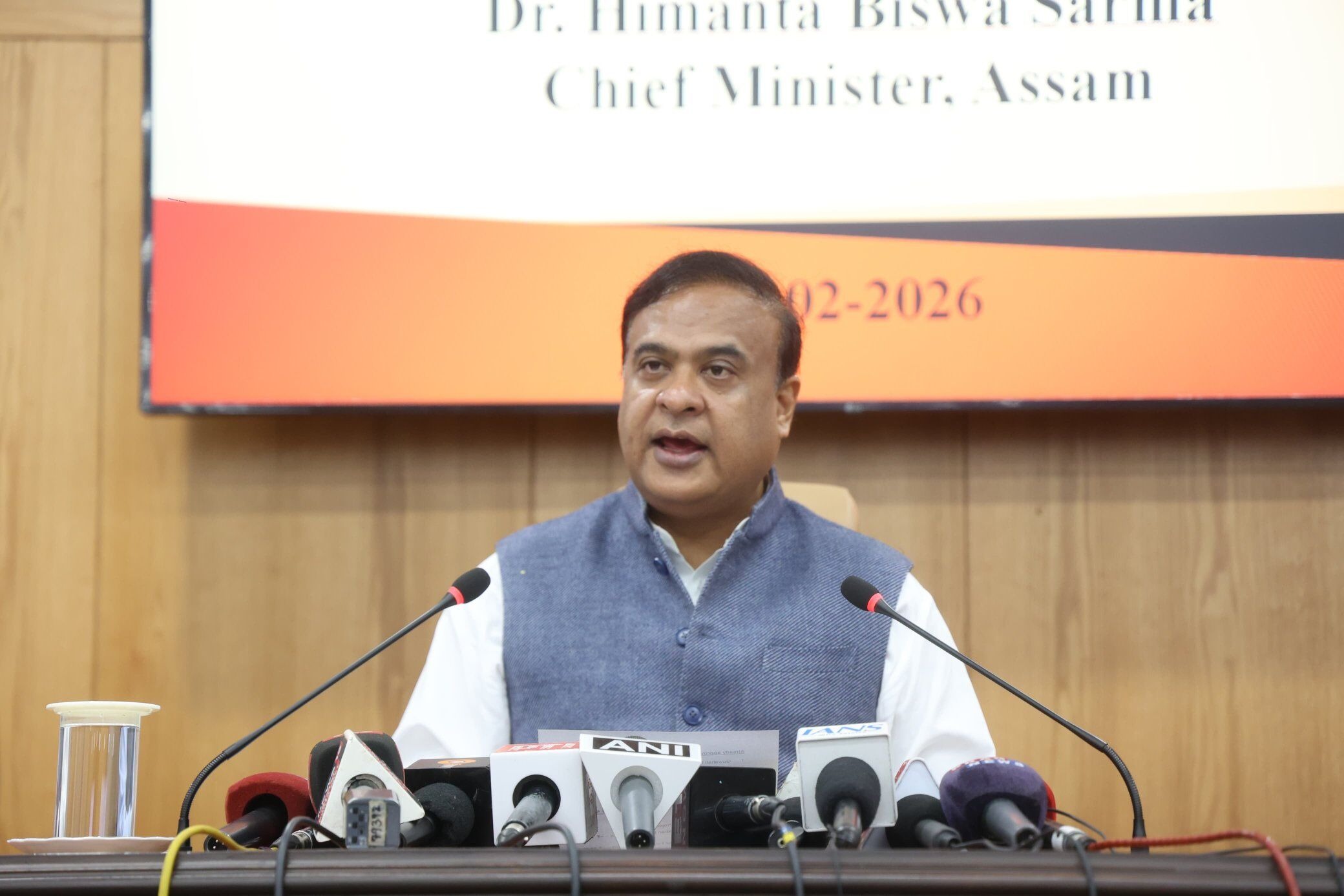
As Chief Minister Himanta Biswa Sarma pointedly recalled during the signing, Airtel’s early entry into Assam decades ago was marred by insurgency and security crises. Today, the telecom giant is committing hundreds of crores to build high-security digital vaults not just in the state capital, but in Silchar and Jorhat.
If Assam can match this private-sector confidence with reliable power and administrative speed across both valleys, its digital transformation will finally be one that the entire state shares.