

A Journey of Engineering Excellence, Professional Integrity and Lifelong Learning
 KRC TIMES Desk
Dipak Chakravarty
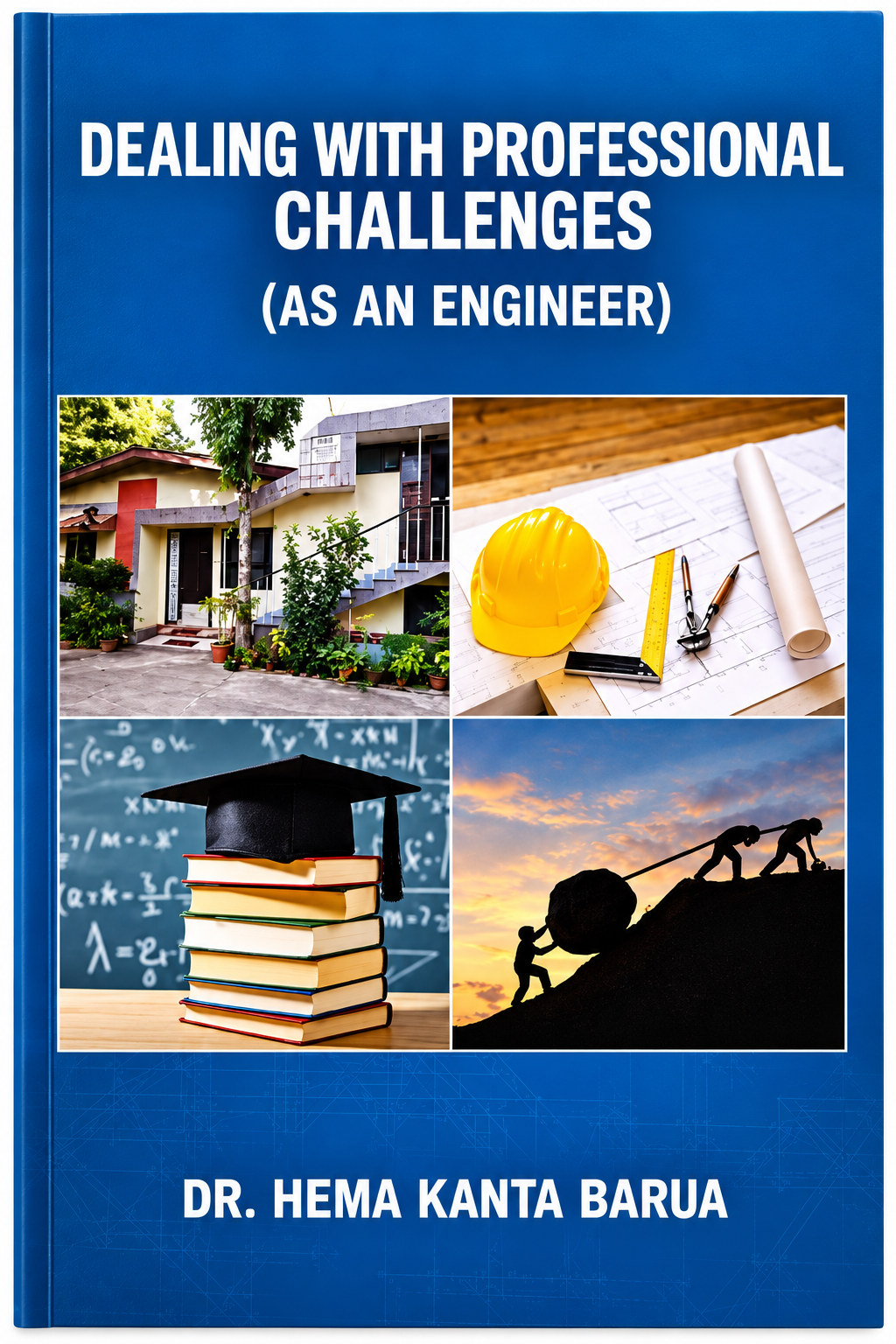
Dr. Hema Kanta Barua’s third book, Dealing with Professional Challenges as an Engineer, is an absorbing and insightful account of a distinguished professional journey, enriched by decades of practical experience, academic excellence and an unwavering commitment to professional ethics. Written with remarkable clarity and sincerity, the book goes beyond the conventional boundaries of engineering literature to offer valuable lessons in professional responsibility, perseverance, leadership and lifelong learning.
As a technocrat myself, I read the book with immense interest and found it difficult to put down. Dr. Barua has presented his experiences in such an engaging and lucid manner that the reader is drawn into the challenges, decisions and achievements that have shaped his professional life. His observations are not merely recollections of an accomplished engineer but constitute a valuable body of knowledge for practising professionals, aspiring engineers and even readers without a technical background.
One of the most compelling aspects of the book is its emphasis on professional ethics. At a time when ethical considerations are increasingly being compromised across different spheres of professional activity, Dr. Barua’s experiences offer a timely reminder that technical competence must always be accompanied by integrity, accountability and a strong sense of responsibility. These lessons are particularly relevant to younger generations entering professions where decisions can have far-reaching consequences for society.
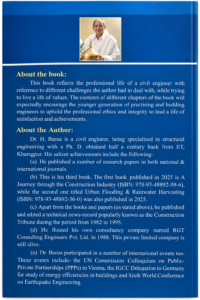
The book also provides fascinating insights into structural engineering, a discipline fundamental to the safety, reliability and sustainability of the built environment. Drawing upon his extensive teaching and professional experience, Dr. Barua explains several critical aspects of structural engineering with admirable precision and accessibility. His academic journey, culminating in doctoral research on a challenging engineering subject at an internationally reputed institution, reflects his intellectual dedication and commitment to advancing technical knowledge.
Equally inspiring is the account of his professional career, beginning with his association with tea research and extending through the various responsibilities he discharged until his superannuation. The diversity of his experiences demonstrates how an engineer’s professional life is shaped not only by technical challenges but also by institutional responsibilities, human relationships, administrative decisions and the ability to adapt to changing circumstances.
Particularly noteworthy is his initiative in conceiving The Construction Tribune, which reflected his vision of creating a platform for sharing technical knowledge, practical experience and professional insights. Such initiatives demonstrate his belief that knowledge acquires greater significance when it is disseminated for the benefit of the wider professional community and future generations.
His contributions to engineering education are equally significant. Students at the University of Science and Technology Meghalaya (USTM) have had the privilege of benefiting not only from his command of technical subjects but also from the wisdom accumulated over a lifetime of professional engagement. The combination of academic knowledge and practical experience that he brings to teaching is an invaluable resource for young engineers.
Having followed an academic and professional path with several similarities to that of Dr. Barua, I found many of his observations personally relatable. I also recall with great appreciation his address as the guest speaker at Numaligarh on the occasion of Engineers’ Day, when I was serving as Director (Technical) at Numaligarh Refinery Limited. His deliberations on that occasion reflected the same depth of knowledge, clarity of thought and commitment to the engineering profession that are evident throughout this book.
With three published books to his credit, Dr. Barua has made a substantial contribution to the documentation and dissemination of engineering knowledge and professional experience. His writings serve as a bridge between generations, preserving valuable lessons from the past while offering guidance for the challenges of the future.
Dealing with Professional Challenges as an Engineer deserves particular attention from structural engineers, construction professionals, engineering educators and students. However, its relevance extends well beyond the engineering fraternity. The book offers broader insights into how professional challenges can be approached with knowledge, sound judgement, ethical conviction and determination.
What makes this work especially valuable is its ability to combine technical substance with the human dimensions of professional life. Dr. Barua has succeeded in transforming his personal experiences into a meaningful educational resource, written in language that even a non-engineer can appreciate and enjoy.
I have personally gained much from reading this book, both in terms of structural engineering knowledge and the larger principles that should guide professional conduct. It is a work that deserves a place in the libraries of engineering institutions and in the personal collections of professionals who believe that learning must continue throughout life.
I warmly congratulate Dr. Hema Kanta Barua on this significant literary and professional contribution. I wish him continued good health and many more years of intellectual engagement, writing and service to the engineering community.
Dipak Chakravarty . Retired Managing Director, Numaligarh Refinery Limited (NRL)