


The Three Silent Threats India Cannot Ignore
 KRC TIMES Desk
Col (Dr.) Ashwani Kumar, MiD, VSM (Retd.)
Introduction.
India’s emergence as a major global power is one of the defining geopolitical developments of the twenty-first century. With a growing economy, expanding technological capabilities, a young population, and increasing international influence, India stands at the threshold of a new strategic era. Yet, as history repeatedly demonstrates, rising powers face challenges that are often less visible than conventional military threats.
For India, three such challenges demand urgent attention, China’s expanding strategic ambitions, the rapidly evolving domain of cyber and satellite warfare, and demographic changes that may have long term national security implications. While these threats differ in nature, they are interconnected and capable of influencing India’s security environment for decades to come.
The challenge before policymakers is not merely to respond to individual crises but to develop a comprehensive national security framework capable of anticipating future threats before they mature into strategic vulnerabilities.
China: The Visible Strategic Challenge.
Among all external security concerns confronting India, China remains the most significant long term challenge. The issue extends far beyond periodic military standoffs along the Line of Actual Control. Beijing’s strategy is multidimensional, combining military modernization, economic influence, technological superiority, information operations, and geopolitical outreach.
China’s infrastructure development along the Tibetan plateau has significantly enhanced its military mobility and logistics capabilities. High-speed rail networks, all weather roads, dual use airports, and advanced surveillance systems provide China with strategic advantages that cannot be ignored.

Having served extensively in the Himalayan region, including the high altitude areas of Leh-Ladakh and the Eastern Sector bordering Arunachal Pradesh, I have witnessed firsthand the harsh realities of mountain warfare. The terrain is unforgiving, logistics are challenging, and the environment itself becomes a force multiplier. In such regions, infrastructure often determines operational capability.
The lessons are clear. Future conflicts in the Himalayas will not be decided solely by troop strength. They will be influenced by surveillance systems, satellite networks, logistics corridors, communication resilience, precision weapons, and the ability to maintain sustained operations in extreme conditions. China understands this reality and has invested heavily in all these domains.
India has made substantial progress in strengthening border infrastructure and force deployment. However, strategic competition with China is likely to remain a defining feature of Asian geopolitics for the foreseeable future.
The New Battlefield: Cyber and Satellite Warfare.
The character of warfare is changing at an unprecedented pace. Future wars may not begin with tanks crossing borders or aircraft entering hostile airspace. They may commence with cyber attacks on power grids, banking systems, communication networks, transportation infrastructure, and military command systems.
Today, cyber space has emerged as the fifth dimension of warfare alongside land, sea, air, and space.
The Russia-Ukraine conflict, Middle East conflicts, and recent global cyber incidents have demonstrated how nations can suffer strategic disruption without a single conventional battle being fought.
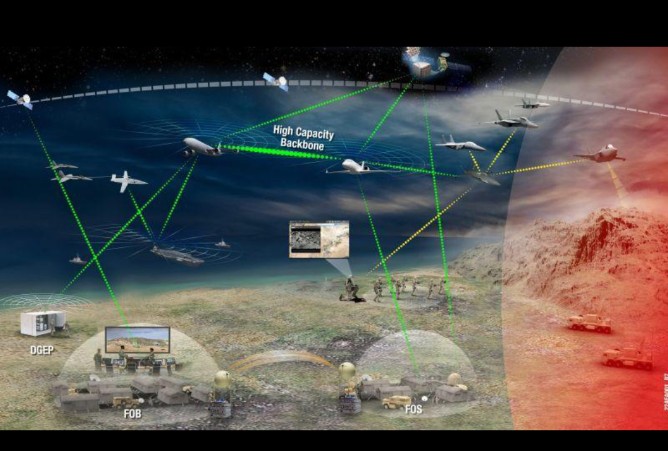
Equally important is the growing significance of satellite warfare.
Modern military operations depend heavily upon satellites for:
(i) Communication
(ii) Navigation
(iii) Intelligence gathering
(iv) Surveillance
(v) Reconnaissance
(vi) Precision targeting
(vii) Missile warning systems
As a military analyst, I believe the next major conflict between advanced nations will involve a fierce contest in space. The side that dominates information will dominate decision-making. The side that protects its satellites while degrading those of its adversary will enjoy enormous operational advantages.
China has already demonstrated anti-satellite capabilities and continues to invest heavily in military space programs. Its integration of artificial intelligence, quantum communications, cyber operations, and satellite networks reflects a comprehensive approach to future warfare.
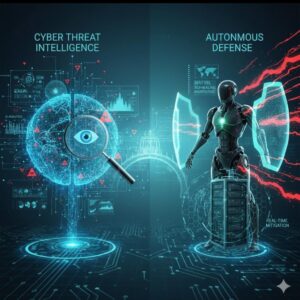
India has also made remarkable strides through indigenous satellite programs, anti-satellite capability demonstrations, and the growing role of the defence space ecosystem. However, the pace of technological evolution demands continuous investment and innovation. The future battlefield may extend thousands of kilometres above the earth. The nation that loses its eyes and ears in space risks losing the battle on the ground.
Operation Sindoor and the Future of Warfare.
Operation Sindoor offers valuable insights into the changing character of warfare in the twenty-first century. While the operation achieved its immediate military and strategic objectives, its broader significance lies in the lessons it provides for future conflicts. It demonstrated that modern warfare is no longer confined to traditional battlefields where success is measured solely by the number of troops, tanks, or artillery guns deployed. Instead, victory increasingly depends upon information dominance, intelligence integration, technological superiority, precision targeting, and rapid decision-making.
The operation highlighted the growing importance of real-time intelligence gathered through multiple sources, including human intelligence, electronic surveillance, drones, and space-based assets. The ability to detect, identify, track, and engage targets with precision reflects the transformation of warfare from platform-centric operations to network-centric warfare. Every sensor, communication node, and operational unit now forms part of an integrated battlefield ecosystem.
One of the most significant lessons emerging from Operation Sindoor is the role of satellites and advanced communication systems in enabling military operations. Modern commanders require uninterrupted access to intelligence, surveillance, reconnaissance, navigation, and secure communication networks. The side that controls information and maintains situational awareness gains a decisive advantage. This reality explains why major powers across the world are investing heavily in military satellites, anti-satellite capabilities, electronic warfare systems, and cyber commands.

The operation also underscored the increasing role of unmanned systems and precision-guided weapons. Drones, loitering munitions, artificial intelligence-enabled surveillance systems, and long-range precision strike capabilities are gradually reshaping military doctrines. Future wars are likely to witness greater integration of manned and unmanned platforms operating simultaneously across land, air, sea, cyber, and space domains.
Equally important was the information dimension of the conflict. In today’s interconnected world, military operations unfold not only on the battlefield but also across television screens, digital platforms, and social media networks. Strategic narratives, public perception, and information management have become critical elements of national power. The battle for perception often begins before the first shot is fired and may continue long after military operations have ended.
From a military analyst’s perspective, Operation Sindoor reflects the emergence of a new model of warfare where intelligence fusion, technological integration, cyber capabilities, satellite support, precision engagement, and joint operational planning work together as force multipliers. The operation demonstrated that future conflicts may be shorter in duration but significantly more intense in terms of technology, information flow, and decision cycles.
Having served in operational areas ranging from Punjab and Jammu & Kashmir to Leh-Ladakh, Arunachal Pradesh, and the North-East, and having observed the evolution of military doctrine over several decades, I believe Operation Sindoor marks an important milestone in India’s journey towards next-generation warfare. It highlights the growing importance of jointness, indigenous technology, cyber resilience, space capabilities, and intelligence-led operations in safeguarding national security.
The central lesson is clear:
the wars of the future will not be won merely by the strength of armies, but by the ability of nations to integrate military power with technology, information, cyber capabilities, and space assets. Operation Sindoor has provided a glimpse into that future.

Send your resume:
biswa@jigyasu.co.in
krcfoundation@gmail.com
Information Warfare and Artificial Intelligence.
The battlefield is no longer confined to physical terrain.
Public perception has become a strategic target. Artificial Intelligence, social media algorithms, deep fake technology, and information manipulation tools are transforming the conduct of psychological operations.
Hostile actors can influence public opinion, create social divisions, manipulate electoral discourse, and weaken institutional trust without firing a single shot.
Information warfare seeks to shape perceptions rather than destroy infrastructure.
The objective is simple: influence decision-making.
The challenge for democracies is particularly severe because open societies are inherently vulnerable to information manipulation.
India must therefore invest not only in technological defenses but also in public awareness, digital literacy, and institutional resilience.
Demography: The Silent Security Challenge.
Demography is often viewed through the lens of economics and social development. However, demographic changes can also have significant national security implications. History provides numerous examples where uncontrolled population movements, illegal immigration, and demographic shifts altered political balances, strained resources, and generated social tensions.
For a country as diverse and populous as India, demographic management is a matter of strategic importance. Border management, citizenship documentation, migration regulation, and resource planning are all interconnected components of national security.
This issue requires a balanced and mature approach. Humanitarian concerns must always be respected. At the same time, sovereign nations possess the legitimate responsibility to monitor and manage population movements that may affect security, governance, and social stability. Ignoring demographic trends today may create governance challenges tomorrow. The Interconnection of Threats. A common mistake in strategic planning is treating security challenges as isolated problems.
In reality, these threats are deeply interconnected.
China employs cyber capabilities.
Cyber operations often target demographic fault lines through disinformation campaigns. Artificial intelligence amplifies information warfare. Satellite systems enable military and cyber operations. Demographic vulnerabilities can be exploited by hostile actors to create instability. Therefore, national security can no longer be viewed exclusively through a military lens. It requires an integrated approach involving diplomacy, technology, economics, intelligence, governance, and societal resilience.
What India Must Do. India’s response must be comprehensive and future-oriented. Strengthen Border Infrastructure.Roads, tunnels, airfields, logistics networks, and surveillance systems must continue to expand across sensitive frontier regions.
Build Cyber Resilience. Critical infrastructure must be protected through robust cyber security frameworks and indigenous technological capabilities. Secure the Space Domain.India must accelerate investments in military space capabilities, satellite protection measures, and advanced space technologies.
Promote Technological Self-Reliance. Dependence on foreign technologies in critical sectors should be progressively reduced. Strengthen Demographic Governance.Accurate population data, effective border management, and migration monitoring are essential components of long-term national security.
Enhance National Awareness. Citizens must understand that future threats may emerge through smartphones, social media platforms, and digital networks rather than traditional battlefields alone
Conclusion.
History teaches us that nations rarely collapse because of threats they can clearly identify. They weaken when they underestimate dangers that emerge gradually and silently. China’s strategic ambitions, cyber and satellite warfare, and demographic challenges are not isolated concerns. They represent a complex security matrix that will shape India’s future.
India possesses the capability, talent, resources, and national will to meet these challenges successfully. However, success will depend upon foresight rather than reaction, preparation rather than complacency, and national unity rather than division. The future belongs to nations that can anticipate change before it arrives. For India, the time to prepare is now.
Author’s Note.
This article is influenced not only by research and strategic analysis but also by personal experiences accumulated over decades of military and national security service.

During my service in the Indian Army, I had the privilege of serving in some of the nation’s most sensitive operational environments, including Leh-Ladakh, the Eastern Sector bordering Arunachal Pradesh, Jammu & Kashmir, Punjab, and the North-Eastern states and Abroad. These assignments provided me with a firsthand understanding of border realities, strategic vulnerabilities, and the immense challenges faced by soldiers operating in difficult terrain and extreme climatic conditions.
My subsequent assignments in Military Intelligence, the Cabinet Secretariat, DIPAC and various national security-related appointments further reinforced the importance of anticipating future threats rather than merely reacting to them.
The observations presented in this article are therefore a combination of professional experience, strategic study, and a continuing commitment to India’s national security and long-term interests.
Col (Dr.) Ashwani Kumar, MiD, VSM (Retd.)
Ashk Machhanvi
Disclaimer:
The views expressed are solely those of the author, based on personal experience, research, and professional analysis, and do not represent the official views of the Government of India, Indian Armed Forces, Cabinet Secretariat, or DIPAC (PMO). This article is intended for academic discussion and strategic awareness; references to countries, policies, or security matters are analytical and not official positions. Illustrative images, where used, may be sourced from publicly available platforms and remain the property of their respective owners.

