

From constitutional promises to the challenge of equal rights
 Narendra Modi
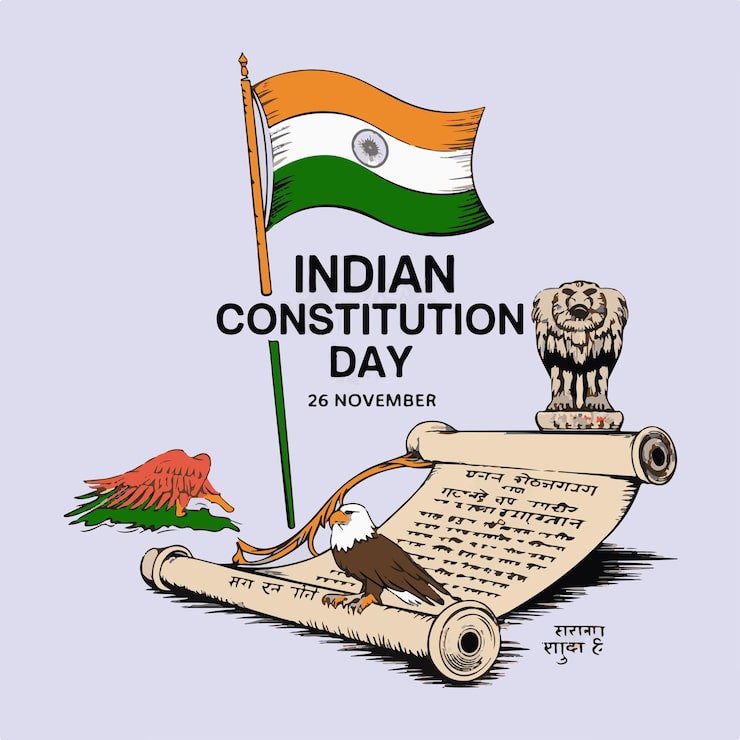
India marks Constitution Day on November 26, commemorating the adoption of the Constitution by the Constituent Assembly in 1949, an occasion that also renews the debate over how effectively its founding principles have translated into the everyday lives of citizens.
Paying tribute to the architects of the Constitution, including Dr Rajendra Prasad, Dr B.R. Ambedkar and other members of the Constituent Assembly, Prime Minister Narendra Modi said India’s constitutional framework drew upon the country’s civilisational traditions while establishing the foundations of a modern democratic republic.
The government decided in 2015 to observe November 26 as Constitution Day, with the stated objective of taking constitutional values beyond Parliament and the courts and connecting younger generations with the country’s democratic foundations.
In his Constitution Day message, Modi described the Constitution as an instrument that enables individuals to overcome the limitations imposed by their social and economic circumstances. Recalling his own childhood in a modest family, he said the opportunity to serve as Prime Minister demonstrated the transformative potential of the constitutional system.
He particularly highlighted the Constitution’s commitment to social and economic justice, referring to constitutional scholar Granville Austin’s description of the document as primarily a social document.
Welfare programmes and the promise of social justice
The Prime Minister linked the constitutional vision of equality and dignity with several government welfare initiatives, arguing that access to housing, healthcare, clean cooking fuel, credit and digital services has helped translate constitutional principles into practical benefits.
He cited the Pradhan Mantri Awas Yojana, Ujjwala Yojana and Ayushman Bharat as examples of programmes intended to improve living conditions among economically vulnerable families. He also referred to the MUDRA scheme and PM-SVANidhi, which provide credit facilities to small entrepreneurs and street vendors.
Digital platforms, particularly the Unified Payments Interface (UPI), were presented as another example of how technology has expanded access to financial services and economic opportunities.

Referring to poverty reduction, Modi cited a recent World Bank report which, according to him, indicated that nearly 50 crore Indians had moved out of poverty.
He argued that the constitutional promise of dignity becomes meaningful when families gain access to permanent housing, healthcare and livelihood opportunities that were previously beyond their reach.
Constitutional amendments and institutional reforms
The Prime Minister also defended several constitutional amendments introduced during the past decade, describing them as measures aimed at addressing long-standing social and economic concerns.
He referred to the 101st Constitutional Amendment, which introduced the Goods and Services Tax, and the 102nd Amendment, which granted constitutional status to the National Commission for Backward Classes.
The 103rd Amendment, providing 10 per cent reservation for Economically Weaker Sections among communities outside the existing reservation framework, was also highlighted as an important step towards addressing economic disadvantage.
Modi further pointed to the availability of the Constitution in all 22 languages included in the Eighth Schedule, describing the initiative as an effort to make the country’s supreme legal document more accessible to ordinary citizens.
Another major reform cited was the replacement of colonial-era criminal laws with the Bharatiya Nyaya Sanhita. The Prime Minister said the new legislation represented a shift from a punishment-oriented colonial system towards a justice-centred approach.
Emergency and the debate over constitutional history
A substantial part of the Prime Minister’s message focused on what he described as historical instances of constitutional misuse.
Referring to the First Constitutional Amendment of 1951, he questioned the restrictions placed on fundamental freedoms and argued that the amendment was introduced by the government before the country’s first general election.
He also recalled the 42nd Amendment, passed during the Emergency in 1976, which altered the balance between constitutional institutions and restricted the scope of judicial review. He urged younger generations to study the 38th and 39th Amendments as well.
The repeated invocation of Article 356 to dismiss elected state governments was another issue raised by Modi. He accused the Congress of having frequently used the provision to remove state governments, describing it as an example of the misuse of constitutional authority.
The Prime Minister also referred to Articles 370 and 35A, arguing that their continuation had prevented the full application of the Constitution in Jammu and Kashmir and restricted the rights of several disadvantaged communities and women. He described their removal in 2019 as the correction of a historical injustice.
Women, tribal communities and political accountability
Highlighting the contribution of women members of the Constituent Assembly, Modi expressed concern over the failure to pass legislation intended to strengthen women’s representation in legislative bodies earlier this year.
He assured women that the government remained committed to securing greater political representation for them.
He also linked the campaign against Naxalism with the restoration of constitutional rights in tribal and remote areas, arguing that armed extremism had prevented economically disadvantaged communities from exercising their democratic freedoms.

At the same time, his remarks included sharp criticism of the principal Opposition party over its position on reservation policies and women’s representation. He alleged that attempts to introduce religion-based reservation would undermine the constitutional framework and accused the Opposition of obstructing legislative processes.
These political observations formed a significant part of the message, placing the debate over constitutional values alongside the continuing contest between the ruling party and the Opposition.
Beyond celebration, the test of constitutional democracy
Constitution Day is not merely an occasion to remember the work of the Constituent Assembly. It is also an opportunity to examine whether the principles of justice, liberty, equality and fraternity are being upheld in practice.
The Constitution provides a framework for both governance and accountability. Its strength lies not only in the powers it grants to elected governments but also in the safeguards it establishes for individual freedoms, institutional independence and the rights of minorities and disadvantaged communities.
The role of the Opposition, the independence of constitutional institutions, the protection of fundamental rights and the fair implementation of welfare policies are equally important to the functioning of a healthy democracy.
As India moves towards the ambition of Viksit Bharat by 2047, Modi called for placing national interest above political considerations and emphasising Kartavya, or civic duties, alongside constitutional rights. He cited initiatives such as Swachh Bharat, water conservation and environmental protection as examples of collective responsibility.
Ultimately, the success of the Constitution cannot be measured solely through amendments, government schemes or political declarations. Its real test lies in whether every citizen, irrespective of caste, religion, language, gender or economic background, enjoys equal rights, dignity and opportunities.
Seventy-seven years after its adoption, that remains the central promise of the Indian Constitution – and an ongoing responsibility of the Republic.