

Why America and Iran Must Choose Dialogue Over Destruction
 KRC TIMES Desk
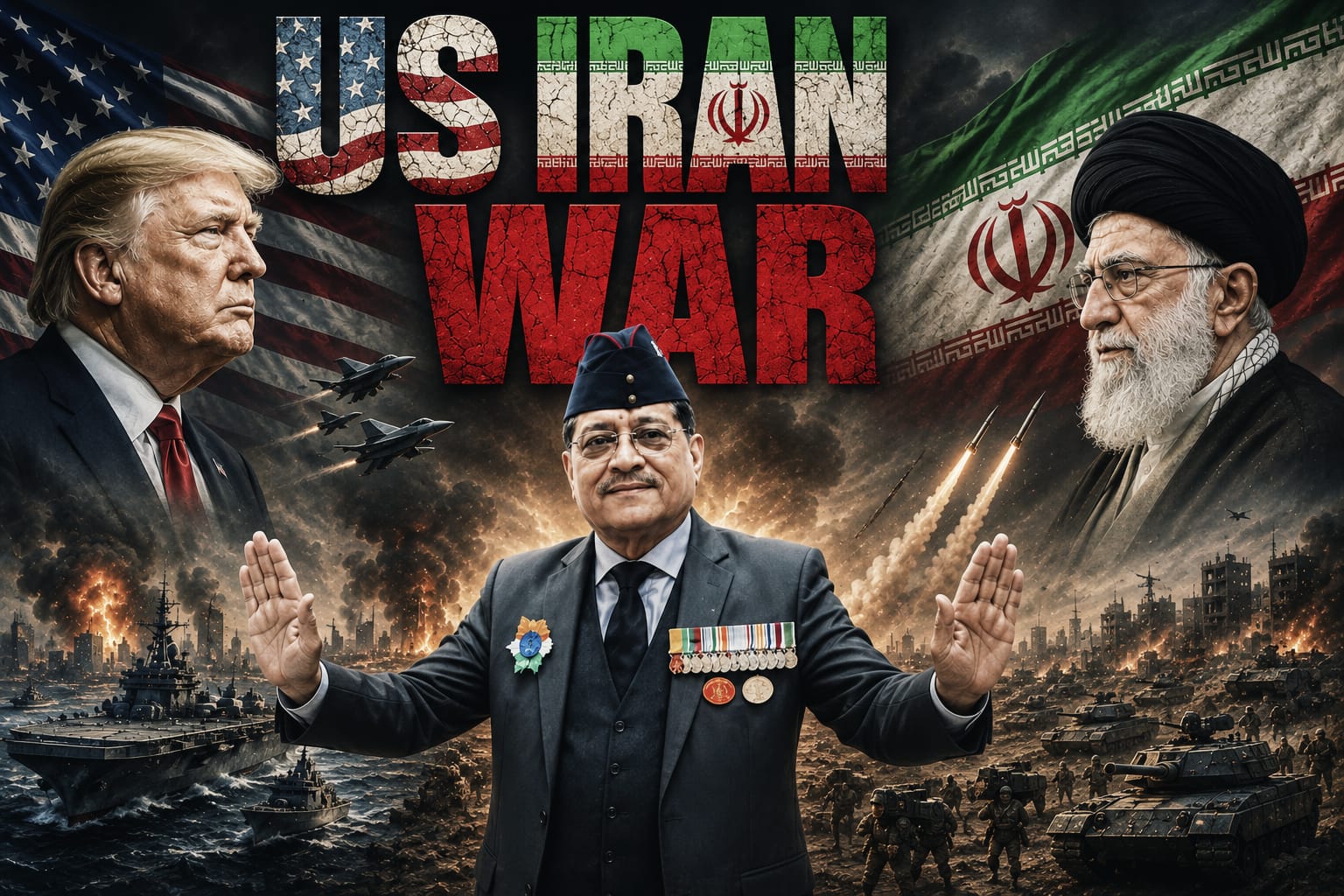
Colonel (Dr.) Ashwani Kumar, MiD, VSM (Retd.)
The World at a Dangerous Crossroads.
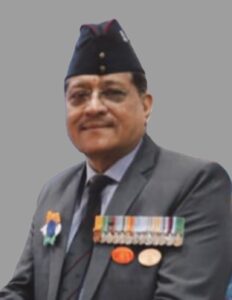
The world today stands at another dangerous crossroads. The continuing confrontation between the United States and Iran threatens not only the stability of the Middle East but also the security of the global economy and the hopes of millions who long for peace. History repeatedly reminds us that wars are easy to begin but extraordinarily difficult to end.
Every missile launched today carries consequences far beyond the battlefield. It affects energy markets, international trade, global security and, above all, innocent human lives. At a time when the world should be united in addressing climate change, poverty and technological progress, another major conflict would only deepen global uncertainty.
Lessons Written in Blood.
As a soldier who spent decades in uniform, I have learned that every war carries a price far greater than political calculations. During Operation Pawan in Sri Lanka, I witnessed young officers and soldiers display extraordinary courage. Many never returned home. Years later, while my unit was serving in the Kargil theatre, I again happened to witness bravery beyond imagination as Indian soldiers recaptured every inch of occupied territory.
The nation celebrated victory and rightly so. Yet every success on the battlefield came at the cost of priceless human lives. Military victories restore borders, they cannot restore sons to grieving parents or husbands to waiting families. That is the true cost of war.
Strength Must Support Peace.
Every sovereign nation has both the right and the responsibility to defend itself. Military preparedness is essential for preserving peace and deterring aggression.

However, military power must remain an instrument of diplomacy, not a substitute for it.
The finest generals understand that the highest purpose of armed strength is not to wage wars but to prevent them. True leadership lies in avoiding conflicts whenever honourable peace remains possible.
Why the US – Iran Conflict Matters to the World.
The present confrontation between Washington and Tehran is not merely a regional dispute.
The Strait of Hormuz is one of the world’s most critical maritime arteries. Any prolonged conflict would disrupt global energy supplies, increase inflation, destabilise markets and affect every nation, including India.
Modern warfare respects no borders.
Cyber attacks, disruptions to shipping, terrorism, refugee movements and economic instability spread far beyond the original battlefield. In today’s interconnected world, there can be no isolated war.
The Wisdom of Sharda Peeth.
India has always believed that lasting peace emerges from wisdom rather than dominion.
For centuries, Sharda Sarvagya Peeth, one of the oldest centres of learning in the Indian civilisation, has represented knowledge, dialogue and spiritual enlightenment. Inspired by the teachings and blessings of Jagadguru Shankaracharya Swami Amritananda Devtirth Ji Maharaj, I offer this appeal not as a politician but as a humble messenger of peace. The timeless message of our civilisation remains relevant today:
Knowledge is stronger than hatred.
Dialogue is stronger than violence.
Compassion is stronger than revenge.
A Soldier’s Appeal to Washington and Tehran.
To the leaders of the United States and Iran, my appeal is simple.
History will not remember who issued the harshest warning.
History will remember those who prevented another devastating war. The resources consumed by missiles can educate millions of children. The wealth spent on conflict can eradicate disease and hunger. Scientific cooperation can achieve what military confrontation never can. Peace is never a sign of weakness.
It is the highest expression of courage.
Building a New World of Peace and Prosperity.
The twenty first century demands cooperation rather than confrontation. No nation can overcome terrorism, cyber warfare, pandemics or climate change in isolation. The world requires statesmanship instead of brinkmanship. India’s timeless philosophy
“Vasudhaiva Kutumbakam” (The World is One Family) offers a vision that transcends politics and ideology. The future belongs to those who build bridges, not battlefields.
To sum up the Greatest Victory
Having witnessed war, I know that every soldier prays for peace. We train for battle so that war may never become necessary. My appeal extends beyond Washington and Tehran to every leader across the globe.
Choose dialogue before destruction.
Choose reconciliation before retaliation.
Choose humanity before hostility.
Let future generations inherit classrooms instead of bunkers, hospitals instead of battlefields and hope instead of fear. Only then will humanity achieve its greatest victory, not over another nation, but over hatred itself.
About the Author
Colonel (Dr.) Ashwani Kumar, MiD, VSM (Retd.) is a decorated Indian Army veteran, military intelligence specialist, strategic affairs analyst and author. He served in Operation Pawan in Sri Lanka, the Operation Vijay, and held senior appointments in Military Intelligence, the Cabinet Secretariat and the Government of India. He is presently the Chief Executive Officer of Sharda Sarvagya Peeth, Jammu & Kashmir, and writes extensively on national security, military history, strategic affairs and India’s civilisational heritage. His writings advocate a strong national defence while promoting dialogue, peace and international cooperation inspired by India’s enduring philosophy of “Vasudhaiva Kutumbakam.” The World is One Family.