


The project is part of a broader development package worth nearly Rs 47,600 crore across Assam
 KRC TIMES Desk
Rajkummar
Prime Minister Narendra Modi laid the foundation stone for the Guwahati–Silchar Expressway on March 14, 2026, marking the start of one of the largest infrastructure pushes in the Northeast. The project is part of a broader development package worth nearly Rs 47,600 crore across Assam.
During the visit, the Prime Minister announced, inaugurated and laid foundation stones for several projects in Kokrajhar, Guwahati and Silchar. These include major road, bridge and social welfare initiatives aimed at improving connectivity and economic growth across the state.
Among the major announcements was the launch of projects worth about Rs 23,550 crore and the Bhoomi Poojan of Assam Mala 3.0, a road infrastructure programme valued at over Rs 3,200 crore. The scheme will build nearly 900 kilometres of new roads to strengthen links between national highways and rural areas while improving inter-state connectivity.
The Prime Minister also performed Bhoomi Poojan for six infrastructure projects in the Bodoland Territorial Region under the Bodoland Territorial Council. These include four flyovers and two bridges with a total investment of around Rs 1,100 crore, aimed at easing traffic congestion and boosting regional mobility.
A Landmark Expressway
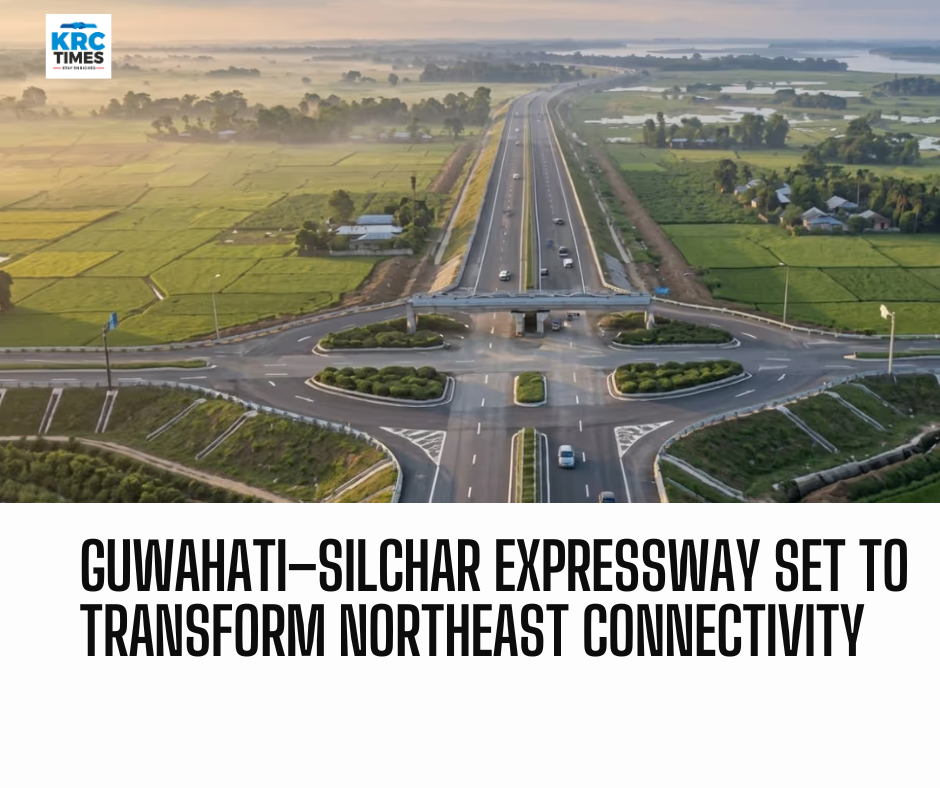
The centrepiece of the infrastructure push is the Guwahati–Silchar Expressway, a Rs 22,864-crore greenfield project that will become the Northeast’s first access-controlled high-speed corridor. Planned as a four-lane highway stretching about 166.8 kilometres, the corridor will largely pass through Meghalaya and connect the Brahmaputra Valley with the Barak Valley more directly.

At present, travel between Guwahati and Silchar covers nearly 295 kilometres through the difficult terrain of Meghalaya and the hills of Dima Hasao. Landslides and heavy monsoon rains often disrupt the journey along the existing National Highway 6, making travel slow and unpredictable.
The new expressway aims to change that.
According to Union Road Transport and Highways Minister Nitin Gadkari, the project will reduce the travel distance between Guwahati and Silchar to about 245 kilometres. The route will be straighter and faster, cutting roughly 25 percent of the distance.
Faster and Safer Travel
Currently, the journey between the two cities can take anywhere from eight to twelve hours due to difficult terrain, landslides near the Sonapur tunnel area and heavy traffic.

The new expressway will allow vehicles to travel at speeds of 80 to 100 kilometres per hour. Once completed, travel time is expected to drop to around four and a half to five hours. This could make same-day business travel between the two major cities possible for the first time.
Economic Lifeline for the Region
The expressway is expected to have a major economic impact across the Northeast. For the Barak Valley and neighbouring states such as Tripura, Mizoram and Manipur, improved road connectivity will make the movement of goods faster and cheaper.
A shorter and smoother route will reduce fuel consumption and vehicle wear for commercial trucks carrying essential supplies such as food, medicines and fuel. Lower transport costs may also help reduce prices of essential goods in remote regions.
The project is expected to generate around 8.9 million person-days of employment during construction, providing a significant boost to the local economy.
Looking Ahead
The project will be implemented by the National Highways and Infrastructure Development Corporation Limited under the Hybrid Annuity Mode. Plans include 19 major bridges and extensive tunnelling to avoid landslide-prone areas.
With a completion target set for 2030, the Guwahati–Silchar Expressway is expected to become a major driver of growth and connectivity for the Northeast. More than just a road, it is being seen as a crucial step toward bridging the geographical and economic gap between Assam’s Brahmaputra and Barak valleys.