

India has also been playing an active role in regional platforms such as the Indo-Pacific Economic Framework and the Indian Ocean Rim Association
 KRC TIMES Desk
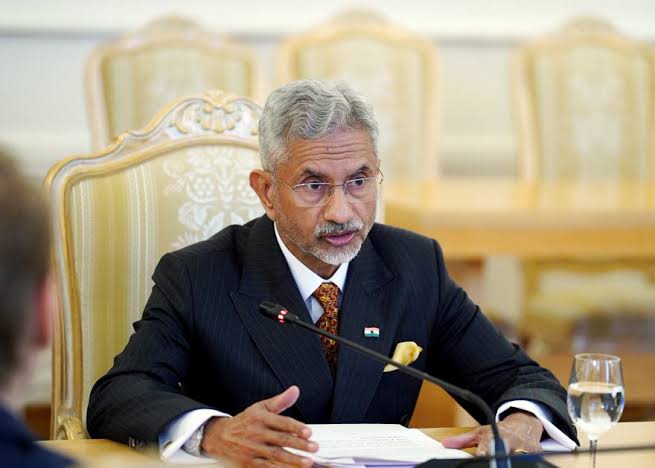
Dr. Thomas Gerlach
The war in Iran and fears of a wider conflict in West Asia have placed India’s multidimensional foreign policy under severe strain. India’s strategy of expanding its presence in East Asia, fostering cordial relations with neighboring countries, and ultimately emerging as a global power is now facing significant challenges.
Prime Minister Narendra Modi’s apparent support for Israel’s position on the Palestinian issue and its policy toward Iran could have unintended consequences for New Delhi. The opposition sharply criticized Modi’s visit to Israel in February 2026, just days before Israel and the United States launched attacks on Iran, arguing that it weakened India’s security interests. However, the visit was consistent with India’s broader ambition to establish itself not merely as a regional power but as an influential global leader.
Today, the growing militarization of international relations is intensifying competition for global influence. Alongside the United States and China, countries such as Japan, South Korea, and Russia, as well as North Korea and Iran, have emerged as important players in the evolving balance of power.
At the 2009 Shangri-La Dialogue, then U.S. Defense Secretary Robert Gates described India as a potential “net security provider” for countries bordering the Indian Ocean. He envisioned India ensuring regional security and, when necessary, employing its military and naval capabilities as instruments of “military diplomacy.”

This concept aligned closely with India’s long-term strategic interests. India has long viewed the Indian Ocean region as part of its sphere of influence. Indian diplomacy considers the region highly important from the perspectives of economic investment, cultural ties, and shared civilizational heritage.
Prime Minister Modi’s MAHASAGAR initiative, launched in 2025-Mutual and Holistic Advancement for Security and Growth Across Regions-aims to ensure collective security and comprehensive development across South Asia. The strategy extends beyond South Asia and incorporates the concept of an “extended neighborhood.”
Before this, India pursued the SAGAR policy-Security and Growth for All in the Region-to strengthen maritime cooperation with Indian Ocean littoral states. The initiative was also viewed as a response to the maritime component of China’s Belt and Road Initiative (BRI).
India proposed the Indo-Pacific Oceans Initiative (IPOI) in 2019. Earlier, at the 2017 QUAD summit in Manila, India, the United States, Japan, and Australia reaffirmed their commitment to strengthening strategic and diplomatic cooperation to balance China’s growing ambitions, particularly in the South China Sea.
India has also been playing an active role in regional platforms such as the Indo-Pacific Economic Framework and the Indian Ocean Rim Association. Under its Act East Policy, India has sought to strengthen ties with East Asian countries and identify new strategic partners, bringing it closer to areas traditionally regarded as within China’s sphere of influence.
However, the success of the Act East Policy depends heavily on maintaining balanced and stable relations with neighboring countries. Given the Himalayan barrier to the north, efficient road connectivity and regional infrastructure projects are essential for India. Sustaining a cooperative environment across the region is therefore critical, especially in areas with significant Muslim populations.
India’s “Neighborhood First” policy remains one of the central pillars of its foreign policy. Its focus lies on the Indian Ocean region, which is considered strategically vital. Yet many of India’s neighboring countries have already become part of the maritime expansion of China’s Belt and Road Initiative.
Chinese investments and influence in Sri Lanka’s Hambantota Port, the Doraleh Port near Djibouti, the Maldives, Myanmar, and Pakistan have heightened India’s strategic concerns. To counter these developments, India has invested in projects such as Iran’s Chabahar Port and Myanmar’s Sittwe Port. However, if these projects succeed fully, they could also affect American strategic interests in the region.
India seeks to establish a leading role in the Indian Ocean, but not all countries in the region are prepared to accept Indian leadership. Historical experiences have created skepticism and anti-India sentiment in some states, where India is often viewed as an interventionist power. Complex domestic political environments and Muslim-majority social structures in several countries may further complicate the implementation of India’s regional policies.
Relations between India and Pakistan remain particularly tense. New Delhi fears that terrorist activities in Kashmir could intensify again, especially under the Sharif government. Political instability within Pakistan and recent Pakistan-Afghanistan tensions have provided opportunities for both the United States and China to exert strategic pressure on India.
India-Bangladesh relations have also entered a period of uncertainty following the fall of the Sheikh Hasina government. Cross-border militant infiltration and mutual distrust have affected bilateral ties. Although the new government led by Prime Minister Tarique Rahman appears interested in improving relations, it is equally determined to preserve its political independence.
The Maldives has emerged as another concern for India. President Mohamed Muizzu came to power in 2023 under the slogan “India Out.” His government has moved toward expanding military cooperation with China and rolling back previous defense agreements with India, creating setbacks for India’s strategic objectives in the Indian Ocean.
Meanwhile, under the Act East Policy, India is developing road connectivity projects through Myanmar. Despite criticism from Western countries, maintaining pragmatic relations with the military government led by General Min Aung Hlaing has become necessary for India.
At the same time, China continues to strengthen its territorial claims in Ladakh and the Galwan Valley region. Nepal has also engaged in what some describe as “cartographic diplomacy” by presenting maps that claim certain territories administered by India.
Across this broader region, Indian and Chinese political interests and economic investments frequently collide. Nevertheless, both countries appear eager to avoid direct military confrontation. China operates under a highly centralized communist system, while India functions as a democracy. Diplomats on both sides therefore attempt to balance mutual distrust with practical cooperation.

Send your resume:
biswa@jigyasu.co.in
krcfoundation@gmail.com
Indian policymakers are well aware that President Donald Trump’s administration views South and Southeast Asian countries as strategic barriers against China’s expanding influence. From Washington’s perspective, India forms an important component of its broader strategy to balance China.
The key question, therefore, is whether India can advance its MAHASAGAR policy while avoiding excessive pressure from both the United States and China and simultaneously preserving its independent foreign policy.
Indian policymakers recognize that, given current economic, technological, industrial, and military realities, India cannot pursue direct power competition with either China or the United States. Consequently, New Delhi is attempting to safeguard its national interests through strategies of “diplomatic resistance” and “soft disagreement.”
This may explain why India has avoided taking unequivocal positions on international disputes such as the Ukraine war, the Gaza conflict, and allegations surrounding the abduction of Venezuela’s president. Instead, New Delhi has generally adopted balanced and relatively ambiguous positions grounded in interpretations of international law.
Recent U.S. tariffs have also strengthened anti-American sentiment in India. Many Indians reject the notion that India should prioritize American strategic objectives over its own national interests or function merely as a “useful partner” in implementing U.S. global policies.
Frequent high-level visits and bilateral dialogues between the two countries demonstrate that India-U.S. relations, while cooperative, remain complex. Their strategic interests and regional priorities differ on many issues.
There is a widespread perception that the United States will continue pressuring India to align more closely with its foreign policy objectives. One reason is India’s ambition to establish itself as the world’s fourth major power after the United States, China, and Russia.
In this environment, India’s greatest challenge will be managing relations with Washington effectively-avoiding isolation from America’s broader Asia strategy while preserving its independent foreign policy and strategic autonomy.

According to the author, India’s independent foreign policy is increasingly becoming a source of discomfort for the Trump administration. He points to the FBI’s arrest of Ashley Tellis, a prominent analyst associated with the Carnegie Foundation and regarded as supportive of India, as an indication of this trend.
The United States is not entirely comfortable with India’s policy of independently determining its immediate and long-term strategic objectives. This has been reflected in measures such as tightening visa regulations, suspending student visas, criticizing India’s close ties with Russia, and other restrictive actions. Washington also appears concerned about the possibility of an emerging strategic alignment among India, Russia, and China.
India’s foreign policy is currently navigating a period in which it must maintain balance on multiple fronts simultaneously. China’s growing regional activism, American strategic expectations, instability in West Asia, and shifting political conditions in neighboring countries are all testing New Delhi’s diplomatic capabilities.
At such a time, India’s greatest challenge will be balancing its strategic autonomy, national interests, and global ambitions. If it succeeds in maintaining this balance, India could further strengthen its position not only as a regional power but also as a significant global power.
Dr. Thomas Gerlach. Expert, Centre for International Relations, Poland