What initially appears to be youthful experimentation becomes a fatal journey, ending in their deaths
 KRC TIMES Desk
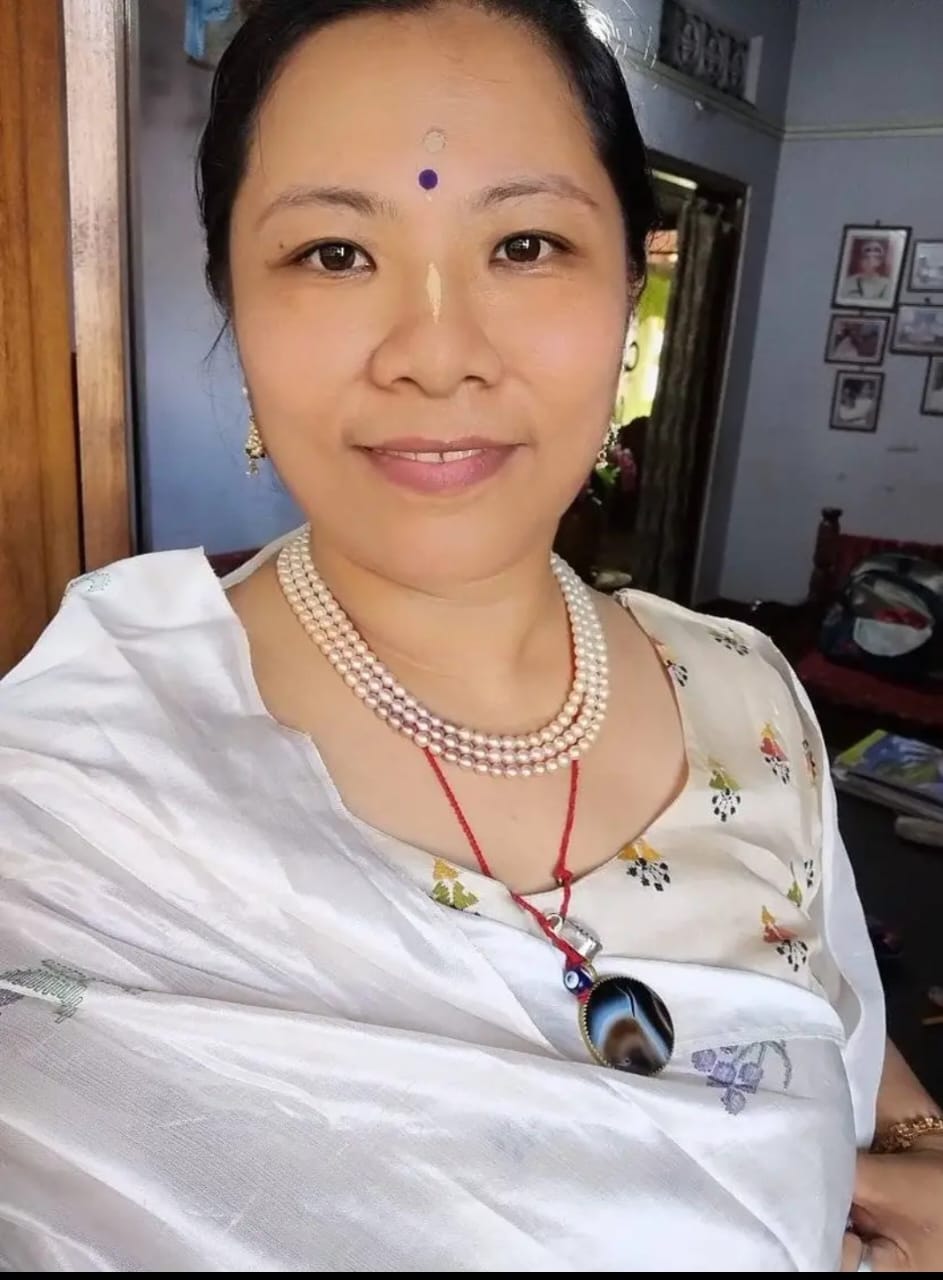
Mayanglambam Meerina Leimarenbi
Under the direction of Khetrimayum Phajaton Chanu, Laman begins not with a conventional dramatic confrontation, but with a striking image: two men, one representing two sides seated across a chessboard and engaged in a game. It is a deceptively simple opening, yet one loaded with meaning. The chessboard becomes a metaphor for history, power and human lives, where movements are calculated, positions are controlled and ordinary people can become pieces in a larger game whose design remains beyond their understanding.
From this symbolic world of chess, the drama moves into the lives of two young men caught in addiction. Their moments of carefree enjoyment gradually descend into destruction. What initially appears to be youthful experimentation becomes a fatal journey, ending in their deaths. The transition is deliberately stark, bringing the audience face to face with the consequences of addiction and the fragility of lives that seem, at first, full of possibility.
But Laman does not treat their deaths as the end of the story. In many ways, their deaths are where the real story begins.
The cremation procession that follows transforms personal loss into a collective wound. The cries of relatives and the visible anguish of those accompanying the bodies create an atmosphere in which grief seems to belong not to one family but to an entire community.
The death of the young men is no longer simply the loss of two individuals; it becomes the loss of sons, brothers and hopes, leaving behind families who must continue living with an absence that cannot be repaired.
It is in the aftermath of this devastating procession that Leibaklei, the widowed daughter-in-law of the old woman, emerges as a significant force in the narrative. Having herself experienced the pain of widowhood, Leibaklei understands the cost of losing a young life perhaps more intimately than most. Rather than surrendering to grief, she chooses to confront what she sees as the source of such destruction.

Leibaklei volunteers to kill Hingchabi, making a solemn promise to end the evil associated with it and to avenge the lives that have been lost. Her resolve introduces a powerful shift in the drama—from mourning to resistance. The promise is not presented merely as an act of personal vengeance.
It becomes a pledge to confront the destructive forces that continue to lure young people towards harmful and ultimately fatal paths.
Here, Hingchabi assumes a significance beyond that of an individual antagonist. It can be understood as a metaphor for the accumulated forces of wrongdoing, destructive habits and influences that consume young lives. By choosing to confront Hingchabi, Leibaklei is therefore symbolically declaring war on the evil that has taken away the young.
Yet the drama does not allow the audience to forget the human cost behind this struggle.
At the centre of the mourning stands the old woman, leaning on her walking stick and repeatedly calling out, “ “Hanlakkho”(Come back)
Few words are needed. The power of the moment lies in its simplicity. “Hanlakkho”(Come back) is not merely a cry directed at the dead. It is the cry of a generation that has watched its younger members disappear before their time.

It carries longing, disbelief, anger and helplessness simultaneously. She knows they cannot return, yet she continues to call for them. In that contradiction lies one of the deepest pains of Laman: the human heart continues to ask for what reality has already taken away.
The old woman gradually becomes more than an individual character. She becomes the embodiment of an ageing generation watching its younger generation being consumed by destructive influences. Her grief is personal, but it is also social. Through her, Laman asks a difficult question: what happens to a society when it begins losing its youth—not only to death, but to the circumstances and choices that lead them towards it?
The answer offered by the drama is not passive.
The promise made by Leibaklei and the grief of the old woman eventually converge in a more symbolic and unconventional transformation. The old woman transforms into a man and sets out on a journey to kill Hingchabi.
This transformation can be read at several levels. On the surface, it is a dramatic metamorphosis that propels the narrative towards revenge. At a deeper level, it represents the transformation of grief into resistance. The woman who could do nothing but stand beside the funeral pyres suddenly acquires agency. The walking stick that once signified age, vulnerability and helplessness gives way to a determination to confront the force she holds responsible for the deaths.

The transformation is therefore not simply about becoming someone else. It is about what grief can do to a human being when sorrow crosses the boundary of endurance.
The journey towards Hingchabi gives the latter half of Laman a different dramatic energy. Yet the revenge itself can be understood as something larger than an individual’s desire for retribution. Hingchabi becomes a symbolic target for the anger of families who have watched their young people fall into destructive paths. The pursuit becomes the pursuit of a community searching for a way to confront the forces responsible for its losses.
This is where Laman moves beyond being a straightforward story about addiction.
Its deeper concern is not merely how young people fall into destructive habits, but what their disappearance does to those who remain. Death is only one part of the tragedy. The greater tragedy lies in what follows—the empty spaces at home, the unfinished conversations, the memories that refuse to fade and the elderly who continue to wait for footsteps that will never come.
The final act of revenge consequently carries the accumulated sorrow of the many “brothers of the state” whose lives have been lost after entering destructive paths. Leibaklei’s vow and the old woman’s transformation become symbolic expressions of the same collective pain: a refusal to allow the deaths of the young to pass into silence.
The symbolism running through Laman is what gives the drama its larger resonance. The chessboard, the two young men, the cremation procession, Leibaklei’s vow, the grieving old woman, her cry of “Come back,” her transformation and the pursuit of Hingchabi form a chain of images rather than merely a sequence of events.

The chessboard speaks of forces and choices.
The young men represent lives caught within those forces.
The cremation represents the price paid.
Leibaklei represents the courage to confront the evil.
The old woman represents those left behind.
And Hingchabi becomes the embodiment of the destructive forces that society must confront.
The drama’s symbolism also demands something from its audience. It asks us not to look at the characters and events only at their literal level. The transformation from woman to man, particularly, can seem unconventional when viewed through the framework of realism. But Laman appears less interested in realism alone than in the expressive language of theatre. The transformation is less about physical identity than about emotional and social power—the powerless becoming powerful enough to confront what has caused unbearable suffering.

At its heart, Laman is a drama about absence, grief and resistance.
The young men are absent from their homes. The old woman is left without those she longs for. Leibaklei carries the wound of widowhood while choosing to fight rather than surrender. Families are left with memories instead of futures. And beneath the revenge lies an even more painful question: could these lives have been different?

That question remains unsettling precisely because there is no easy answer. The recurring cry of “Come back” consequently becomes the emotional centre of the production. It is a cry that cannot reverse death, but it refuses to allow the dead to become mere numbers or statistics. Behind every young person lost to addiction is a face, a family, a relationship and a future that will never unfold.
That is where Laman finds its deepest human significance. It does not leave the audience merely with a story of addiction or revenge. It leaves behind the image of an old woman standing with her walking stick, calling into a world that no longer answers her, while another woman, Leibaklei, chooses to turn that grief into a vow to confront the evil that caused it.
Perhaps that is the most haunting message of Laman: when a society loses its youth, the loss is never confined to the young. Those left behind inherit the grief—and sometimes, the responsibility to fight against whatever continues to take the young away.
In that sense, Laman is not simply about death. It is about the unbearable weight of those who survive it, the courage born from grief, and the human desire to reclaim a future from the forces that threaten to destroy it.