


Beyond material prosperity, let a new India be illuminated by human values, self-purification, non-violence and self-restraint
 KRC TIMES Desk
LALIT GARG
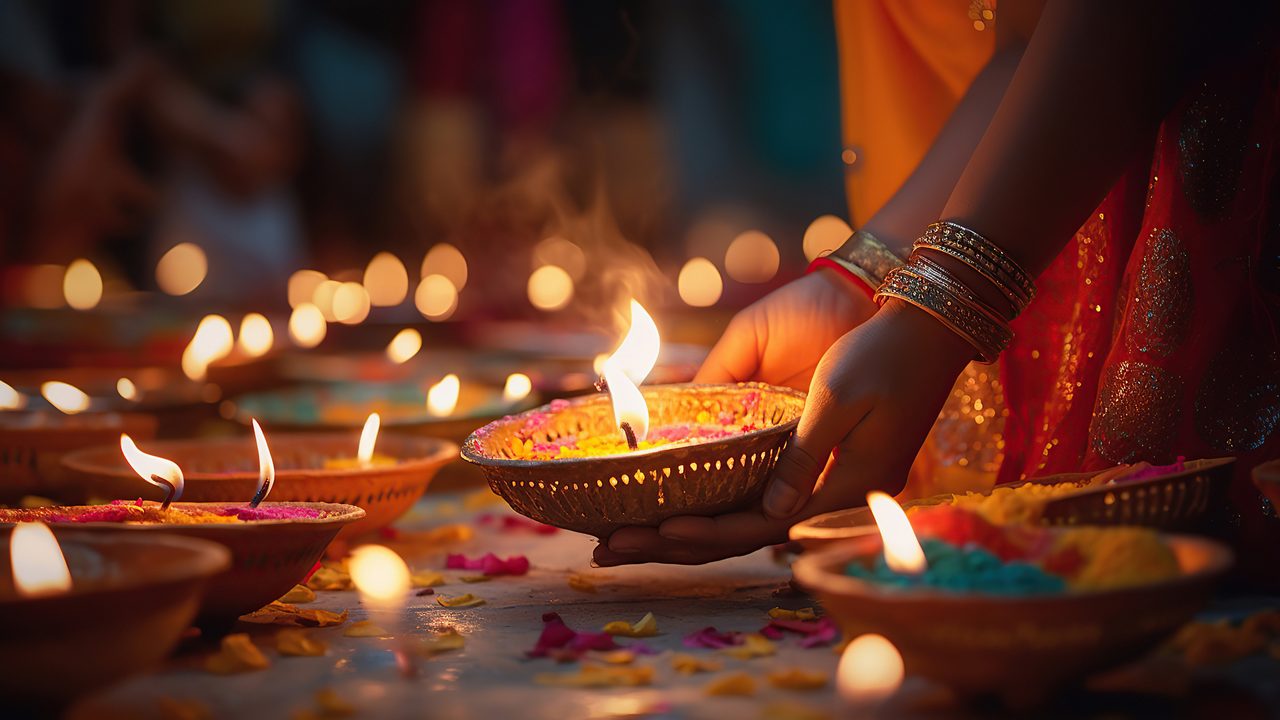
Diwali is not merely a celebration of the triumph of light over darkness. It is an oc- casion to awaken our inner consciousness, give a new direction to lives that have lost their way, and re-examine our values at a critical juncture in the evolution of civili- sation. Today, India is moving rapidly to- wards becoming a developed, prosperous, capable and self-reliant nation.
Its econom- ic strength, technological capabilities, rich cultural heritage and spiritual outlook have inspired growing confidence across the world. At such a time, the light of Di- wali must not remain confined to the door- steps of our homes; it must illuminate the wider horizon of national consciousness.
Yet, a profound question confronts us. Why is the light within people gradually fading even as the number of lamps around us continues to grow? Homes are brightly illuminated, markets are bustling, cities are adorned with electric lights, and tech- nology is making life increasingly com- fortable.
Yet anxiety, insecurity, violence, selfishness, intolerance and attachment are deepening in human minds. Have we become so preoccupied with lighting countless lamps outside that we have for- gotten to kindle even a single flame within ourselves? The roots of terrorism, violence, war, hatred and hostility lie not merely in weapons or machines but in the distorted consciousness of human beings.
There- fore, strengthening security arrangements alone cannot provide a lasting solution to terrorism. What is needed is a collective resolve to reject unnecessary violence. As long as the fire of revenge continues to burn in human hearts, the lamps of peace cannot spread their full radiance across the world.
Non-violence is not merely a principle of Jain philosophy; it is also an indispensable condition for safeguarding the future of human civilisation. In this context, a beautiful spiritual anecdote comes to mind. Once, Darkness complained to Brahma that the Sun was constantly pursuing it and seeking to de- stroy it. The Sun, however, responded, “I do not even know what darkness is. How, then, could I wish to destroy it?
Let dark- ness first be brought before me.” When Darkness was asked to appear be- fore the Sun, it replied, “How can I go be- fore him? The moment I stand in his pres- ence, my very existence will disappear.” The relationship between spiritual knowledge and ignorance is much the same.
When the sun of knowledge rises, the darkness of ignorance cannot sur- vive. When the lamp of compassion is lit, the shadows of violence gradually recede. When the flame of self-restraint burns bright, the dominance of attachment and illusion begins to weaken. The true signif- icance of Diwali, therefore, lies not merely in cleaning and decorating our homes but in purifying our inner selves.
In the weeks preceding Diwali, we spend considerable time removing dust from ev- ery corner of our homes, organising old be- longings, renovating walls and giving our surroundings a fresh appearance. But do we ever clear the dust of jealousy that ac- cumulates in the corners of our minds? Do we wipe away the stains of anger?
Do we remove the cobwebs of arrogance? Are we willing to discard the old burdens of greed and attachment? If, during this Diwali, we can devote ourselves even once to such an exercise in self-purification, the festival will become one of the most meaningful celebrations of our lives. Acharya Shri Mahapragya, an emi- nent Jain philosopher and spiritual prac- titioner, regarded introspection as one of the most important paths to inner en- lightenment.
His observation was simple yet profound: people have developed an increasing habit of looking outward, while the practice of looking within has steadily weakened. Today, we have countless ways of observing the world, but hardly any time to understand ourselves.
The screens of our mobile phones glow brightly, while the screens of our minds are becoming increasingly clouded. The storehouse of information is expanding, but the lamp of self-awareness appears to be growing dimmer. Perhaps this is one of the great- est contradictions of our times: we are preparing to reach the Moon, yet hesitate to explore the dark corners of our own con- sciousness.
A new India cannot be built merely through towering buildings, a rapidly ex- panding economy, advanced technology or world-class infrastructure. The true identity of a developed India will emerge from the enlightened consciousness and human values of its citizens. Prosperity be- comes meaningful only when compassion remains alive. Power becomes construc- tive only when guided by restraint. Sci- ence serves humanity best when directed by wisdom.
And development achieves its fullest purpose only when both human be- ings and nature remain at its centre. India’s timeless cultural heritage con- veyed this profound message to humanity centuries ago: “Tamaso Ma Jyotirgama- ya” — lead us from darkness to light.
The journey from ignorance to knowledge, from disorder to self-discipline, and from selfishness to concern for others lies at the heart of In- dia’s enduring civilisational ethos. As India moves to- wards estab- lishing itself as a global leader and a guiding force for humanity, its greatest strength cannot be limited to economic performance or technological ex- cellence.
India’s real wealth lies in its time- less civilisational wisdom and humanistic outlook. Diwali can become an occasion to carry this eternal wisdom towards new horizons. It is not enough for the world to know that India is advancing economically; India must demonstrate how a nation can pursue development while remaining deeply root- ed in human values.
What we need is a model of develop- ment in which nature receives the respect it deserves, the deprived are treated with compassion, the elderly are accorded dig- nity, young people are given opportunities, women enjoy dignity and security, and every citizen has the right to live a safe, peaceful and meaningful life.
Today, the lamps of Diwali must become symbols of national resolve. Let there be one lamp for self-restraint, another for non-violence, one for environmental pro- tection, another for social harmony, one for women’s dignity, another for honesty, and yet another for patriotism.
When mil- lions of lamps are lit in millions of homes with these values at their heart, India’s light will no longer remain confined to houses and marketplaces; it will illuminate the path of humanity as well. A lamp possesses a remarkable quali- ty: it burns itself to spread light to others. The essential character of Indian culture is much the same. Guided by the ideal of “Va- sudhaiva Kutumbakam” — the world is one family — a civilisation cannot separate its own progress from the welfare of the world.
If India aspires to become a guiding force for humanity, it must offer the world not only knowledge but also the wisdom of balance. It must present not merely a mod- el of prosperity but also a pathway to peace. This Diwali, we must ask ourselves at least one question: What darkness still remains within me? Is it anger, greed, ar- rogance, jealousy, fear, insensitivity or indifference to the suffering of others?

For darkness does not disappear simply by condemning it. A small lamp must be lit to dispel it. A lamp also teaches us another profound lesson: life is not about escaping difficult circumstances but transforming them. However challenging the situation may be, we must never allow the flame within us to go out.
This Diwali, let us resolve not merely to decorate our homes but also to beautify our hearts. Let us not only make our doorsteps attractive but also purify our conscious- ness. Alongside illuminating the skies with strings of lights, let us kindle the flame of self-awakening within ourselves. For the greatest identity of a developed India will not be its shining roads or magnificent buildings, but its awakened and conscious citizenry.
India stands today at a new crossroads. Its economy is scaling new heights, scien- tific achievements are opening up fresh horizons, its young generation is unlock- ing new possibilities, and the country is increasingly asserting its role on the global stage with confidence. In this journey of transformation, the message of Diwali must also acquire a renewed meaning: let the India outside be illuminated, and let the India within awaken.
Only then will Diwali transcend the boundaries of a festival and become the guiding light of a new India, a symbol of the renewal of its timeless civilisation, and a firm declaration of its commitment to showing humanity the path of light. Let us, therefore, light one lamp in our homes and another within ourselves. One lamp for prosperity, another for compassion. One for development, another for wisdom.
One for progress, another for peace. One for a strong India, and another for a sensitive and compassionate India. For it is only when the lamp within us burns brightly that the light outside ac- quires its true meaning. And when this in- ner light awakens in the hearts of millions of Indians, India will not merely become a developed nation; it will also gain the ability to demonstrate to the world how development can coexist with wisdom, strength with peace, and prosperity with compassion. That will be the true spirit of Diwali.

