


“Peace is not merely the inheritance we hope to receive. It is the responsibility we must cultivate, teach and pass on”
 KRC TIMES Desk
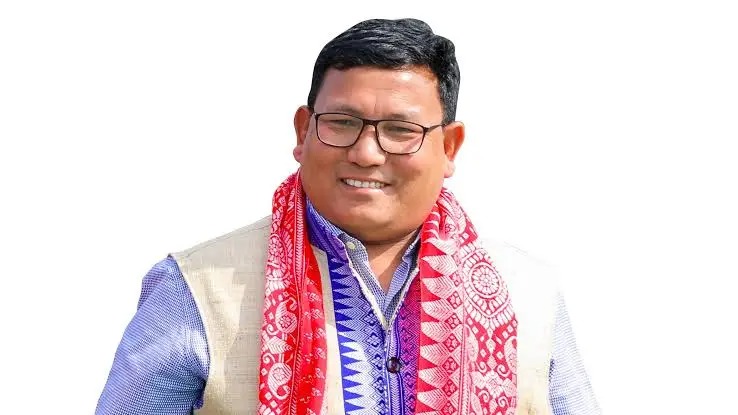
Pramod Boro, MP (Rajya Sabha)
I visited Imphal last week with some of my like-minded seniors and friends on a humanitarian mission with a message of solidarity and support for peace and reconciliation among the communities. This was my first visit to the state after violence broke out in May 2023. I met Governor and Chief Minister and conveyed my best wishes to them in their difficult task of restoring peace and normalcy in Manipur. Both of them appreciated our initiative.Unfortunately, my visit led to some misgivings in certain quarters relating to itspurpose and objective, which is perfectly understandable under the prevailing atmosphere of trust deficit among the stakeholders.
As a fellow citizen of a neighbouring state in the region and particularlyafter having lived in a conflict zone since my childhood, I was closely followingthe developments but could not do anything concrete to douse the fire other thanwriting couple of columns in newspapers, which went unnoticed as expected.After I became a Parliamentarian of this great nation, which has a place of prideamong the comity of nations for being the largest democracy, my conscience constantly pricked me and compelled me to think as to what I can do to buildpeace and communal harmony in this trouble-torn neighbourhood.
TEZPUR DECLARATION – A CITIZEN’S INITIATIVE
In the first week of October, coinciding with the birth anniversary of Mahatma Gandhi, an epitome of empathy and love, some of us organised a 2-day North East Peace Dialogue jointly by the North East Peace Foundation for Sustainable Futures and Tezpur University.
The Dialogue, participated by public representatives, retired public servants, security experts, academicians, religiousleaders, and representatives of civil society organisations/NGOs, deliberated onmany issues such as understanding conflict and changing peace landscape in theregion; experiences, challenges and lessons from communities; role ofgovernment agencies and civil society in reconciliation and peace-building; imperatives of sustainable peace from conflict resolution to reconciliation;inclusive governance and development; and a shared vision for peace andpeace-building framework for the North East.
A joint statement titled “TezpurDeclaration” was issued on October 3, 2026, which emphasised on the need forconfidence building measures to restore trust of public in government agencies,institutional capacity building to handle conflict situations, developing comprehensive peace plan, peace education/training in educational institutionsto propagate spirit of peace and create generations of peace volunteers, etc.
The Dialogue appealed to the communities in the region to maintain peace and communal harmony keeping in mind the region’s rich traditional values, spiritof co-existence, cooperation and collaboration, while aspiring to promote andprotect one’s own social systems and culture.
BODOLAND HAPPINESS MISSION – A SOCIAL MOVEMENT
Although the discussions focussed on the North-East as a whole, Manipuroccupied the centre-stage in view of the ongoing humanitarian crisis.Participants from all three major communities in the state stressed the need forsustained citizen-led efforts, in partnership with civil society organisations.
In this context, my personal experience in peace-building in the five districts of Bodo-inhabited areas in Assam was discussed in detail. More than twenty-sixcommunities living in these areas are now living peacefully, after more thanfour decades of inter-community conflicts, burying their past of violence andhatred, which was possible through sustained efforts to rebuild relationships,strengthen institutions and encourage social transformation.
The experience of Bodoland was shared during the Dialogue as one example of how sustained community engagement can contribute to rebuilding relationships afterprolonged conflict. It was also recognised that every conflict has its own history, complexities and local dynamics. Any initiative in Manipur would thereforeneed to emerge from the aspirations and priorities of its own communities,drawing upon their experiences, institutions and existing peace building efforts. I belief Bodoland Happiness Mission May not work in Manipur but Manipur Happiness Mission Will definitely Transforms the state.
MANIPUR CONFLICT- A HUMAN TRAGEDY
Beyond its immediate political and security dimensions, the crisis in Manipur needs urgent intervention to strengthen inter-community trust andconfidence, promote social harmony, protect human dignity, restore every day human relationships, and prepare future generations to coexist peacefully.Peace-building in Manipur, therefore, must extend beyond mere security and political interventions and arrangements and encompass host of initiatives,including inter-community dialogue, creating awareness through education,psycho-social healing, etc.
The central proposition is that sustainable peace cannot be imposed exclusively from above; it must be cultivated with in institutions, communities and the minds of the everyday relationships. Manipur recovery must become not only aregional responsibility but also an opportunity to demonstrate humanity & capacity to transform suffering into solidarity.There are moments in history when the suffering of one region/people challenges the conscience of the entire nation and humanity. Manipur representssuch a moment.
The violence that erupted in May 2023 transformed the lives ofcountless families, disrupted community relationships and exposed the fragility of trust between people. Behind every statistic, there is a human life. Behind every death, there is a family whose world has been permanently shattered.Behind every displaced person, there is a home filled with memories,relationships and a sense of belonging. Behind every child exposed to violence,there is a future that deserves something better than inherited fear.
When a mother loses her child; the language of community cannot measure her grief.When a family is forced to abandon its home, no political explanation canjustify the loss of security, dignity and belonging. When children grow upbelieving that their neighbours are enemies, the damage extends beyond one generation.
When action of an individual is attributed to an entire community,the foundation of inter-community trust collapses. When we see an individua lthrough the prism of identity, we begin to surrender our humanity. The answercannot be found in security measures alone. It requires us to examine how societies construct identity, transmit grievances, educate children, exercise political power and respond to the suffering of others. We do not claim to haveanswers to the complex problems confronting Manipur. Nor do we presumethat experiences from else where can be replicated here.
But we believe thatthe suffering of the people, the prolonged separation of communities and the erosion of trust cannot be matters of indifference to concerned citizens of theregion. We would like to contribute, in whatever modest way we can, toefforts that the people of Manipur themselves consider useful.
OUR HERITAGE – A FOUNDATION FOR RENEWED SOCIAL TRUST
North East India offers a powerful cultural context for understanding how communities can sustain relationships across generations. Its extraordinary diversity is expressed through different histories, languages, customs, traditions,festivals, and arts and crafts, etc. However, historically, there is a common thread running through the age-old systems of inter-community support,solidarity and dependence.
Barter and reciprocal exchange connected people through shared economic needs. Agricultural practices reflected accumulated knowledge of local soils, seasons, forests and water. Traditional food cultures developed from close relationships with the natural environment. Community members cooperated in agricultural work, irrigation maintenance and other activities necessary for collective well-being.Marriage ceremonies, funerals,festivals and customary rituals have also served, in many communities, asoccasions for collective participation, hospitality and mutual support.

Communities could share labour during times of hardship and gather tocelebrate moments of happiness.These traditions should not be romanticised as evidence that all historical relationships were free from conflicts. Rather, they offer valuable examples ofsocial practices through which trust, reciprocity and inter dependence have been cultivated. Their contemporary relevance is considerable. At a time when social fragmentation and environmental pressures challenge communities around theworld, indigenous knowledge can contribute to sustainable livelihoods,
ecological responsibility and community-based development. The diversity of North East India resembles a living garden more than an artificially arranged collection of flowers. Every community has developed its own character,language, cultural expression and historical experience. The beauty of the wholeis not in uniformity, but in the ability of distinct identities to flourish together.The task before us is to restore the social conditions, in which, diversity becomes a source of shared strength to develop a resilient society to develop asustainable future rather than a justification for exclusion and mutual destruction.
OUR MISSION – A SHARED RESPONSIBILITY FOR PEACE
It is with this mission that we came to Manipur last week. We are a teamof concerned citizens, a voluntary non-government initiative, who empathise with the people of Manipur and feel that it is our moral responsibility to work towards peace in Manipur with the help of civil society organisations of thevarious communities. Our broad purpose was to promote inter-community dialogue by providing a credible platform, in which, communities can acknowledge suffering, clarify grievances, resist misinformation, and develop practical forms of cooperation.
We will also help develop trust among communities through inter-community social, cultural, sports, education,youth/student exchange programmes/camps, etc, to foster social harmony andbuild sustainable peace.Manipur must not become a permanent symbol of humanity failure. Let Manipur become a testament to humanity& capacity to heal by acknowledging suffering and choosing a future beyond inherited hostility. Manipur futuremust not be confined to the memories of violence.
It must also be shaped by thecourage of survivors, the wisdom of communities, the integrity of institutions and the determination of future generations to build a different society. The roadto reconciliation will not be simple. Grief cannot be hurried, trust cannot becommanded and justice cannot be replaced by declarations of goodwill. But the difficulty of peace is not a reason to abandon it. It is a reason to approach it withgreater seriousness, patience and moral courage.
Pramod Boro, MP (Rajya Sabha)

