

A Vital Bridge in a Fragmented World
 KRC TIMES Desk
Rup Narayan Das
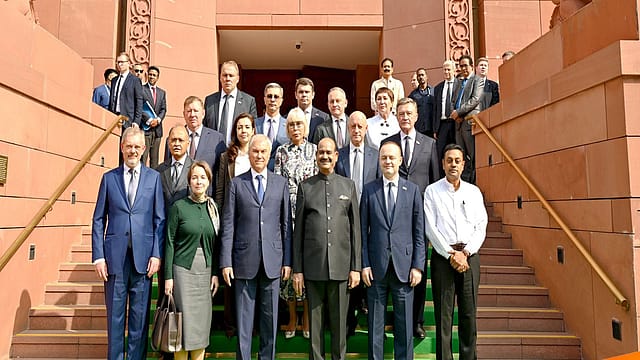
At a time when the global geopolitical landscape is undergoing profound changes, diplomacy can no longer remain confined to government-to-government negotiations and high-level summits. Parliamentary engagement, often conducted away from the glare of publicity, has emerged as an important instrument for building trust, sustaining dialogue and keeping channels of communication open when conventional diplomacy encounters obstacles. The 12th BRICS Parliamentary Forum, being hosted by Lok Sabha Speaker Om Birla on October 26 and 27, offers an opportunity to appreciate the growing significance of this less visible but increasingly relevant dimension of international relations.
The meeting follows the BRICS summit held in Delhi on September 12 and 13. Prime Minister Narendra Modi is also expected to interact with distinguished parliamentarians from BRICS member countries. Such engagement provides legislators with an opportunity to exchange views directly with the Indian leadership and gain a broader understanding of the country’s perspectives on pressing international issues. At a time when geopolitical rivalries are intensifying and the international order is under strain, such interactions can help create space for dialogue beyond the limitations of formal diplomatic engagements.
Beyond the corridors of conventional diplomacy
In recent years, Lok Sabha Speaker Om Birla and Rajya Sabha Deputy Chairman Harivansh have played significant roles in advancing India’s parliamentary diplomacy. The Commonwealth Speakers’ and Presiding Officers’ Conference, organised in January this year, and the G20 Speakers’ Conference held in October 2023 are notable examples of India’s efforts to strengthen engagement among legislative institutions. Both also participated in the BRICS Parliamentary Forum in Brasília in June last year.
The all-party parliamentary delegations sent to various countries following Operation Sindoor further demonstrated how legislators can contribute to India’s international outreach. By representing a broad spectrum of political opinion, such delegations can communicate national positions while engaging foreign lawmakers and political institutions. Their significance lies not merely in conveying a government’s message but also in establishing relationships that may prove valuable long after a particular diplomatic initiative has run its course.
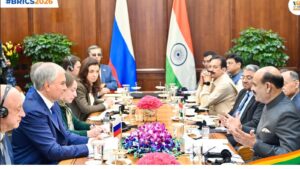
Yet, parliamentary diplomacy remains insufficiently understood outside policy and diplomatic circles. Its contribution is often overshadowed by the more visible activities of heads of government, foreign ministers and diplomats. This is unfortunate because legislatures provide an additional channel through which countries can sustain communication, exchange perspectives and explore common ground without necessarily committing themselves to formal agreements.
The history of the Inter-Parliamentary Union (IPU), established in 1889, is instructive in this regard. Long before the establishment of the United Nations, the organisation had created a platform for dialogue and cooperation among parliamentarians across national boundaries. Its evolution reflects the enduring belief that disagreements between countries need not eliminate opportunities for communication between their elected representatives.
The experience of the United Kingdom and Argentina after the Falklands War of 1982 offers a telling illustration. When relations between the two countries were severely strained, the centenary celebrations of the IPU in London in 1989 provided an opportunity for representatives of both sides to meet. Such encounters demonstrate how parliamentary platforms can help break the ice when conventional diplomatic engagement is constrained by political circumstances.
This does not mean that parliamentary diplomacy can replace formal negotiations or resolve every international dispute. Its strength lies elsewhere: in creating opportunities for contact, preserving channels of communication and gradually building the mutual understanding necessary for more substantive engagement. Meetings held alongside major international forums can be particularly useful in this respect. Bilateral exchanges between parliamentary leaders may not produce immediate breakthroughs, but they can establish the foundations for future cooperation.
Giving the BRICS agenda a parliamentary dimension
The BRICS Parliamentary Forum is designed to carry forward the broad objectives of the grouping’s summit declarations and decisions within the legislative domain. It complements the wider BRICS framework by bringing together representatives of member countries to discuss governance, institutional development and international cooperation.
The central theme of the present meeting, ‘Fostering Parliament for People-Centric Development’, is particularly relevant at a time when democratic and representative institutions are under pressure to respond to increasingly complex public expectations. Economic uncertainty, technological disruption, social inequalities and geopolitical tensions have made governance more challenging. Citizens expect institutions not only to deliver development but also to ensure that its benefits are accessible, equitable and sustainable.
The forum’s proposed discussions on strengthening institutional resilience, promoting human-centric innovation in artificial intelligence and leveraging parliamentary cooperation for more representative global governance address some of these emerging concerns.
Institutional resilience is essential because parliaments must remain effective even amid political polarisation, economic shocks and public distrust. Their legitimacy depends on their ability to facilitate debate, scrutinise executive action and translate citizens’ concerns into meaningful policy. Resilience, therefore, should not be understood simply as the survival of institutions under pressure; it must also encompass their capacity to remain transparent, accountable and responsive.
Artificial intelligence presents another important challenge. While technological innovation can improve public services, expand access to information and enhance administrative efficiency, it also raises questions about privacy, accountability, employment and the concentration of technological power. Parliamentary institutions have a crucial role in ensuring that the adoption of AI serves human interests rather than advancing technological change without adequate safeguards. Cooperation among legislators can help countries exchange regulatory experiences and develop common approaches to issues that transcend national boundaries.
The discussion on representative global governance is equally significant. International institutions must contend with demands from emerging economies and developing countries for a greater voice in decisions affecting trade, finance, climate action, technology and security. Parliamentary dialogue can help articulate these concerns and encourage a more inclusive understanding of global governance.
BRICS and the changing international order
The international system is becoming increasingly fragmented. Strategic competition among major powers, regional conflicts, economic nationalism and disagreements over global rules have weakened confidence in the ability of existing institutions to respond effectively to contemporary challenges. The post-war international order, shaped substantially by Western powers, is facing growing demands for reform.
India’s expanding economic weight makes its participation in this debate particularly consequential. As one of the world’s largest economies and a major emerging power, India has an interest in an international system that reflects contemporary economic realities and gives developing countries a more meaningful role in decision-making.

BRICS has acquired importance in this context, particularly as a platform through which countries of the Global South can raise questions about representation, development financing and the distribution of global economic power. Its expansion has widened its geographical and political reach, although its members continue to differ in their strategic priorities, economic structures and approaches to international affairs.
These differences should not be overlooked. BRICS is not a uniform political bloc, nor does its growing profile automatically translate into a common position on every international issue. Its effectiveness will depend on the ability of its members to identify shared interests, manage disagreements and develop practical mechanisms for cooperation.
Nevertheless, the grouping offers an important forum for debating the future of global governance. The existing international order, rooted in the state-centric principles associated with the Peace of Westphalia, has evolved considerably over the centuries. However, the institutions that emerged after the Second World War have struggled to accommodate the changing distribution of economic power and the aspirations of a more diverse international community.
The Non-Aligned Movement, which once provided a collective platform for countries seeking to preserve strategic autonomy during the Cold War, has also lost much of its earlier political momentum. Its historical contribution remains significant, but the challenges of the present era require institutions capable of translating shared concerns into tangible outcomes. BRICS has the potential to contribute to this process, provided its members move beyond declarations and strengthen cooperation through effective institutions and implementable initiatives.
For India, the BRICS platform and its parliamentary forum offer opportunities to present its perspectives on international reform, development and cooperation. But leadership in global affairs must be demonstrated through sustained engagement, credible proposals and a willingness to accommodate the legitimate concerns of other countries. A larger economic profile can strengthen India’s influence, but it cannot by itself guarantee a more representative international order.