


These contacts suggest that the private sector could play an important role in stabilising the bilateral relationship
 KRC TIMES Desk
Dr D. K. Giri
US Secretary of State Marco Rubio’s two-day visit to India on October 20-21 came at a time when political differences had strained relations between Washington and New Delhi. Yet, rather than concentrating exclusively on diplomatic disagreements, Rubio placed trade, energy security and private-sector investment at the centre of his engagements. His meetings in Mumbai and planned visit to Jamnagar, home to the world’s largest oil-refining complex, highlighted an approach that seeks to sustain practical cooperation despite wider geopolitical tensions.
The visit also raised a broader question about India’s foreign policy: should economic engagement be treated as a central instrument of diplomacy rather than a separate track? Economic cooperation can strengthen political relationships, just as diplomatic understanding can facilitate trade and investment. Rubio’s itinerary offered a reminder of how closely the two are linked.
Mumbai meeting sparks political debate
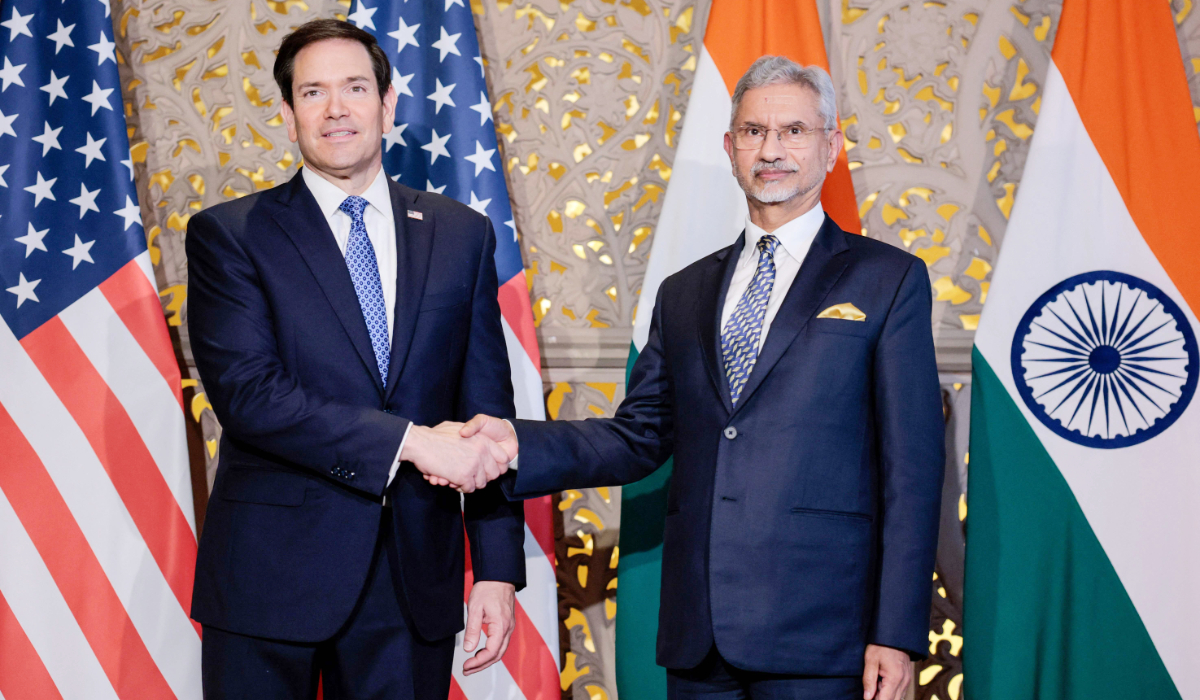
Rubio arrived in Mumbai on October 20, beginning his second visit to India in six months. At 3.40 pm, he paid tribute at the 26/11 memorial at the Taj Mahal Palace hotel. Ten minutes later, he held bilateral talks with External Affairs Minister S. Jaishankar at the same venue.
The choice of Mumbai rather than New Delhi triggered a political controversy. US Ambassador to India Sergio Gor reportedly said that Rubio had asked to meet Jaishankar in Mumbai. Opposition leaders questioned the circumstances, arguing that the arrangement appeared to undermine India’s diplomatic standing. They asked why India’s foreign minister should travel to meet his American counterpart rather than host him in the national capital.
The Ministry of External Affairs sought to play down the controversy. Spokesperson Randhir Jaiswal pointed out that India had hosted foreign dignitaries outside New Delhi for years. Prime Minister Narendra Modi, he noted, had received the Spanish prime minister in Vadodara and the Mauritian prime minister in Varanasi, while meetings of foreign ministers had also taken place in Goa.
According to the government’s explanation, holding the talks in Mumbai did not signify a reduction in diplomatic status. Instead, it recognised the importance of India’s commercial centre-a point Rubio also emphasised.
The episode illustrates how the location and format of diplomatic meetings can become subjects of domestic political debate. But the substantive question is whether the engagement produces progress on issues important to both countries.
Jamnagar and the significance of energy cooperation
Rubio’s visit to Jamnagar on October 21 was expected to underline the growing importance of energy ties. The refinery complex operated by Mukesh Ambani’s Reliance Industries has a capacity of around 1.4 million barrels a day, making it one of the most significant refining facilities in the world.
Jamnagar has acquired added strategic importance amid discussions about potential Indian investment in the United States. In March, President Donald Trump announced that Reliance was investing up to $10 billion in a proposed oil refinery in Brownsville, Texas. If realised, the project would represent a major addition to US refining capacity.
The prospect of such investment provides a commercial rationale for Rubio’s interest in India’s refining industry. His Mumbai schedule also included meetings with Gautam Adani and Tata Sons chairman N. Chandrasekaran, signalling Washington’s desire to strengthen engagement with major Indian business groups.
These contacts suggest that the private sector could play an important role in stabilising the bilateral relationship. Corporate investment, energy infrastructure and supply-chain cooperation create interests that can endure even when governments disagree on other issues.
Russian oil remains a sensitive issue
The visit took place against the backdrop of continuing tensions over India’s purchases of Russian crude oil. India, one of the largest buyers of Russian oil, has sought to balance its energy requirements with pressure from Western governments over Moscow’s war in Ukraine.
Shortly before Rubio arrived in India, Trump announced a temporary exemption from certain restrictions affecting Indian purchases of Russian oil. The relief offered Indian refiners greater flexibility at a time when conflict in West Asia was adding uncertainty to global energy markets.
The wider sanctions framework has remained a source of concern. Legislation associated with US Senator Lindsey Graham in 2026 proposed giving the American president the authority to impose tariffs of up to 100 per cent on countries buying Russian oil. Any such measures could have significant implications for India’s energy security and trade relations with Washington.
However, the exemption was not necessarily a permanent change in American policy. Rubio indicated that the Trump administration could take up to 60 days to assess the effects of the restrictions. The immediate relief therefore offered flexibility, but left uncertainty over the longer-term position.
Speaking in Samarkand on October 20, Rubio acknowledged the difficulties countries face in changing their energy sources quickly. He said that countries such as India had voluntarily diversified their supplies but continued to obtain substantial amounts of energy from Russia because replacing existing sources overnight was not easy.
His remarks reflected the tension between Washington’s sanctions policy and the practical realities of energy markets. For India, affordable and reliable supplies remain important to domestic economic stability. For the United States, the challenge is to pursue its strategic objectives without allowing disagreements over energy purchases to damage broader cooperation. Trade agreement close, but not yet concluded
Trade negotiations were another major focus of Rubio’s meeting with Jaishankar. Speaking to journalists in Mumbai, the US secretary of state said Washington and New Delhi were working to finalise a trade agreement and were close to resolving the remaining issues.
“We are very close,” Rubio said, indicating that only a few matters remained to be settled and expressing hope that the process could be completed soon.
A successful agreement could help address commercial differences and provide greater certainty for businesses operating in both countries. But the final outcome would depend on the terms negotiated, including how the two sides reconcile their respective economic priorities.
Rubio also described India as a “superpower” in crude-oil refining and urged it to process more Venezuelan crude. His comments underscored Washington’s interest in India’s refining capacity and its potential role in international energy supply chains.
Jaishankar said the discussions covered trade and energy, as well as technology, defence and regional developments. He also thanked Rubio for paying tribute to the victims of the November 2008 Mumbai terrorist attacks and reiterated India’s position of zero tolerance towards terrorism.
The agenda demonstrated that bilateral ties extend well beyond commerce. Trade negotiations and energy cooperation remain linked to security concerns, technological competition and the changing strategic balance in Asia.
A trilateral energy dialogue with the UAE
Rubio and Jaishankar also held a trilateral meeting with Sheikh Abdullah bin Zayed Al Nahyan, the United Arab Emirates’ foreign minister, who was in Mumbai for energy-related discussions.
The meeting focused on regional energy security and shared economic priorities. Such engagement offers an opportunity for India, the United States and the UAE to explore practical cooperation in areas where their interests overlap.
The format also reflected the wider logic of the I2U2 grouping, which brings together India, Israel, the United States and the UAE to promote cooperation in areas including investment, technology, food security and infrastructure.
While a single meeting does not establish a new strategic framework, regular dialogue among the three countries could help identify areas for investment and strengthen economic links across the region.
Technology and the wider strategic relationship
Rubio’s visit also had a cultural and technological dimension. On the evening of October 20, he attended the ‘Freedom 250’ reception at the Jio World Convention Centre, marking the 250th anniversary of American independence. Jaishankar attended as a distinguished guest.
Speaking at the event, Rubio highlighted the importance of cooperation between the United States and India on artificial intelligence and what the Trump administration describes as “superintelligence”. He said the two countries shared an interest in ensuring that advanced intelligence technologies were used for the benefit of humanity.

Technology is likely to remain an important area of bilateral engagement, particularly as both countries seek to strengthen their positions in artificial intelligence, digital infrastructure and advanced manufacturing. Cooperation, however, will require agreement on commercial interests, security concerns and the rules governing emerging technologies.
The strategic context is equally significant. Washington has long viewed India as an important partner in the Indo-Pacific, particularly in efforts to balance China’s growing influence. Successive US administrations have supported closer engagement with New Delhi, although the relationship has not been free from disagreements.
Recent strains have included Washington’s renewed contacts with Pakistan’s military leadership, differences over the conflict involving Iran, and US tariffs and immigration restrictions affecting Indian businesses and students. These issues have complicated a partnership that both governments have repeatedly described as important.
Trump has often referred to his personal relationship with Prime Minister Narendra Modi, reflecting his preference for leader-to-leader engagement. Yet personal rapport cannot, by itself, resolve differences over trade, sanctions, immigration or regional security. Durable progress requires institutional dialogue and agreements that can withstand political changes.
Economic diplomacy must deliver tangible results
Rubio’s visit offered signs of an effort to maintain momentum in India-US relations despite these disagreements. A US secretary of state who has previously taken a tough position on China and criticised India’s Russian oil purchases was now discussing trade negotiations, refining cooperation and investment opportunities with Indian officials and business leaders.
The shift does not mean that political differences have disappeared. Rather, it suggests that both sides see value in keeping economic channels open while continuing to negotiate on contentious issues.
For India, the central lesson is the importance of integrating economic priorities more closely into foreign policy. Trade agreements, energy partnerships, private investment and technology cooperation should not be treated as secondary to diplomatic protocol. They are instruments through which strategic relationships can be strengthened.
The location of a meeting matters less than the outcomes it produces. If discussions in Mumbai help move a bilateral trade agreement forward, improve energy cooperation or encourage major investment, their significance should be assessed in terms of those results rather than geography alone.
At the same time, India must ensure that closer commercial engagement does not come at the cost of its ability to make independent decisions on energy security and other national interests. Partnership requires negotiation, not automatic alignment.
The challenge for New Delhi and Washington is therefore to convert expressions of goodwill into practical agreements. Rubio’s visit has created an opportunity to do so. Whether it marks a lasting improvement in relations will depend on progress in trade talks, the stability of energy arrangements and the willingness of both governments to manage their differences through sustained dialogue.

