

Kisama Heritage Village in Nagaland serves as the venue for the Hornbill Festival and offers visitors a window into the culture and traditions of the state’s many Naga tribes
 North East Integration Rally
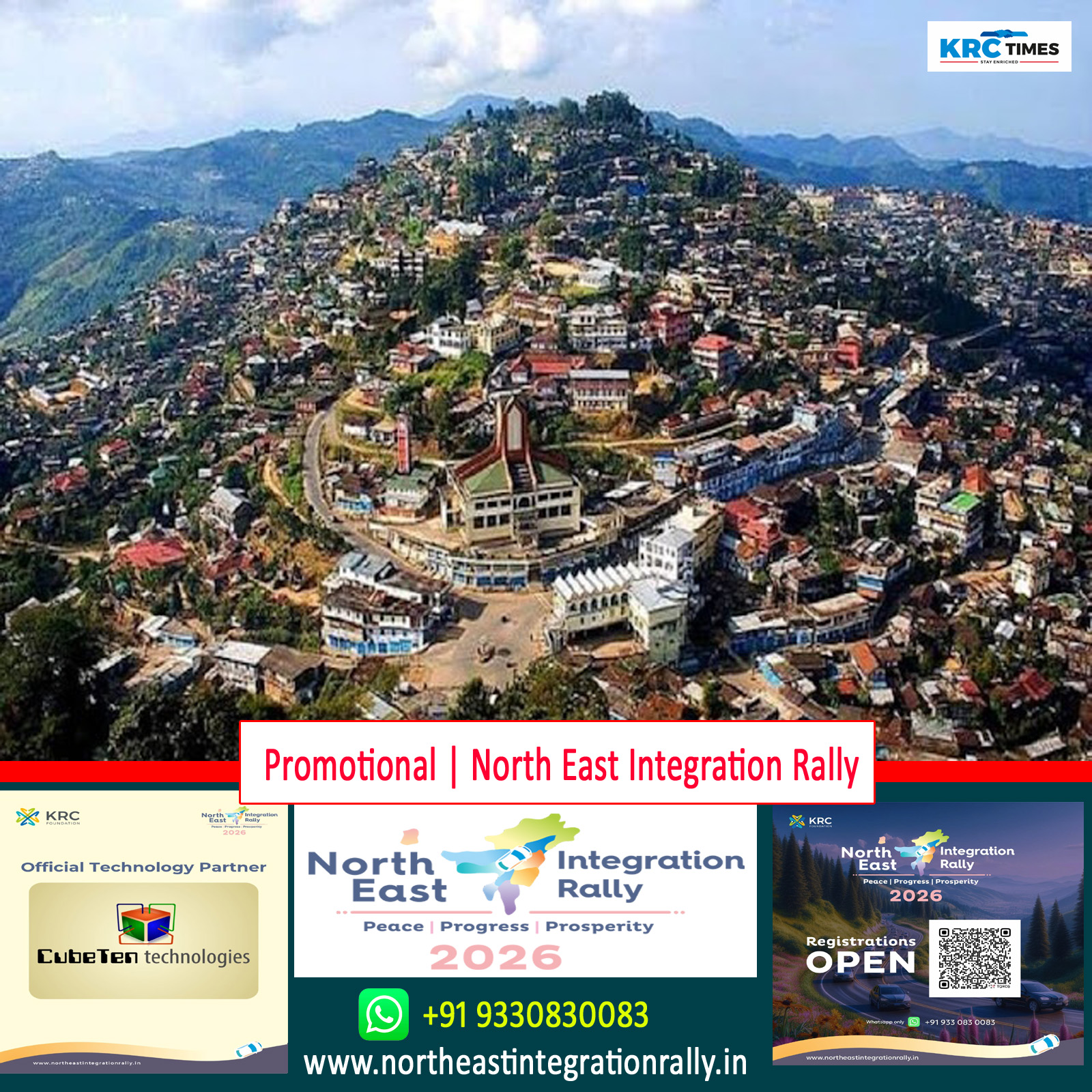
Nagaland’s Kohima rises. Hills layered over hills. Roads that twist without apology. Clouds that float low enough to brush rooftops. The city sits at the crest of Nagaland with a kind of quiet authority. It doesn’t bother competing with the drama of Shillong or the sprawl of Imphal. Kohima has its own mood—measured, thoughtful, and anchored in memory.
The rally (NEIR) will hold its activities on January 18 (Kohima Activities – Kisama). Kisama Heritage Village in Nagaland serves as the venue for the Hornbill Festival and offers visitors a window into the culture and traditions of the state’s many Naga tribes.
The site features sixteen traditional morungs, striking ceremonial gates, open arenas and amphitheatres, bamboo halls and shops, and even a World War II museum. To understand Kohima, you have to start with the land.
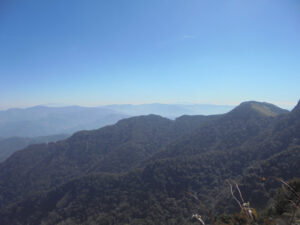
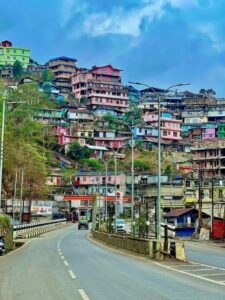
The city climbs and folds along ridges, making every neighbourhood feel like a lookout point. Houses perch on slopes with a confidence that seems impossible if you’re used to flat ground. Streets rise sharply, flatten for a breath, then rise again. Even walking here feels like a negotiation with gravity. But once you settle into the rhythm, you realise the hills aren’t obstacles. They are the city’s identity.
And at the center of that identity is the Kohima War Cemetery. You can’t talk about the city without acknowledging this place. It’s not a tourist spot; it’s a reminder. Rows of white headstones stretch across manicured terraces overlooking the valley.
The silence feels intentional. The Battle of Kohima was decisive, brutal, and historic, and the cemetery holds that memory with a dignity that shapes the city’s relationship with its own past. People who grow up here carry an awareness that their home once stood at the turning point of a global conflict. That gives Kohima a kind of depth you feel even if you don’t articulate it.
But Kohima isn’t defined by grief. It’s defined by resilience. The city rebuilt itself, expanded, and grew into Nagaland’s political heart. Legislative buildings, government offices, educational institutions—they form the administrative spine.
But look closer and you’ll see a city that balances governance with the rhythm of everyday life: morning markets buzzing with local vegetables and smoked meats, schoolchildren climbing steep lanes, church bells ringing clean across the hills.
Kohima’s culture doesn’t live in museums. It lives in kitchens, street corners, and gatherings. Food here is straightforward and grounded. Smoked pork cooked to perfection, bamboo shoot adding sharpness, axone giving that familiar fermented punch, boiled vegetables carrying the taste of the soil—meals reflect Nagaland’s relationship with its land.
Even ingredients sold in small markets tell stories: local herbs that heal, wild fruits that surprise you with a sudden sweetness, fresh fish carried from nearby rivers, and chili varieties that don’t believe in moderation.
Cafes and bakeries have carved their own space in the city’s newer rhythm. Run by young entrepreneurs, they blend global influences with local comfort. You hear soft music, see students sharing notes, and spot travelers catching their breath after a long climb.
Kohima’s youth culture is subtle but sure of itself—music gigs, fashion pop-ups, photography walks, and conversations that shift easily from politics to football to indie bands.
Then there’s the church. Christianity shapes the city’s social fabric. Sundays feel different. Roads go quieter. Homes fill with families getting ready for service. Choirs practice harmonies that float across neighbourhoods. Churches are not just places of worship—they’re community anchors, places where relationships form, where people feel held.
And yet, Kohima embraces modernity with surprising energy. New buildings push upward wherever the terrain allows. Fleets of taxis weave through traffic. Shops carry everything from handcrafted shawls to Korean skincare to the latest sneakers.
The city absorbs trends without losing itself. You see traditional shawls paired with denim jackets, folk songs blending with rock, and heritage merging with modern expression in a way that feels natural, not curated.
Walk through the heart of the city and you’ll notice how layered the place is. The State Museum holds textiles, weapons, ornaments, and everyday objects from tribes across Nagaland. But the real living archive sits outside, in the people themselves.
You hear many languages in a single afternoon. Angami elders discussing community affairs. Ao college students planning events. Visitors from other tribes and states blending into the city’s flow. Kohima never feels homogenous; it feels coordinated.
Now, talk to anyone about Kohima during December and one word comes up: Hornbill Festival. Though technically held at Kisama Heritage Village, just outside the city, the festival transforms Kohima’s atmosphere. It brings the entire state together.
Dance, craft, music, food, sports, and cultural performances share space without competing. What matters is representation, not spectacle. Visitors come with expectations of color and energy, but what they often leave with is an understanding of how rooted these traditions are.

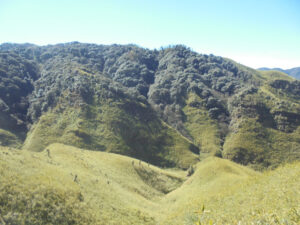
Move beyond the central parts and Kohima reveals a calmer side. Villages on the outskirts hold onto older ways of living. Terraced fields carve patterns across hills. Families tend to gardens with care passed down through generations. The air grows colder, cleaner, more patient. This blend of urban growth and rural continuity gives the city dimension.
Nature shapes everything here. The climate dictates routines. Fog rolls in from nowhere. Rain changes plans instantly. Winter carries a chill that makes community gatherings warmer. Even during busy hours, look up and you’ll find green ridges framing the city like protectors. Kohima doesn’t forget that it exists because the hills allow it.
Now let’s talk about the city’s challenges. Urban congestion is real. Roads struggle to support the growing population. Landslides during heavy rain remain a threat. Expansion is limited by geography, forcing the city to grow vertically or outward in narrow belts. But Kohima meets these challenges with a kind of steady pragmatism. People adjust. Plans shift. Communities support each other.
What you learn quickly is that Kohima isn’t a city built around convenience. It’s built around meaning. Conversations matter. Community matters. History matters. Faith matters. Respect matters. You sense it in the way people greet each other, in how they navigate disagreements, in the way the city pauses to honor memory while still stepping into the future.
Kohima isn’t about spectacle. It’s about depth. It’s a city that asks you to slow down, adapt to its altitude, listen to its silences, and pay attention to its conversations. Walk its steep lanes long enough and the city begins to make sense. You recognize its mix of heritage and ambition. You grasp its balance of tradition and youth. You feel its collective memory shaping its present.
Kohima stays with you not because it overwhelms you, but because it grounds you. It reminds you that cities don’t need to shout to be powerful. Some speak softly, from the hills, with stories that echo long after you’ve left.
Promotional | North East Integration Rally