The Cherrapunji and Mawlynnong
 North East Integration Rally
Cherrapunji sits at the edge of the Khasi Hills like a place carved out of cloud and stone. People know it through trivia. Wettest place on earth. Endless rain. Waterfalls everywhere. But the village and its surrounding cliffs hold a deeper story, one shaped by geology, tribal memory, and a relationship with weather that goes beyond climate and enters the realm of belief.
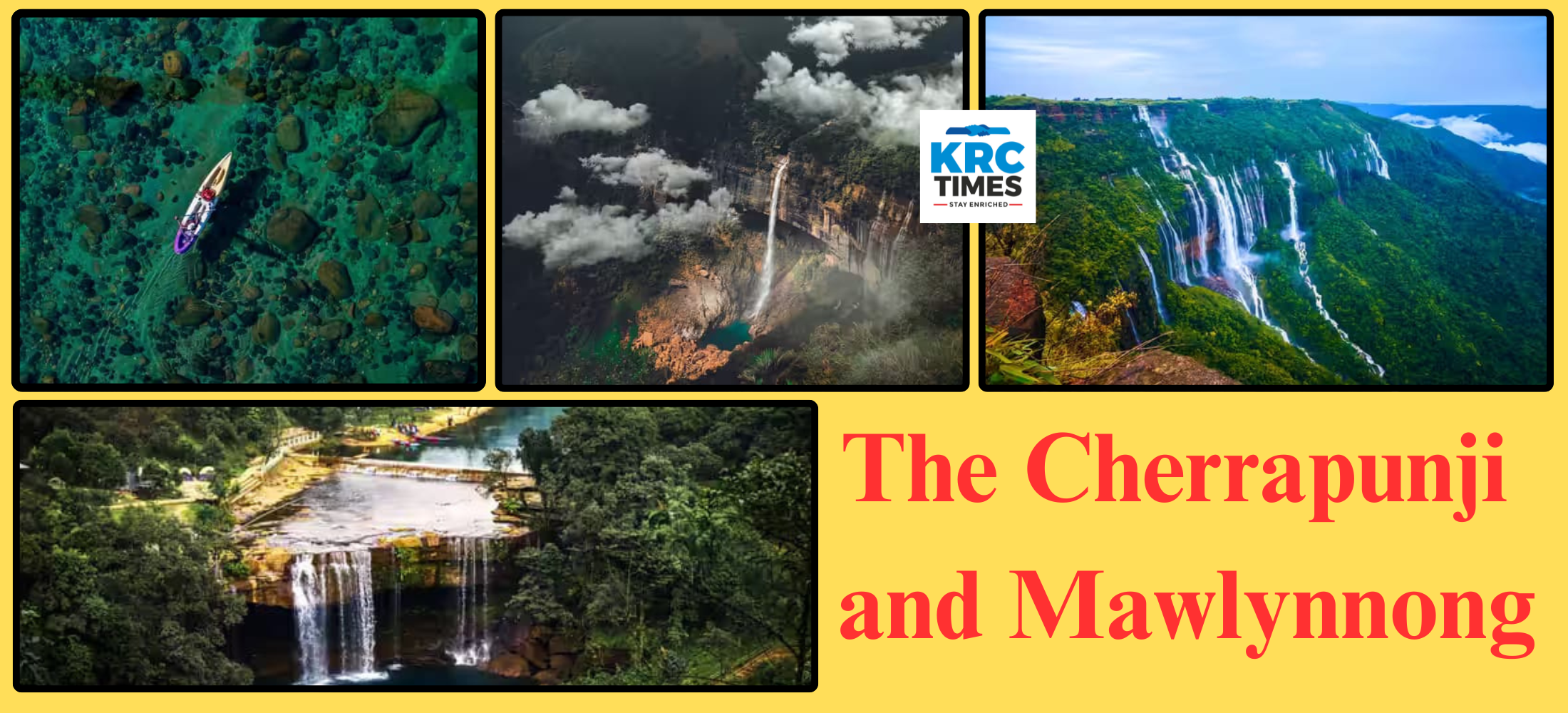
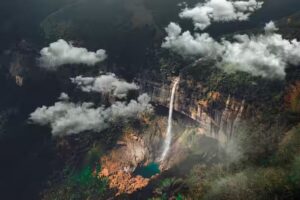
The first thing you feel in Cherrapunji is the air. It wraps around you with a cool heaviness even when the sun looks harmless. The terrain lies open and rugged, with rolling plateaus that plunge suddenly into gorges so deep they feel like the earth split on purpose. There’s nothing tame about the geography. You stand at the viewpoint above Nohkalikai Falls and the land stretches out like a map you can almost read. A green expanse, thin villages, sudden cliffs, endless sky.
This is a place where weather doesn’t just pass through. It lives.
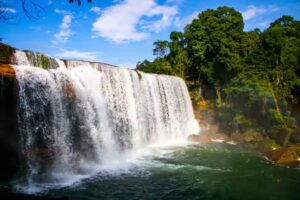
For most of the world, rain is inconvenient or romantic. In Cherrapunji, it’s architecture. It’s work. It’s a memory. The rainfall is not a poetic drizzle. It’s relentless, weeks-long, soaking you until the idea of being dry feels fictional.
What this really means is the rain has shaped everything. Homes once had thatched roofs designed to let water flow without pooling. Paths were built to channel the downpour. Families scheduled farming around the monsoon’s moods. In a landscape constantly sculpted by rain, people adapted with patience rather than resistance.
And then there are the clouds. They appear without warning. One moment you see a valley stretching forever. The next you’re inside a white room that erases every direction. Cherrapunji teaches you to trust your feet more than your eyes.

If you want to understand Cherrapunji’s creativity, stand on a living root bridge and let the place speak for itself. The War-Khasis didn’t build these bridges in a single season. They grew them by guiding the roots of rubber fig trees across streams and ravines, weaving them, training them, letting time do what concrete never could.
The bridges are not heritage pieces polished for visitors. They’re practical, durable solutions built by people who understand their environment at a molecular level. Some bridges take eighteen to twenty years to become strong enough for daily use.
Think about the mindset that requires. A community invests in a structure that their grandchildren will benefit from. That’s a different way of relating to time. It tells you why Cherrapunji feels both ancient and forward-looking at once.
The Khasi worldview runs through Cherrapunji’s daily life. Matrilineal descent defines inheritance and lineage. Family ties run through the mother’s clan. This shapes household relationships, village leadership patterns, and social responsibility.
Yet, the region doesn’t exist in a glass case. Christianity has become a major force here, blending with local traditions. Schools, churches, and small businesses now sit alongside monoliths and sacred groves. The balance isn’t perfect, but it’s stable.
You sense this mix most clearly in conversations with local residents. They speak of rainfall records, land rights, education, tourism, and climate change with the clarity of people who know their environment intimately and also see how the outside world interprets it.
And that gap—between lived experience and simplistic understanding—defines much of Cherrapunji’s quiet frustration.
Move away from the viewpoints and you’ll find a quieter Cherrapunji. Children walking to school in neat uniforms. Elderly women carrying baskets woven with the precision of muscle memory. Houses painted in soft pastels that look surprisingly modern against the rugged landscape.
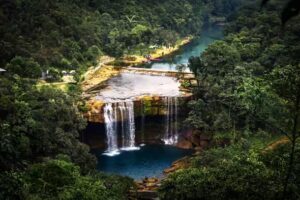
Each settlement sits on a hill crest, close enough to share resources yet spaced out enough to give every family its own view of the valley. Life here moves at a steady, unhurried rhythm. People respect privacy. They trust silence. They understand the seasons in ways a weather app never could.
Nohkalikai steals most of the attention, and rightly so. Its drop is dramatic, and the legend behind its name is darker than most tourist spots would dare to advertise. But the region is full of waterfalls that feel more personal: Dainthlen, Seven Sisters, Wei Sawdong, countless unnamed cascades that appear only during the stronger months of rain.
These falls aren’t spectacles. They’re signatures of a land shaped by gravity and moisture in constant negotiation. The roads have improved. Homestays have doubled. Social media has turned the landscape into a spectacle. But Cherrapunji hasn’t morphed into a performance.
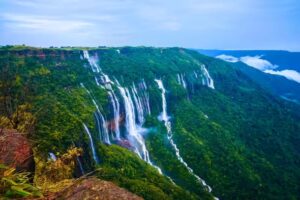
It still resists becoming a theme park. Even the busiest spots carry a certain restraint. Local guides speak softly. Villagers observe visitors with curiosity rather than commercial urgency.
The tourism economy helps families and builds opportunities, but the community protects its boundaries. Sacred forests remain off-limits. Ritual spaces stay unadorned. Certain stories are shared; others stay rooted in clan memory.
Cherrapunji isn’t defined by rainfall records. Those numbers flatten the place into trivia. What defines it is the way its people have built a life around the meeting point of stone, cloud, root, and rain.

The region shows how human adaptation can be elegant instead of extractive. How tradition can be innovation. How weather can be a teacher instead of an obstacle. It reminds you that identity formed in harsh landscapes often carries the deepest wisdom.
You come to Cherrapunji expecting climate. You leave thinking about time. The bridges that grow, the cliffs that shift, the villages that endure, and the people who shape a home in a place that constantly changes its face. If you want to understand the Northeast’s relationship with land, this is where you start.
It add a little, Mawlynnong is a small village in Meghalaya’s East Khasi Hills, known for its reputation as Asia’s cleanest village. Travelers come for its spotless lanes, thick greenery, and the remarkable Living Root Bridges crafted by the Khasi community. The village leans into ecotourism, asking both locals and visitors to help preserve its calm, well-kept environment. Bamboo bins are placed throughout, community clean-ups are routine, and plastic is off-limits.
Promotional | North East Integration Rally