

The High Court constituted the committee in April 2022 following years of litigation over illegal coal mining, mine-related deaths and environmental degradation
 KRC TIMES Assam Bureau
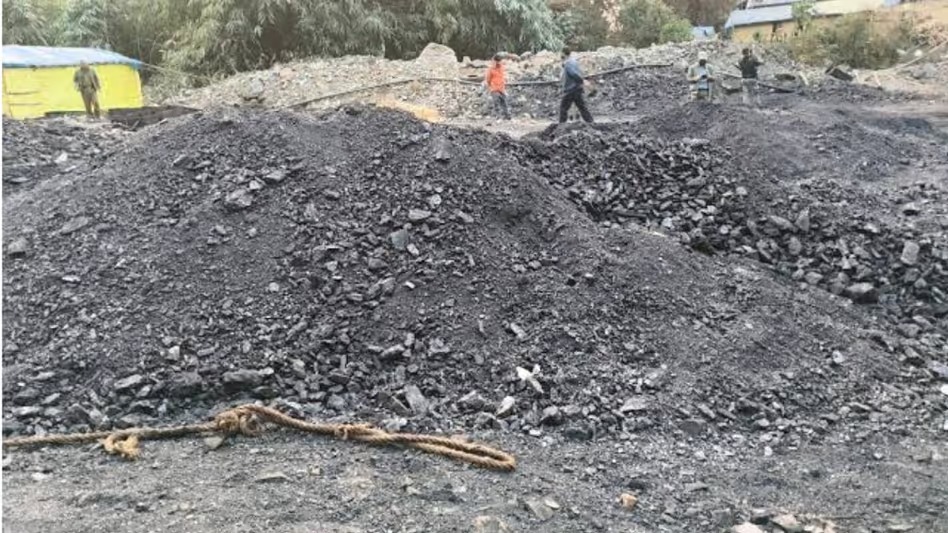
GUWAHATI | More than 13 lakh metric tonnes of inventoried coal remain unaccounted for in Meghalaya, while abandoned rat-hole mine openings across the state continue to remain unsecured despite repeated court directions, according to the latest interim report of a Meghalaya High Court-appointed committee.
The committee, headed by retired Justice B.P. Katakey, has called for a detailed investigation to determine responsibility for the missing coal and alleged lapses in safeguarding extracted coal and tackling illegal mining.
The findings are contained in the committee’s 41st interim report, submitted as part of its continuing oversight of compliance with directions issued by the Supreme Court, the National Green Tribunal and the Meghalaya High Court on unscientific and illegal rat-hole coal mining.
The High Court constituted the committee in April 2022 following years of litigation over illegal coal mining, mine-related deaths and environmental degradation. Rat-hole mining was banned in 2014, while the Supreme Court later allowed the state to deal with coal already extracted under regulated conditions.
The state government had earlier informed the Supreme Court that 32,56,715 metric tonnes of extracted coal were available. However, an aerial assessment subsequently indicated a substantially lower quantity, while physical verification by Deputy Commissioners recorded 19,54,258.816 metric tonnes.
The resulting shortfall stands at 13,02,456.184 metric tonnes.
The committee said the discrepancy warrants a detailed inquiry, particularly because the state government had been entrusted with safeguarding the extracted coal. The missing quantity would amount to roughly 52,000 truckloads if each truck carried 25 tonnes. At a rate of 100 trucks a day, transporting such a volume would take more than 500 days.
The state has previously attributed some of the difference to variations between physical and drone-based measurements, besides accounting for coal that had been auctioned or seized. The committee, however, has not accepted these explanations in full.
The report also raises concerns over 37,449.53 metric tonnes of illegally extracted coal detected outside designated Coal India Limited depots that subsequently went missing. Initially, police cases covered only 4,141.83 metric tonnes.
Although the government later informed the committee that cases had been registered for the entire quantity, details such as case numbers and the progress of investigations have not yet been submitted despite earlier directions.

Abandoned mines remain unsecured
The committee has also flagged the continued failure to close or fence abandoned rat-hole mine openings. Despite repeated directions, no mine opening has been fully secured, the report said. Deputy Commissioners have submitted proposals for fencing, while the Oversight Committee has examined detailed project reports for permanent closure.
The state has cited Meghalaya’s complex landholding system, involving private, clan and customary ownership, as well as concerns that fencing in remote areas could be damaged. The committee has nevertheless sought a fixed timeline for securing all abandoned mine openings, with temporary fencing to be installed until permanent measures are completed.
Fresh illegal mining case
The report records a suspected case of illegal mining detected at Sakhain village in East Jaintia Hills in early September. Police registered an FIR at Khliehriat Police Station after a newly excavated pit was detected. Photographs from the site showed mining equipment, although the police report did not indicate whether the equipment had been seized.
The committee also pointed to gaps in follow-up action after seizures. Between 2023 and 2026, authorities seized 62 vehicles and 92 pieces of equipment in cases involving illegal mining and transportation. However, confiscation proceedings under the Mines and Minerals (Development and Regulation) Act were initiated in only one case, while action against landowners and mine owners remained limited.
A detailed action plan prepared by the Mining and Geology Department to prevent, detect and control illegal mining and transportation is also awaiting approval.
Restoration and compensation pending
The committee said progress on environmental restoration in coal-affected areas has remained slow. Projects aimed at restoring the Kyrhuhkhla and Lunar rivers have not been implemented despite receiving in-principle approval. Funds earmarked for restoration also remain unused because adequate project proposals have not been submitted.
Compensation is meanwhile pending for the family of Durba Rai, whose body was recovered earlier this year from an unsecured illegal coal mine pit in East Jaintia Hills. Police have registered a case in connection with the death.
The report noted one recent step by the state government: revised rules for transporting scientifically mined coal were notified on September 14, 2026. The procedure incorporates safeguards intended to prevent illegally extracted coal from being transported as legally mined material.
The committee has sought fixed timelines for identifying responsibility for the missing coal, securing abandoned mine openings, completing pending criminal investigations and strengthening mechanisms for reporting illegal mining, including protection for whistle-blowers.
While the latest report records some progress through new procedures and government notifications, it concludes that several key issues remain unresolved, particularly the missing inventoried coal, unsecured mine openings, pending investigations and delays in environmental restoration.