

The specimens included 14 preserved snakes and 13 live individuals examined during herpetological surveys conducted between 2007 and 2023
 KRC TIMES Assam Bureau
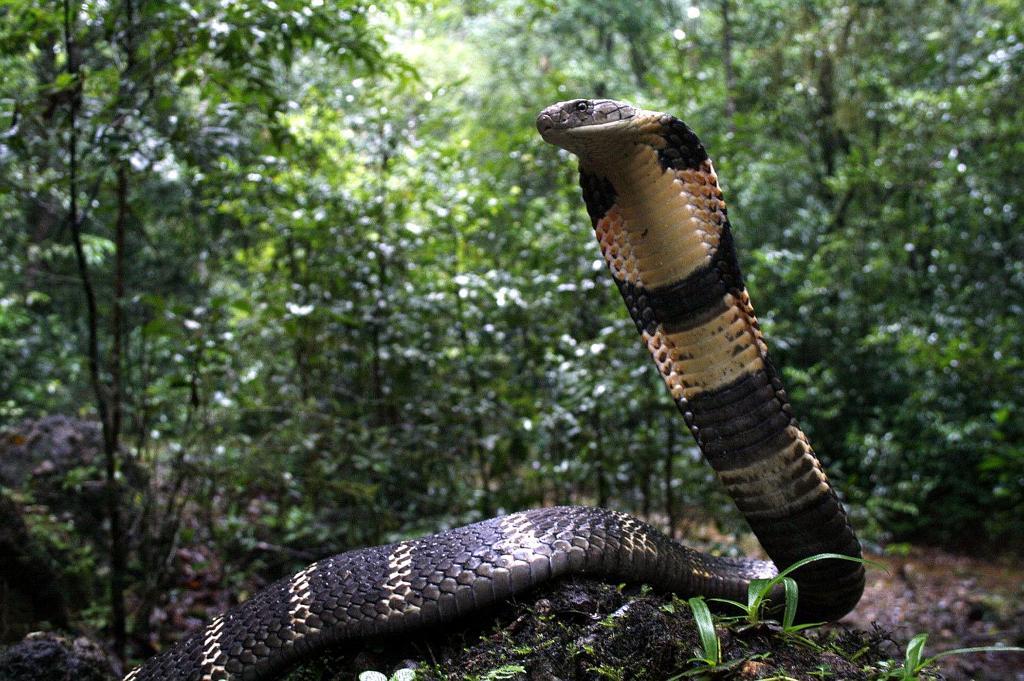
Guwahati | A new study by researchers from Mizoram has provided the first detailed morphological characterisation of the Northern King Cobra population in the state, strengthening earlier genetic evidence that places Mizoram’s king cobras within the Indo-Chinese lineage of Ophiophagus hannah.
The study, led by Prof Hmar Tlawmte Lalremsanga of the Department of Zoology at Mizoram University, has been published in Proceedings of the Zoological Society by Springer.
Researchers examined 27 adult king cobras – 15 males and 12 females – combining detailed physical measurements with mitochondrial DNA analysis to establish the population’s systematic placement.
The specimens included 14 preserved snakes and 13 live individuals examined during herpetological surveys conducted between 2007 and 2023.
Studying the species is challenging because the king cobra is a highly protected animal in India, listed under Schedule I of the Wildlife Protection Act, while the International Union for Conservation of Nature (IUCN) classifies it as vulnerable.
For the genetic analysis, researchers examined three mitochondrial markers – 16S rRNA, cytochrome c oxidase subunit 1 (cox1) and cytochrome b (cytb). Phylogenetic analysis placed the Mizoram samples within the Indo-Chinese lineage, alongside populations from Northeast India and other parts of the region.
The findings provide morphological support to earlier genetic studies that had classified Mizoram’s king cobras under O. hannah. Until now, researchers said, detailed morphological data on the state’s population had been limited.

The study comes amid a major revision in the scientific understanding of king cobra diversity. Researchers now recognise four distinct evolutionary lineages or species that were previously grouped under a single widespread species: the Indo-Chinese O. hannah, Western Ghats O. kaalinga, Indo-Malayan O. bungarus and Luzon Island O. salvatana.
The Mizoram specimens also showed clear differences between males and females. Females recorded higher average numbers of ventral scales, while males had higher average values for subcaudal scales, undivided subcaudals and tail length, along with several head measurements.
These included head length, head width, head depth, nostril diameter, internarial distance, frontal width and parietal width.
The researchers said the differences in head size and shape warrant further investigation, including whether they could be linked to sex-specific selection or competition between males. However, they stressed that this remains a hypothesis for future research rather than a conclusion established by the study.
The study also updates several previously recorded morphological ranges. Male specimens had between 236 and 261 ventral scales, compared with 240 to 258 in females. Male tail lengths ranged from 300 to 630 mm, while female tail lengths ranged from 308 to 430 mm.
The researchers cautioned that some of the updated ranges were based on unusual measurements from two live rescued snakes that were released after examination and could not subsequently be rechecked. They said the variations could be linked to habitat adaptation, developmental conditions or sampling differences.
According to the researchers, the combined morphological and genetic data provide an important baseline for future studies on the evolution, systematics and conservation of king cobras in Mizoram.
The study also underlines the conservation challenges facing the species. King cobras are often killed after encounters with people, while habitat destruction, retaliatory killings and the loss of nesting sites remain threats to populations in the region.
The researchers said recognising distinct evolutionary lineages could also have implications for conservation planning, with strategies potentially needing to account for the specific ecological pressures faced by different populations.