


NHPC Office, Police Station Set Ablaze in Pasighat
 KRC TIMES NE Desk
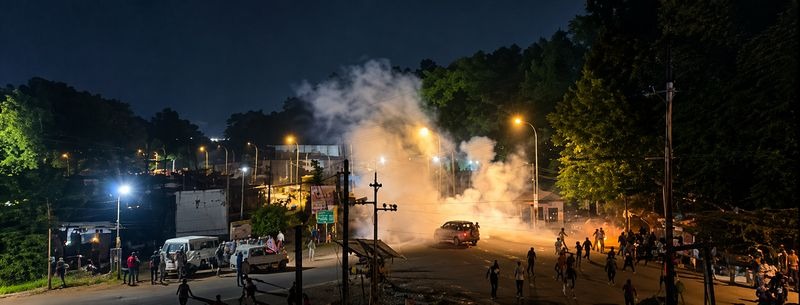
PASIGHAT | Protests against the proposed Siang Upper Multipurpose Project (SUMP) in Arunachal Pradesh turned violent on Friday, October 23, with an office of the National Hydroelectric Power Corporation (NHPC) and a police station in Pasighat reportedly set ablaze. Seven police vehicles were also reportedly torched, while a journalist sustained injuries during the unrest.
The violence erupted amid mounting opposition to preliminary survey work for the proposed 11,000-megawatt hydropower project on the Siang River. Protesters have demanded the immediate release of detained activists, the withdrawal of security personnel from the Siang region and a complete halt to the pre-feasibility report (PFR) survey associated with the project.
Tensions escalated as demonstrators confronted security personnel. Local reports alleged that police used tear gas to disperse the protesters. Security was subsequently tightened in Pasighat as authorities attempted to bring the situation under control.
The extent of the damage to government and other properties remained unclear, with no detailed official account of the incidents immediately available.
Opposition to Siang project intensifies
The latest violence has brought renewed attention to the opposition surrounding the proposed Siang Upper Multipurpose Project, one of the major hydropower initiatives planned in Arunachal Pradesh.
The project, proposed on the Siang River and being pursued by NHPC, has faced resistance from sections of local communities concerned about its potential impact on land, livelihoods, settlements and the river ecosystem.

For communities in the Siang region, the debate extends beyond electricity generation and infrastructure development. Concerns over the possible displacement of residents, environmental changes and the long-term consequences of a large dam have contributed to opposition to the project.
The demand to stop the pre-feasibility survey reflects protesters’ resistance to preliminary activities associated with the project. The latest mobilisation has also focused on the presence of security forces and the detention of activists, turning the dispute into a wider confrontation over the manner in which the project-related process is being pursued.
Security deployment adds to tensions
The reported burning of the NHPC office, police station and police vehicles marks a serious escalation in the protests. The injury to a journalist has also raised concerns about the safety of media personnel covering the unrest.
Authorities deployed additional security personnel in Pasighat following the incidents. However, details regarding the circumstances leading to the arson, the identities of those responsible and the official assessment of the damage were not immediately available.
The demands raised by protesters centre on three immediate issues: the release of detained activists, the withdrawal of security forces from the Siang region and the suspension of survey activities for the proposed project.
The situation underscores the challenge facing the authorities in balancing infrastructure development with local concerns over land, the environment and community rights.
As tensions continue over the proposed hydropower project, the immediate priority remains restoring order and establishing the facts surrounding the violence. The longer-term challenge will be to address the concerns of affected communities through transparent consultations and a credible assessment of the project’s social and environmental implications.
The reports of arson and damage had not been independently confirmed by an official account at the time of publication.

