


The initiative aims to strengthen the preparedness of civilian volunteers and develop a more organised response mechanism for security-related emergencies and other critical situations
 KRC TIMES National Bureau
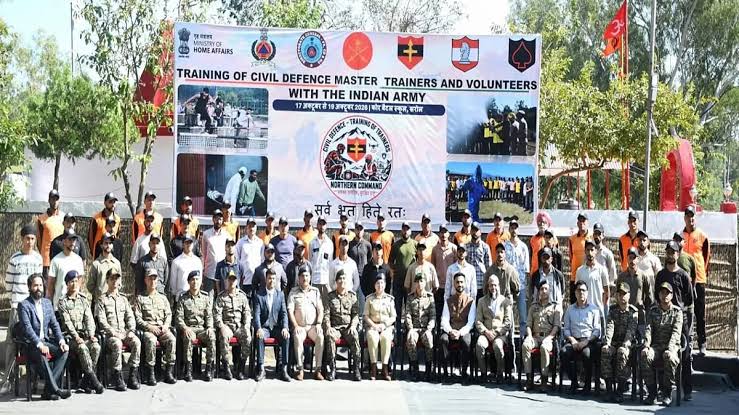
NEW DELHI | Assam and other northeastern states are set to play a role in the Centre’s initiative to strengthen civilian preparedness and emergency response, with the Union Home Ministry planning to build a civil defence network involving around 60,000 volunteers across 12 states and Union Territories.
Under the pilot project, master trainers in civil defence from the selected regions will receive specialised three-day training in collaboration with the Indian Army. The initiative aims to strengthen the preparedness of civilian volunteers and develop a more organised response mechanism for security-related emergencies and other critical situations.
Assam, Meghalaya and Sikkim are among the participating states, while Jammu and Kashmir, Punjab, Rajasthan, Gujarat, Delhi, Uttar Pradesh, Kerala, Karnataka and Tamil Nadu are also included in the programme.
The initiative draws inspiration from Prime Minister Narendra Modi’s Independence Day address, in which he outlined a vision for a modern civilian protection network equipped with advanced technology and capabilities to address emerging security challenges.
For the Northeast, the initiative assumes particular significance given the region’s geographical vulnerabilities, international borders and exposure to natural disasters. Assam and neighbouring states frequently face challenges such as floods, landslides and disruptions to transport and communication, making coordination among civilian volunteers, security agencies and emergency services crucial during crises.
However, the ministry’s announcement does not specify how the proposed 60,000 volunteers will be distributed among the participating states or provide a separate implementation timeline for the Northeast.
Guwahati among 10 locations identified for emergency communication network
Alongside the civil defence initiative, the Home Ministry is planning a nationwide Broadband Public Protection and Disaster Relief (BB-PPDR) network to provide advanced communication facilities to around three million personnel from police forces, central armed police forces and disaster response agencies.

Guwahati has been identified as one of 10 locations for the proposed network, highlighting the importance of strengthening emergency communications infrastructure in the Northeast.
The other identified locations are the Andaman and Nicobar Islands, Amritsar, Bastar, Bengaluru, Ladakh, Lakshadweep, Mumbai, Rudraprayag and Visakhapatnam.
According to the ministry, the proposed system will provide mission-critical push-to-talk communication, data transmission and video connectivity to state police forces, central armed police forces, the National Disaster Response Force, fire services, medical services and other security agencies.
The network is intended to enable faster information-sharing and coordination among agencies during emergencies, when conventional communication systems may be disrupted or inadequate.
For Assam, where widespread flooding can affect several districts simultaneously and interrupt road connectivity, reliable communication between rescue teams, police, medical personnel and disaster management authorities can be particularly important. The proposed network could support such coordination, although its actual coverage, operational capabilities and implementation schedule have not yet been detailed.
Northeast focus on preparedness and coordination
The two initiatives form part of the Centre’s broader effort to strengthen civilian protection, emergency communication and disaster response capabilities.
The civil defence programme will focus on developing trained volunteers through a master-trainer system, while the proposed broadband network is intended to improve communication among professional responders and security agencies.
For the Northeast, the effectiveness of these measures will depend on how quickly training reaches local volunteers, whether the communication network covers vulnerable and remote areas, and how well the different agencies coordinate their operations.
The Home Ministry has invited suggestions from the public and stakeholders on the proposed nationwide broadband network. Further details on the rollout, funding and state-wise implementation of the projects are awaited.

