


He said local land and boundary disputes should not be allowed to develop into larger State-versus-State confrontations
 KRC TIMES National Bureau
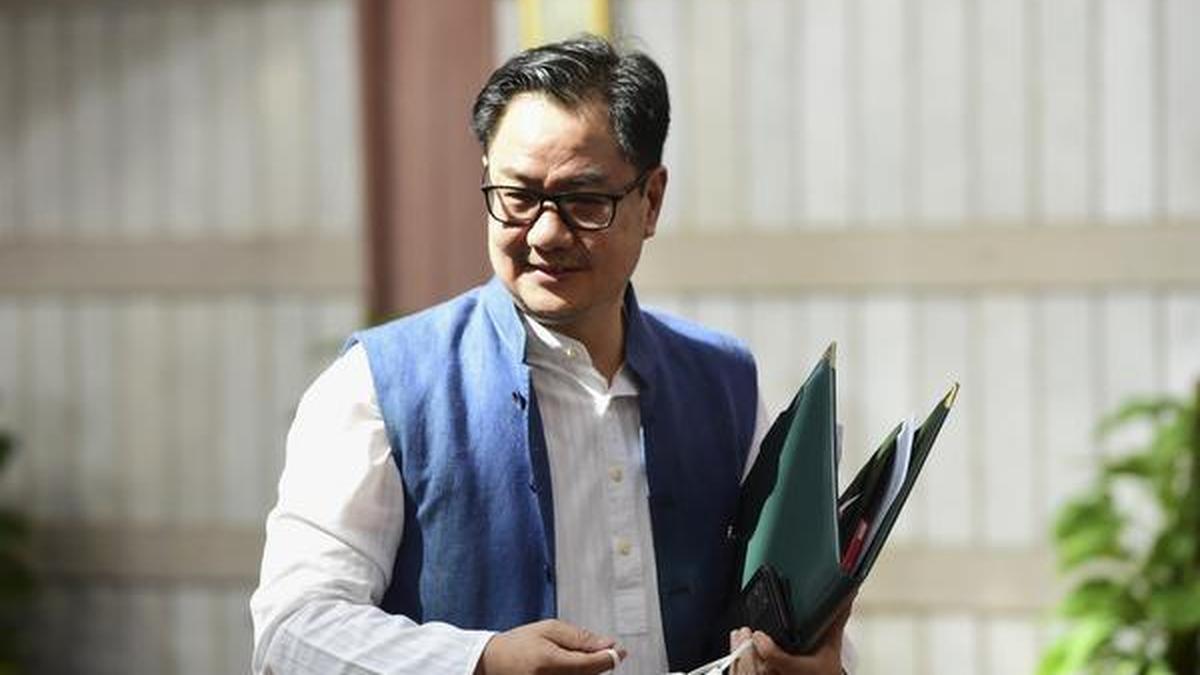
New Delhi | Union Parliamentary Affairs Minister Kiren Rijiju has called for greater unity among the Northeastern states, saying boundary and community disputes must be resolved through dialogue and mutual understanding rather than confrontation.
In an interview in New Delhi, Rijiju said the Northeast, comprising eight states including Sikkim, had the potential to emerge as a prosperous, peaceful and developed region if differences between states, communities and ethnic groups were addressed constructively.
“The entire Northeastern region, including Sikkim, we are eight states. We are very emotional people. We want to be a region which is prosperous, developed and where people are happy,” he said.
Rijiju, who represents Arunachal Pradesh, said the region had suffered from inadequate attention from the Centre during previous governments, but claimed that the situation had changed since 2014 with the Narendra Modi government placing the Northeast higher on its development agenda.
“Prime Minister Modi has made the Northeast a priority area,” he said. At the same time, Rijiju expressed concern over continuing disputes between Northeastern states, particularly those involving Assam and Meghalaya, Mizoram and Nagaland, Assam and Arunachal Pradesh, and Nagaland and Manipur.

Send your resume:
biswa@jigyasu.co.in
krcfoundation@gmail.com
He said local land and boundary disputes should not be allowed to develop into larger State-versus-State confrontations. “We have to understand that we all are part of the same region and same country,” Rijiju said. He noted that disputes over land and resources were not unique to the Northeast and could arise between families, villages and communities. The challenge, he said, was to prevent such differences from escalating into violence.
“Even there are problems within families, problems within the same states. There are differences between village to village also. So, it’s not that land disputes are not there. It is everywhere. Then to make it state versus state, that is unfortunate,” he said. Referring to recent tensions along the Assam-Arunachal Pradesh boundary, Rijiju said elected representatives from both states had appealed to people to prevent local differences from turning violent.
He said such disputes could be resolved amicably if all sides were willing to engage in dialogue and find common ground.”There may be differences in perception but there has to be some solution. One point of view of one group may be different from the other group or the other state. In that case, we have to come to the middle ground,” he said.
Rijiju also cautioned against the role of social media and sections of the local media in amplifying sensitive disputes. According to him, narratives portraying one state or community as being “anti” another can quickly inflame public sentiment, particularly when the complexities of the underlying dispute are not adequately explained.
He said young people could be particularly vulnerable to such narratives and warned that exaggerated or one-sided portrayals could encourage them to resort to violence. Rijiju described Assam and Arunachal Pradesh as sharing deep historical and social links and said their relationship should not be defined solely by boundary disagreements.
He recalled that Arunachal Pradesh was administered as part of Assam before becoming a separate Union Territory in 1972 and said Assamese people had played an important role in the early development of the frontier region. “Arunachal Pradesh in the initial stage was supported and built by the Assamese people. Our first language was also Assamese. When I was born, I was born as an Assamese,” he said.
Rijiju credited Assam Chief Minister Himanta Biswa Sarma and Arunachal Pradesh Chief Minister Pema Khandu with helping maintain peace during periods of tension along the inter-state boundary. He also praised student organisations and civil society groups in both states for playing a role in preventing disputes from escalating into clashes.
On China’s repeated claims over Arunachal Pradesh and its efforts to assign Chinese names to places and geographical features in the state, Rijiju said such moves would have no bearing on India’s position.He described the recent standardisation of the names of 27 places and geographical features in Arunachal Pradesh on official maps as essentially a correction of nomenclature.
Rijiju said some local names had historically been recorded incorrectly because officials unfamiliar with local languages and pronunciations had documented them inaccurately. “Chinese naming of Arunachal Pradesh does not make any kind of difference to us. We have nothing to do with China,” he said.
He claimed that China’s assertions over Arunachal Pradesh had intensified after the 1980s, initially focusing on Tawang before expanding to the entire state.Rijiju said the people of Arunachal Pradesh were clear about their historical and cultural identity and had no connection with China.
“Arunachal people are very clear. There is nothing to do with China with regards to our historical background or cultural identity. We have no connection with China,” he said.Rijiju also launched a political attack on the Congress, describing the party as “leaderless and directionless”.
He alleged that the Congress had moved away from the political centre and was increasingly adopting what he described as “extreme leftist” positions while also pursuing what he termed Muslim appeasement.”Congress is today turning into two distinct characters. On the one side, Congress is becoming Muslim League and on the other side, Congress is becoming a Maoist party – extreme leftist,” he alleged.
Rijiju also defended police action during a recent student protest, denying that police had used force against a peaceful demonstration.He said students had been permitted to protest for more than 30 days but were stopped when they attempted to march towards Parliament.
“There was no lathi-charge on the peaceful protest. Only when they tried to march towards Parliament, they were stopped,” he said, adding that the police action was necessary to maintain law and order.The minister also defended Prime Minister Narendra Modi’s reference to “dimagi naxals” in his Independence Day address from the Red Fort.
Rijiju said armed Left Wing Extremism had been substantially weakened, but claimed that the ideology associated with it continued to influence sections of intellectuals in urban areas.”Left Wing Extremism, those who took up arms, are almost wiped out. But the same thinking is still there in the cities amongst the intellectuals,” he said.
Rijiju described the ideological influence as a national security concern and recalled that former Prime Minister Manmohan Singh had earlier described Naxalism as one of the biggest threats to India’s internal security.The Union minister’s remarks come amid continuing efforts by Northeastern states to manage long-standing boundary disputes and prevent local disagreements from triggering wider tensions.
Rijiju said sustained dialogue, responsible public discourse and cooperation among state governments and communities would be essential to ensuring peace and unlocking the region’s broader development potential.