


ITBP chief flags Chinese troop deployments
 KRC TIMES National Bureau
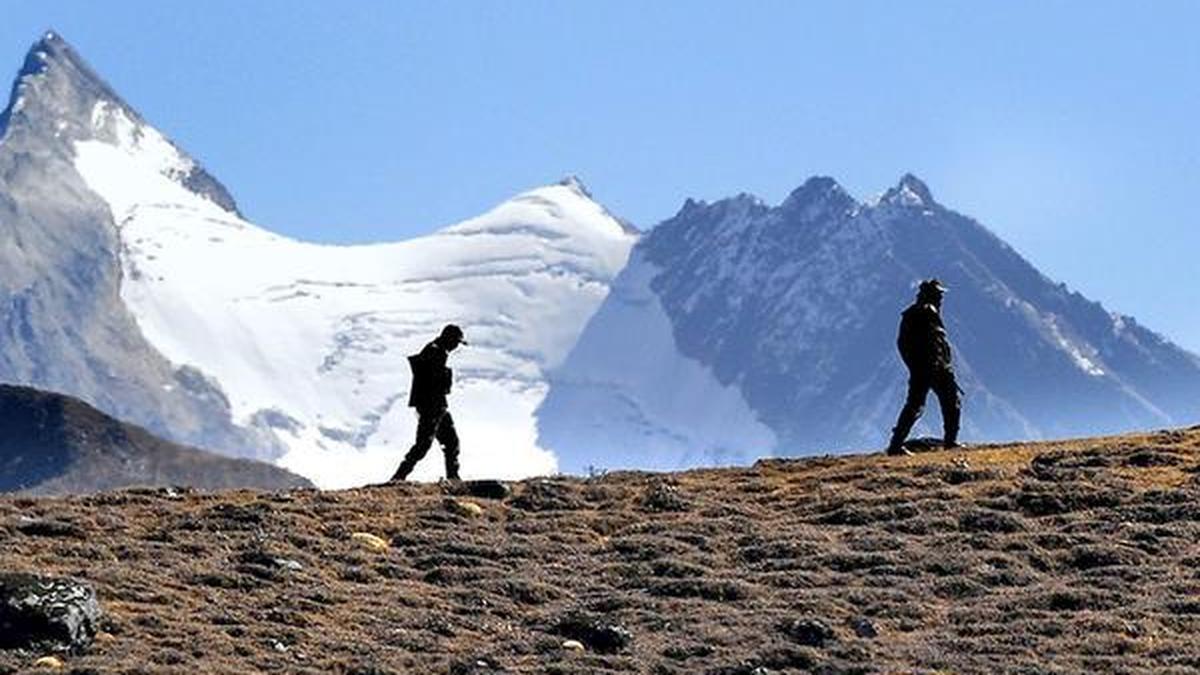
New Delhi | Face-offs between Indian security personnel and Chinese People’s Liberation Army (PLA) troops continue at multiple locations along the Line of Actual Control (LAC) in Arunachal Pradesh, with some confrontations reportedly persisting since July, Indo-Tibetan Border Police (ITBP) Director General Shatrujeet Kapur has confirmed.
Speaking at the Himveer Samman Samaroh on Thursday, Kapur said Indian and Chinese troops had come face-to-face at several points along the disputed border in recent days, indicating that tensions in the region remain unresolved.
“In the past few days, a situation arose where face-offs happened at several locations… and it still continues,” the ITBP chief said.
Kapur also referred to Chinese military deployments in forward areas near the LAC, stating that PLA personnel had pitched tents around six to seven kilometres from India’s perception of the Line of Actual Control, according to reports.
The reported deployments include areas around Asapfila and locations near Taksing in Arunachal Pradesh, where the two countries have differing perceptions of the boundary. Indian forces have also undertaken counter-deployments to safeguard their positions and prevent further encroachment, Kapur indicated.
The latest remarks come amid continuing efforts by India and China to address border-related concerns through military-level engagement. On September 6, Corps Commander-level talks were held at the Wacha-Damai border meeting point on the Indian side to discuss outstanding issues along the LAC in the Taksing sector.
Despite such engagements, the reported face-offs underscore the continuing challenges faced by security forces along the sensitive frontier.

ITBP strengthens high-altitude combat capabilities
Kapur also highlighted the ITBP’s efforts to strengthen its specialised high-altitude combat capabilities, emphasising that the force must retain its mountain warfare expertise while carrying out its border-guarding responsibilities. Referring to the newly raised Shaurya commandos, he credited the specialised unit with playing an important role in responding to situations along the frontier.
“Our newly raised Shaurya commandos played an exemplary role in this. ITBP was raised as a mountain guerrilla force and we were given border guarding duty along China in 2004,” Kapur said. “We need not leave our original function, and a specialised high-altitude mountain fighting force is being set up, distinct from the Army. We will soon have one full battalion of Shaurya commandos; high-altitude deployment is our strength,” he added.
The ITBP, which guards India’s frontier with China across some of the country’s most challenging mountainous terrain, has been strengthening its operational preparedness in response to evolving security requirements along the border.
Drones emerging as a key factor in modern warfare
The ITBP chief also underlined the growing importance of drones in contemporary warfare, pointing to China’s substantial investments in military modernisation. He said drone technology could enable smaller countries to challenge militarily stronger adversaries, citing conflicts involving Russia and Ukraine, as well as Iran and the United States, as examples of the changing character of warfare.
The emphasis on unmanned systems reflects the growing importance of surveillance, rapid intelligence gathering and precision capabilities in modern military operations, particularly in difficult terrain.
The latest developments along the Arunachal Pradesh frontier come against the backdrop of persistent boundary differences between India and China. While both sides have continued diplomatic and military engagements to manage tensions, the latest reported confrontations indicate that maintaining stability along the LAC remains a significant security challenge.

