

Officials say such findings suggest that the violence in Manipur cannot be explained solely through internal dynamics
 KRC TIMES Manipur Bureau
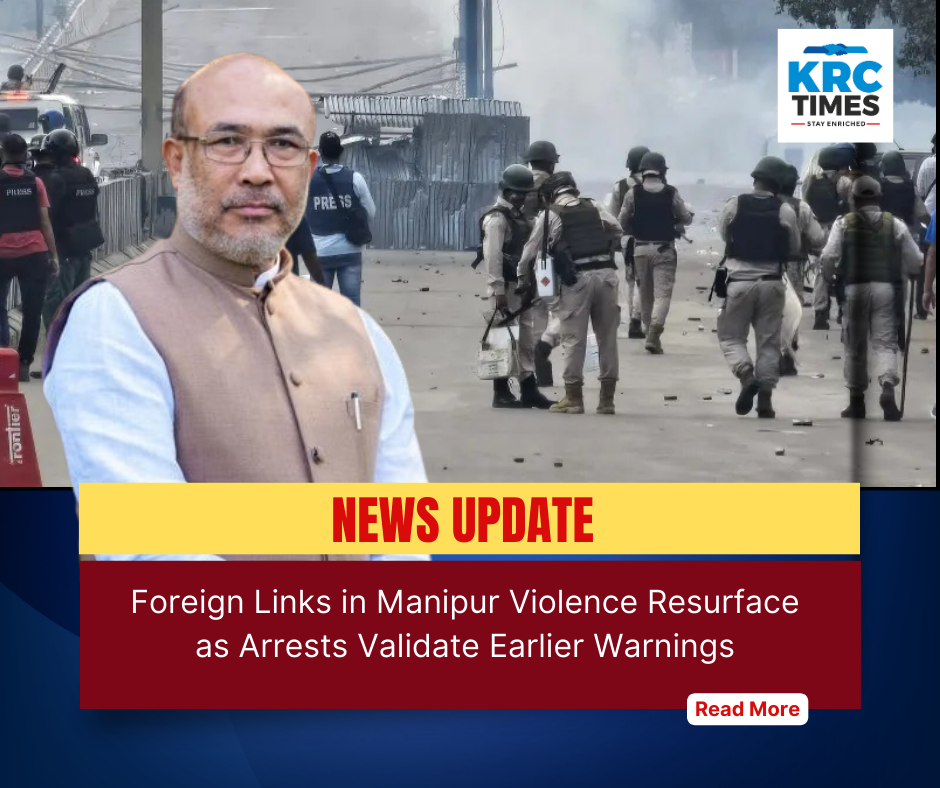
Imphal: When ethnic violence erupted in Manipur in May 2023, much of the early narrative focused on long-standing internal grievances between communities. The crisis was widely seen as a domestic conflict rooted in historical tensions, land disputes, and political mistrust.
Amid the turmoil, former Chief Minister N. Biren Singh repeatedly raised a different and controversial claim. He argued that the unrest was not entirely internal but was being fueled and prolonged by foreign elements and cross-border networks. At the time, many critics dismissed these statements as political rhetoric or attempts to deflect attention from local administrative failures.

However, recent developments have prompted a renewed discussion around those assertions. Security agencies have made several arrests that reportedly involve foreign nationals, while investigations have uncovered incidents of drone-based smuggling and alleged links between armed groups and cross-border militant networks operating along the porous Indo-Myanmar border. These revelations have added a new dimension to the understanding of the conflict.
Officials say such findings suggest that the violence in Manipur cannot be explained solely through internal dynamics. Instead, they indicate that transnational actors and illegal networks may have exploited the fragile situation to intensify instability in the border state.
Despite these developments, analysts stress that the crisis remains complex. Deep-rooted community mistrust, displacement, and political grievances continue to shape the conflict. Addressing these issues requires dialogue, reconciliation, and long-term policy interventions within the state.
At the same time, the emerging evidence has underscored the importance of strengthening border surveillance and countering cross-border militant activity. Observers note that ignoring transnational factors in sensitive frontier regions can allow conflicts to deepen and persist.
While acknowledging the possible role of external actors does not absolve local responsibilities, it adds another layer to the broader picture of what fueled and sustained the turmoil in Manipur over the past three years.