

The city’s Air Quality Index (AQI), which typically spikes during Diwali due to smoke and emissions from fireworks
 KRC TIMES Assam Bureau
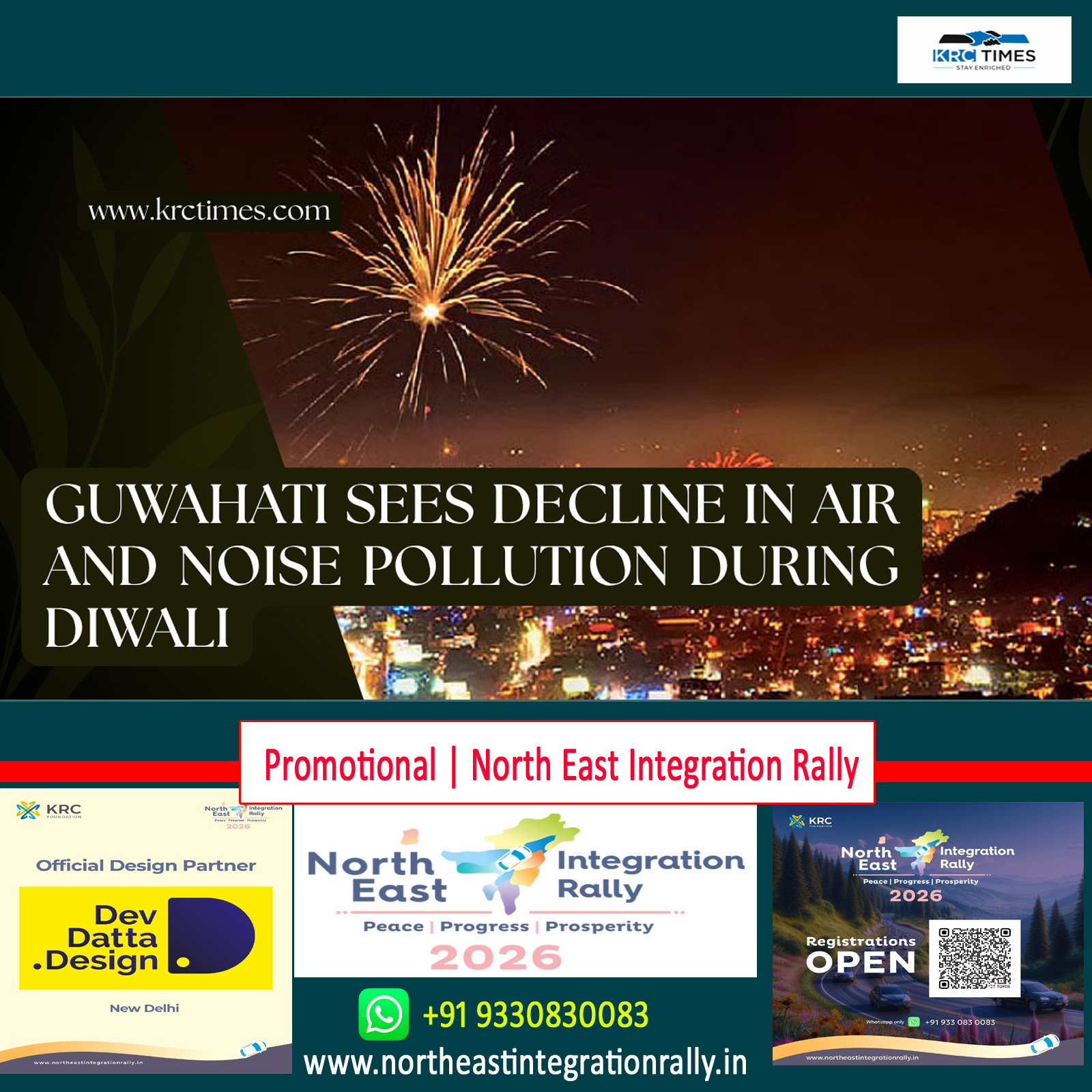
Guwahati : Guwahati has bucked the usual post-Diwali pollution trend, recording lower levels of both air and noise pollution this festive season. Data from the Assam Pollution Control Board (APCB) indicates that reduced bursting of firecrackers played a key role in the improvement.
The city’s Air Quality Index (AQI), which typically spikes during Diwali due to smoke and emissions from fireworks, remained comparatively moderate this year. On the first day of Diwali, the AQI was recorded at 144, dropping to 118 on the second day—both within the ‘Moderate’ pollution category.

For comparison, Diwali in 2024 saw AQI levels at 154 on the first day and 93 on the second day. The situation was even more severe in 2023, when the second day of the festival recorded a hazardous AQI of 234. Officials noted that since September, Guwahati’s air quality has mostly stayed within the ‘Satisfactory’ range, and this year’s festival did not lead to the usual surge in pollution.
Noise pollution also registered a decline across key city areas. In Panbazar, levels stood at 76.3 decibels, slightly lower than last year’s 78 decibels. Ganeshguri saw a notable drop to 63.3 decibels from 72 decibels in 2024, while Ulubari measured 66.1 decibels, down from 72 decibels the previous year.
Commenting on the trend, Dr. Gautam Kumar Mishra, Member Secretary of the APCB, said, “During Diwali this year, both air and noise pollution levels in Guwahati have decreased. Especially in residential areas, the improvement is quite visible.” He added that the reduction in firecracker use, influenced in part by the somber mood following the recent passing of singer Zubeen Garg, contributed significantly to the improved conditions.
The data suggests a shift in festive practices in Guwahati, with residents showing increased awareness of environmental and health impacts associated with traditional celebrations.