He alleged that the Centre failed to pursue the matter despite the willingness of Tripura’s erstwhile royal family to merge those territories with India
 KRC TIMES NE Desk
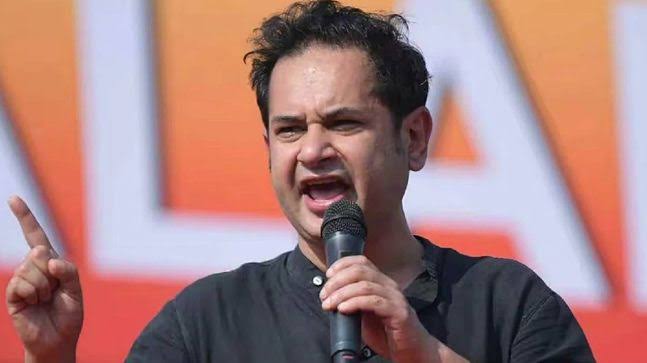
Agartala | Tipra Motha Party founder Pradyot Bikram Manikya Deb Barma has described the geographical isolation of the Northeast as the consequence of what he termed a series of historical blunders, alleging that India missed crucial opportunities during Partition and the 1971 Bangladesh Liberation War to secure territories that could have strengthened the region’s connectivity.
Deb Barma argued that parts of the erstwhile Kingdom of Tripura, which he claimed were historically connected to the princely state, could have been included within India during Partition. He alleged that the Centre failed to pursue the matter despite the willingness of Tripura’s erstwhile royal family to merge those territories with India.
“At that time, the Government of India should have pushed for the inclusion of parts of the Kingdom of Tripura, which the Maharaja and the Rajmata were subsequently ready to merge with India. But the Government of India, for whatever reason, did not include parts of East Pakistan, which today could have been very beneficial for our state, our Northeast and our country,” he said.

The Tipra Motha founder also pointed to the 1971 Bangladesh Liberation War, arguing that India had another opportunity to negotiate territorial arrangements that could have improved connectivity in the Northeast. Referring to the approximately 90,000 Pakistani soldiers taken into Indian custody following the war, Deb Barma said New Delhi could have used the situation to negotiate for territories that would have benefited the region.
“Another chance came in 1971, when 90,000 Pakistani soldiers were in India’s custody; we could have negotiated at that time. But we did not do it even then. Opportunities like this do not come repeatedly, and we lost this opportunity. This is a historical blunder,” he said.
He maintained that the Northeast continues to face geographical isolation because of historical political and territorial decisions that, in his view, were not adequately addressed by successive governments. Clarifying that his remarks were not intended to target any particular political party or individual, Deb Barma said the issue should be viewed from a broader historical and geographical perspective.
He also questioned why discussions on territorial claims generally focus on Pakistan-occupied Kashmir, while historical developments in India’s eastern neighbourhood receive comparatively less attention. “Why should we only talk about Pakistan-occupied Kashmir? A lot has happened in our East as well, which was wrong,” he said.
Deb Barma called for greater recognition of territories that he considers historically inseparable from the region, arguing that their separation had long-term implications for the Northeast’s geographical position and connectivity.