

The figures point to a gradual erosion in NOTA’s usage over time, even as voter turnout remains robust across elections
 KRC TIMES Assam Bureau
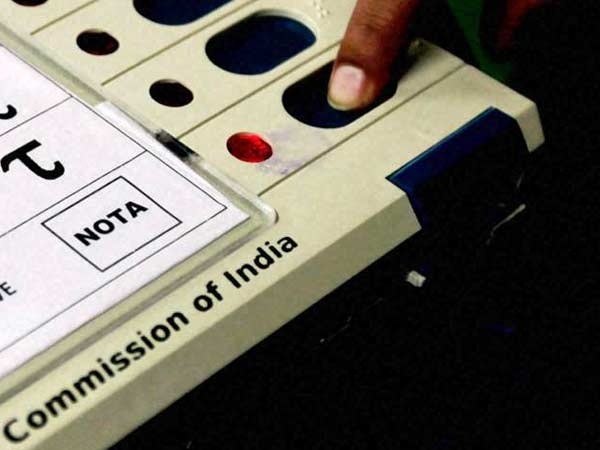
Guwahati : The ‘None of the Above’ (NOTA) option, once introduced as a tool for voters to register dissent, is steadily losing its practical significance in India’s electoral landscape, a trend reflected clearly in the latest Assam Assembly election results.
Data from the recent round of Assembly polls across five states shows that NOTA continues to draw only marginal support. In Assam, it recorded a vote share of 1.29%-the highest among the states under consideration-yet still a small fraction of the total electorate. West Bengal followed with 0.81%, while other states reported even lower figures, underscoring the limited traction of the option.
The pattern aligns with national data compiled by the Election Commission of India. According to its Atlas-2024, NOTA’s share in the 2024 Lok Sabha elections declined to 0.99%, its lowest since inception, compared to 1.08% in 2014.
The figures point to a gradual erosion in NOTA’s usage over time, even as voter turnout remains robust across elections.
Limited by design
NOTA was introduced in 2013 following a landmark directive by the Supreme Court of India, aimed at strengthening democratic choice by allowing voters to reject all candidates while maintaining ballot secrecy. Prior to this, a similar provision existed under Form 49-O, which required voters to disclose their identity-discouraging its use.
However, more than a decade later, structural limitations have constrained NOTA’s effectiveness. Crucially, even if NOTA secures the highest number of votes in a constituency, it does not trigger re-elections or disqualify candidates. The candidate with the next highest votes is still declared the winner.

This absence of electoral consequence has significantly reduced NOTA’s ability to influence outcomes, relegating it largely to a symbolic expression of dissatisfaction.
Symbolic in decisive contests
Political observer Vikas Tripathi said the relevance of NOTA diminishes further in elections marked by clear mandates. “In a fragmented verdict, NOTA could have mattered more. But in a decisive sweep, its impact becomes negligible,” he noted.
Assam’s 2026 results-indicating a strong mandate in favour of the BJP-led NDA-reinforce this trend. In such scenarios, voter behaviour tends to consolidate around major parties, leaving limited space for protest votes to alter outcomes.
Voter sentiment and strategic choices
For many voters, NOTA remains a symbolic gesture rather than a tool for change. Guwahati-based voter Dilip Sen described it as “a polite way of saying, I showed up, I did my duty, but I refuse to choose.”
Others echoed similar views. Homemaker Ankita Kalita said the option reflects dissatisfaction but lacks practical impact. “It’s a protest without consequence,” she observed.
Businessperson Rituraj Saikia pointed to a more strategic mindset among voters. “Most people prefer choosing the lesser evil rather than opting for NOTA, because they want their vote to influence the result,” he said.
This outcome-oriented voting behaviour is particularly visible in closely contested constituencies, where even dissatisfied voters tend to back a viable candidate instead of casting a non-impactful vote.
A case for reform?
The Assam data highlights a broader electoral reality-participation is increasingly driven by outcomes rather than symbolic expression. While NOTA continues to offer an avenue for dissent, it lacks the institutional backing to translate that dissent into tangible political consequences.
Yet, its presence on the ballot is not entirely without value. It functions as a barometer of voter discontent, however limited, and reinforces the democratic principle of choice-even if that choice is to reject all candidates.
The larger question, however, remains unresolved: can symbolism alone sustain relevance in a highly competitive and polarised electoral system?
As Assam’s results demonstrate, the ballot box continues to reward organisation, alliances and winnability over protest. Unless backed by structural reforms that attach consequences to its outcome, NOTA risks remaining what it has increasingly become-a quiet register of dissatisfaction in an otherwise decisive democratic process.