

He noted that students and women activists had faced hardships and made sacrifices during earlier movements demanding the ILP
 KRC TIMES Manipur Bureau
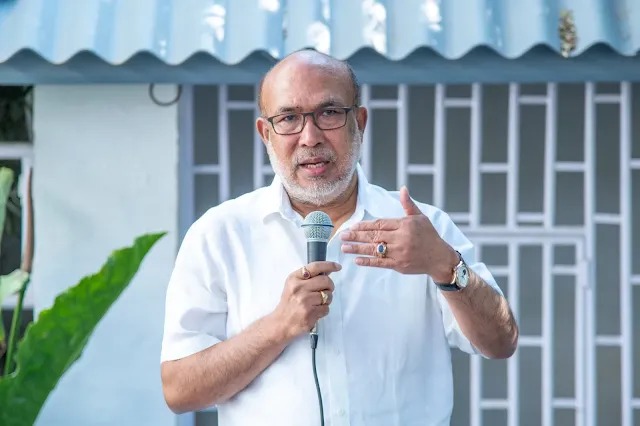
Imphal : Former Manipur Chief Minister N. Biren Singh on Sunday said the complex issues facing Manipur cannot be addressed through temporary or “band-aid” solutions, stressing the need for a permanent and collective strategy to tackle illegal immigration and border-related challenges in the state.
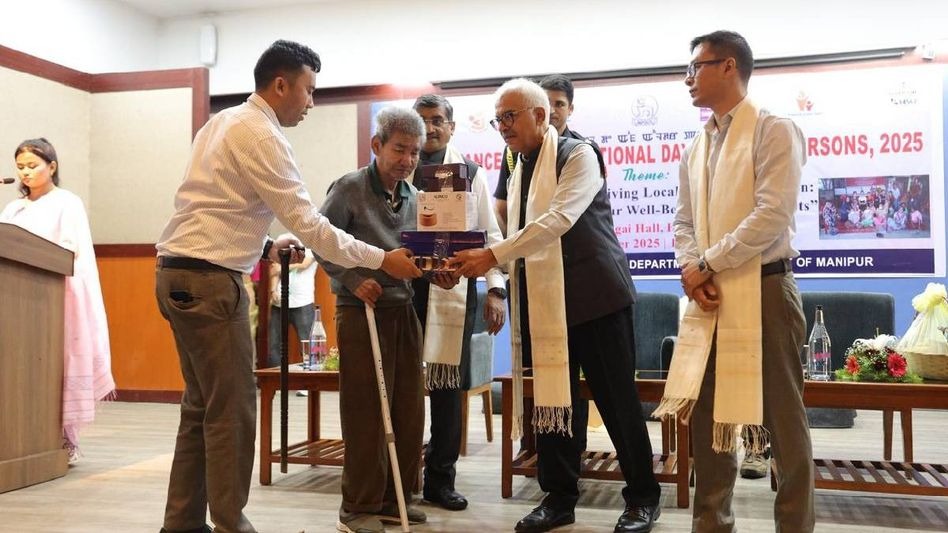
Biren Singh was speaking at a reception and presentation ceremony for senior citizens aged 80 years and above at Leitong Shanglen in Laipham Khunou Mamang Leikai, Imphal. The programme was organised by the Laipham Khunou Senior Citizens Welfare Association.
Addressing the gathering, the former chief minister said the current unrest in Manipur was not the first major conflict witnessed by the state. Referring to past incidents, he cited the historic Seven Years’ Devastation (Chahi Taret Khuntakpa), the Naga-Kuki clashes between 1993 and 1998, the Kuki-Paite conflict, and the Meitei-Meitei Pangal clashes.
He said repeated temporary settlements without long-term solutions had only deepened the crisis over time and warned that unresolved issues would place a greater burden on future generations.
Highlighting initiatives undertaken during his tenure, Biren Singh said the implementation of the Inner Line Permit (ILP) system in Manipur fulfilled a long-standing public demand. He noted that students and women activists had faced hardships and made sacrifices during earlier movements demanding the ILP.
On border security, he claimed significant progress had been made in fencing the Indo-Myanmar border during his government’s tenure. According to him, while only 3 to 4 kilometres of the 398-kilometre border had previously been fenced, nearly 60 kilometres have now been completed, with the remaining work expected to be finished within the next one or two years.

The former chief minister also spoke about the regulation of the Free Movement Regime (FMR), stating that under the revised mechanism, individuals entering from across the border are required to submit biometric details.
He said biometric registration was aimed at preventing illegal immigrants from obtaining Indian identity documents such as Aadhaar cards and passports.
Clarifying the distinction between the ILP and the National Register of Citizens (NRC), Biren Singh explained that the ILP regulates the entry of Indian citizens from outside the state, while the NRC is intended to identify foreigners based on a specified base year.
He urged the people of Manipur to collectively demand implementation of the NRC with 1951 as the base year, stating that the exercise requires approval from the Central government and cannot be implemented solely by the state administration.
Biren Singh further claimed that during his tenure, illegal immigrants were being identified and deported under the provisions of the Foreigners Act, 1946, through biometric verification and documentation procedures.
Referring to communications issued by the Union Home Ministry after the violence of May 3, 2023, he said the state government had been authorised to continue identifying foreigners and collecting biometric data, with the process later extended till March 31, 2024.
He added that continuing the identification process for a few more years could significantly address the issue of illegal immigration in Manipur.
The former chief minister also expressed concern over what he described as misinformation surrounding the NRC and related issues, stating that many people comment on the matter without fully understanding the mechanisms and measures already undertaken by the government.