

The official stated that Bangladesh authorities have shown interest in addressing the issue through discussions
 KRC TIMES NE Desk
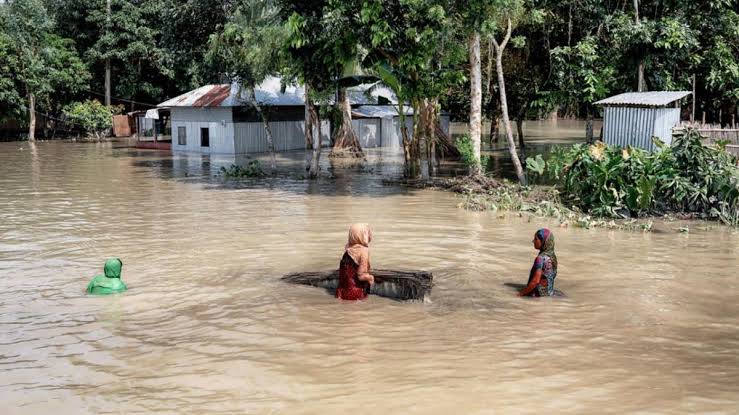
Agartala | Tripura Public Works Department and Health Secretary Kiran Gitte has said that recurring flooding in Agartala and several border towns cannot be resolved through state-level interventions alone, stressing the need for coordinated action between India and Bangladesh to achieve a long-term solution.
Addressing a brainstorming session on waterlogging in Agartala on Thursday, Gitte noted that many of the state’s drainage channels ultimately flow into Bangladesh, where inadequate downstream drainage often causes water to back up during periods of heavy rainfall.
He explained that water from channels such as Kalapania and Katakhal enters Bangladesh, but poor drainage infrastructure across the border frequently results in flooding in low-lying areas of Tripura. “The problem affects not only Agartala but also border towns such as Kailashahar and Belonia. A joint action plan involving both countries can provide a sustainable solution,” Gitte said.
The official stated that Bangladesh authorities have shown interest in addressing the issue through discussions held under the Joint River Commission framework and during interactions between district-level officials on both sides of the border.

Send your resume:
biswa@jigyasu.co.in
krcfoundation@gmail.com
He suggested that funding for cross-border drainage and flood-management projects could be mobilised either through the Government of India or the Bangladesh government, depending on the nature and location of the proposed works.
Drawing parallels with the India-funded Agartala-Akhaura railway project, Gitte said the growing connectivity between the two countries through road, rail and inland waterways demonstrates the potential for similar cooperation in flood management and water-resource planning.
As part of efforts to address the problem scientifically, the National Institute of Hydrology (NIH), Roorkee, has been tasked with conducting a comprehensive study of Agartala’s chronic waterlogging issues and recommending long-term mitigation measures.
Gitte also highlighted the importance of strengthening the remaining 650-metre stretch of the northern embankment of the Howrah River. He said the project could substantially reduce flooding in several parts of Agartala once families currently residing along the embankment are rehabilitated.
According to him, the reinforced embankment would help safeguard a large urban stretch extending from Maharaj Ganja Bazar to the City Centre area from floodwaters during periods of heavy rainfall. However, he cautioned that strengthening the northern embankment could increase hydraulic pressure on the southern bank of the river, creating new challenges that would require careful engineering and planning.
The secretary further outlined plans to improve Agartala’s drinking water supply through greater utilisation of surface water from the Gomati and other rivers. He noted that the city, which has a resident population of around six lakh and an additional floating population of nearly two lakh people every day, currently meets only 70 to 80 per cent of its drinking water demand through existing infrastructure.
The remarks come amid increasing concerns over urban flooding in Tripura’s major towns, with officials exploring both domestic and cross-border solutions to address the recurring problem and build climate-resilient infrastructure for the future.