

Tapash Roy Praises Vision Behind North East Integration Rally 2026
 North East Integration Rally
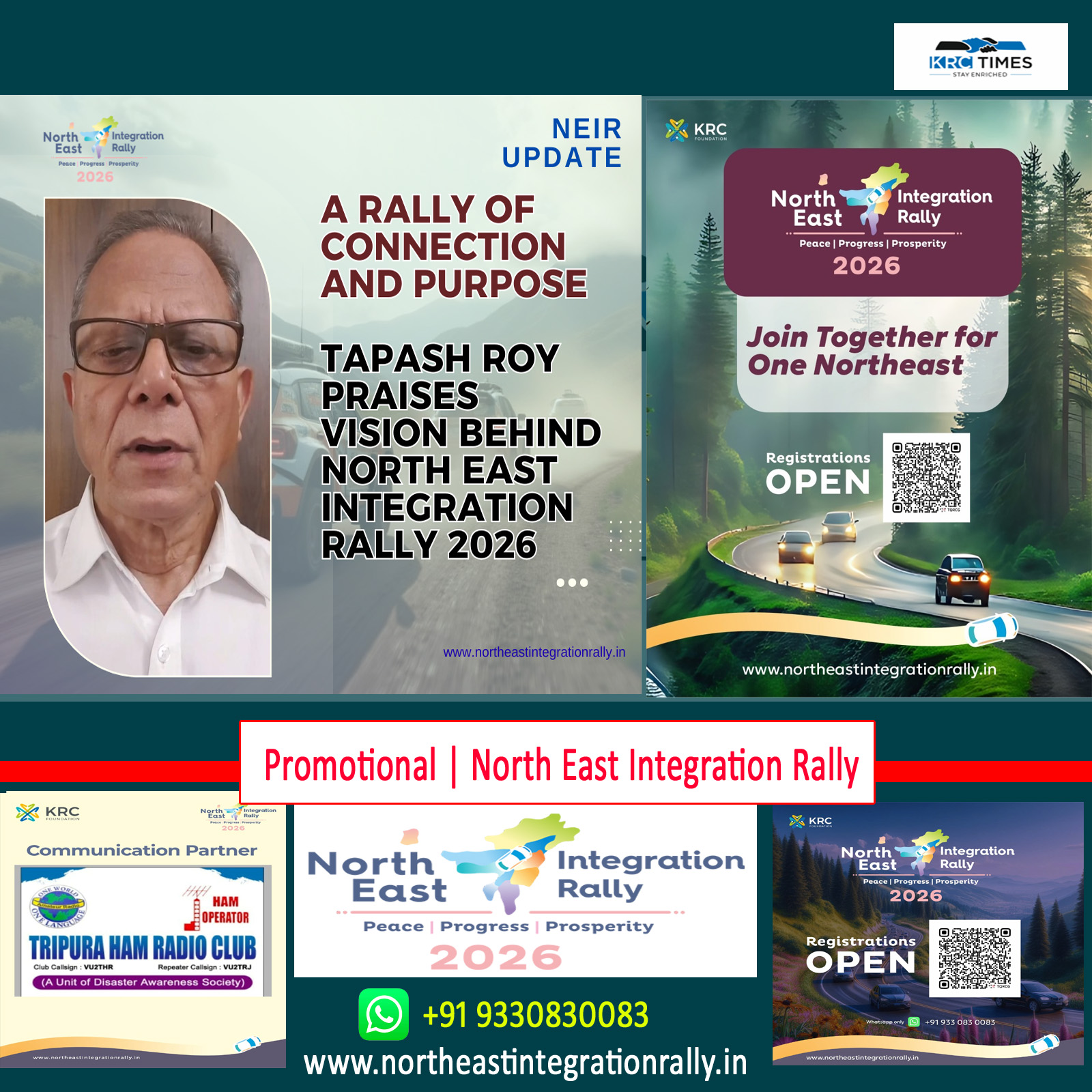
The North East Integration Rally 2026 has begun to gather momentum long before its engines start. At the heart of this growing excitement is the KRC Foundation’s attempt to turn a simple idea into a unifying movement. The rally, designed as a non-competitive car and motorcycle journey across the region, aims to bring people together through shared purpose rather than speed or spectacle.
Among those lending their voice to the initiative is veteran power engineer Tapash Roy, who carries a deep sense of belonging to the region. Born in Digboi, raised in Duliajan, and shaped further by his engineering years in Tripura, he describes the northeast not as a backdrop to his life but as the place that formed him.
While speaking about the rally, he didn’t dwell on his 37 years of professional experience. Instead, he returned again and again to a simple point: everything he has become comes from this land and its people.
Here’s what matters. Roy sees the northeast as one of the clearest expressions of India’s unity in diversity. That spirit, he says, sits at the core of the rally. The route will wind across hills, valleys and towns, but what it really hopes to cross are social divides. It is meant to be a journey of connection, celebrating shared identity and the cultural wealth that binds the region together.
What this really means is that the rally is not just about vehicles on the road. It is tied to a larger mission that includes strengthening ham radio networks for disaster management, raising awareness on climate change, improving earthquake preparedness and promoting road safety. Roy believes each of these efforts can trigger a chain reaction of positive change if people participate with sincerity.
He called the rally an awakening rather than an event — something that honours the past while preparing communities for a safer, more connected future. His words also carried a generous acknowledgement of the people who often remain unseen: the volunteers, organisers and support teams who keep such initiatives alive through patient, quiet work.
Roy’s message to the KRC Foundation was one of respect for a vision he believes can transform attitudes and build resilience. His message to participants was different in tone — he described them as the carriers of hope, the ones who would give the rally its soul. And to the northeast itself, he offered gratitude. The region, he said, gave him identity and purpose, and speaking for the rally is one way he hopes to give something back.
As preparations continue, the North East Integration Rally 2026 is shaping up to be more than a logistical exercise. It promises to be an expression of pride, harmony and collective strength. If the sentiment shared by voices like Roy’s is any indication, the road ahead is already lit with purpose.
Tapash Roy is an electrical engineer with a long record of work across power generation, transmission, and distribution. He graduated at the top of his class from the University of Calcutta in 1979 and began his career with Durgapur Projects Limited, handling electrical maintenance at a major pulverised fuel–fired power station.
He later joined CESC, where he spent most of his professional life. Across his years there, he helped shape key projects, from preparing technical specifications and assessing bids to supervising the installation and commissioning of transformers, switchgear, and substations.
His work included India’s first 150 MVA EHV underground substation at Park Circus and several GIS installations across the CESC network.
He also brought his expertise to Gem Refineries, Dolphin Laboratories, and Philips India between 1985 and 1990, strengthening their engineering and project operations.
Roy was part of the CESC core group involved in the technology-transfer collaboration with Singapore Power and contributed to national standards work as a member of the BIS Working Group ETD-06. Over the years he has taught substation operation and maintenance in several training programmes, presented a paper at ELECRAMA 2004, and served on the Board of Governors of NIT Agartala from 2006 to 2011.
After retirement, he worked as an Advisor to WBTC on assignments supported by the World Bank and the India Smart Grid Forum, guiding network planning and charging infrastructure for Kolkata’s 120 electric buses. In 2022, he was involved in a power study for the rollout of 1,180 more electric buses across the region.
He later helped set up a transformer manufacturing and repair facility in Agartala in 2024 and continues to serve there as Technical Advisor.
Roy remains active in the engineering community, delivering lectures at NIT Agartala and the Institution of Engineers (India), Tripura State Centre. Away from work he enjoys historical travel, Indian classical music, and building meaningful connections with people.
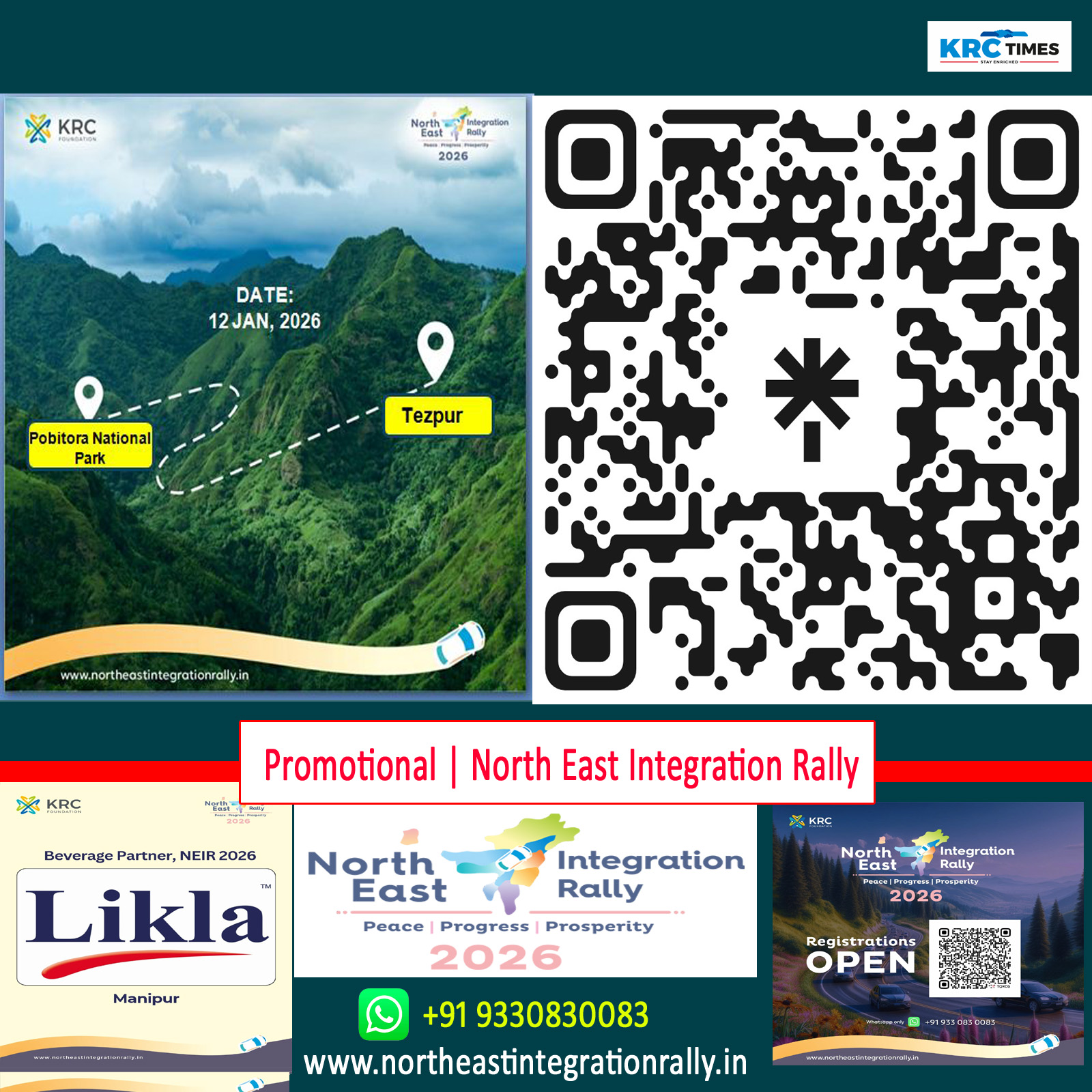
Promotional | North East Integration Rally