5E for Success Series
 5E for Success
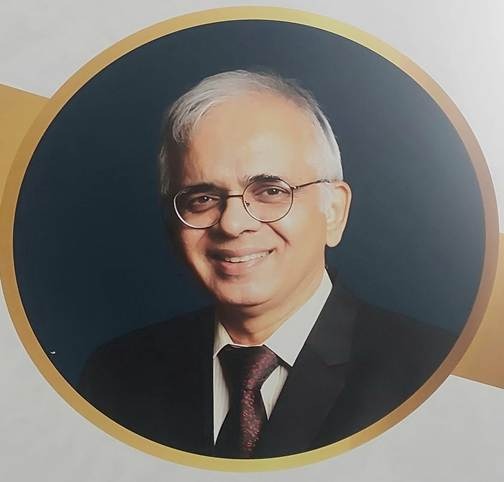
About | Professor Shekhar C. Mande
Professor Shekhar C. Mande (born April 5, 1962) is an eminent Indian structural and computational biologist whose career spans pioneering macromolecular research, major national science administration, and international science-policy leadership.
Academic Background & Scientific Research
After earning his B.Sc. and M.Sc. in Physics from the University of Nagpur (1984), Mande shifted to biological physics, completing his Ph.D. in Molecular Biophysics at the Indian Institute of Science (IISc), Bengaluru, in 1991 under Prof. M. Vijayan. He subsequently conducted postdoctoral research in X-ray crystallography with Prof.Wim G. J. Hol at the University of Groningen (Netherlands) and the University of Washington, Seattle.
His research bridges structural biology, X-ray crystallography, and computational systems biology, with over 100 peer-reviewed publications focusing on infectious disease pathogens and protein interactions:
- Mycobacterial Pathogenesis & Chaperonins: Mande elucidated the three-dimensional crystal structures and unconventional oligomerization mechanisms of heat shock proteins—specifically chaperonin-10 (GroES) and GroEL paralogs—in Mycobacterium leprae and Mycobacterium tuberculosis. His work demonstrated how ATP-independent lower oligomers and phosphorylation-modulated chaperonins help M. tuberculosis survive oxidative stress, copper toxicity, and dormancy inside host macrophages.
- Redox Homeostasis & Metabolic Enzymes: He characterized key metabolic and redox-regulating proteins in tuberculosis, including multiple thioredoxins, Class Ib ribonucleotide reductases, inositol-1-phosphate synthase (INO1), and human/parasitic triosephosphate isomerase (TIM), offering structural blueprints for structure-based drug design against tuberculosis and trypanosomiasis.
- Computational & Systems Biology: His group pioneered genome-wide computational prediction of protein–protein interaction networks, operon organization, and evolutionary sequence patterns across bacterial genomes.
- Public Health & Epidemiological Analysis: During the COVID-19 pandemic, Mande co-authored quantitative epidemiological studies analyzing correlations between demographic factors, sanitation, prior disease burden, and COVID-19 mortality rates across Indian states and globally.
Institutional Leadership Roles
Early Academic & Research Appointments
1995 – 2011
Began his independent career as a scientist at the Institute of Microbial Technology (IMTECH), Chandigarh (1995–2001), before moving to the Centre for DNA Fingerprinting and Diagnostics (CDFD), Hyderabad (2001–2011), where he built a leading structural biology and computational biology program.
Director, National Centre for Cell Science (NCCS)
2011 – 2018
Led NCCS in Pune, expanding national research capabilities in cell biology, stem cell research, infectious diseases, and human microbiome studies.
Director General, CSIR & Secretary, DSIR
2018 – 2022
Appointed in October 2018 to head India’s largest civilian R&D network (37 national laboratories) alongside the Department of Scientific and Industrial Research.
President, Indian National Science Academy (INSA)
2026 – Present
Assumed office as President of INSA in 2026 while serving as Distinguished Professor at SavitribaiPhule Pune University, J.C. Bose Fellow at NCCS, and National President of VijnanaBharati.
Key Contributions at CSIR & DSIR
- COVID-19 S&T Mitigation: Steered CSIR’s pan-India pandemic response—accelerating indigenous diagnostic kits, genome sequencing consortia, repurposed drug trials, oxygen concentrators, and mRNA technology collaborations.
- Industry–Academia & Clean Energy Translation: Championed the “One CSIR for One Nation” framework, forging strategic R&D partnerships with major industries (such as Tata Steel) and advancing clean-energy, green mining, and e-waste recycling initiatives.
- SDG-Aligned National Missions: Oversaw major CSIR initiatives in groundwater mapping and aquifer replenishment in arid regions (such as the Thar Desert), wastewater treatment, and high-altitude agricultural diversification (such as indigenous heeng/asafoetida cultivation).
- Industrial R&D Policy (DSIR): As Secretary of DSIR and ex-officio member of the Technology Development Board (TDB), facilitated financial and policy support for commercializing indigenous technologies and deep-tech startups.
Leadership at INSA
- Elected an INSA Fellow in 2010 and previously chaired the National Committee for the International Union of Crystallography (until December 2019).
- As President of INSA (from 2026), he leads India’s premier scientific academy in science diplomacy, policy advisory, and international academic cooperation—culminating in his November 2026 appointment to the UN 10-Member High-Level Group on Science, Technology and Innovation for the SDGs.
Major Awards, Fellowships &Honors
| Year | Award / Honor | Conferred By |
| 1999 | B.M. Birla Young Scientist Award | B.M. Birla Science Centre |
| 2003 | Elected Fellow (FASc&FNASc) | Indian Academy of Sciences (Bengaluru) & National Academy of Sciences, India (Prayagraj) |
| 2003–2008 | Wellcome Trust International Senior Research Fellowship | The Wellcome Trust, UK |
| 2005 | Shanti SwarupBhatnagar Prize (Biological Sciences) | Council of Scientific and Industrial Research (CSIR) |
| 2010 | Elected Fellow (FNA) | Indian National Science Academy (INSA), New Delhi |
| 2017 | B.C. Guha Memorial Lecture & B.K. Bachhawat Memorial Lecture | INSA & National Academy of Sciences, India (NASI) |
| 2019 | Bharat Asmita Tantra-Vidnyan Shrestha Award | MIT World Peace University, Pune |
| 2020 | H.K. FirodiaVijnanBhushan Award | H.K. Firodia Memorial Foundation |
| 2021 | Aryabhata Medal | Indian National Science Academy (INSA) |