

Solidarity is often treated as a slogan, something to invoke during speeches or crises
 KRC TIMES Desk
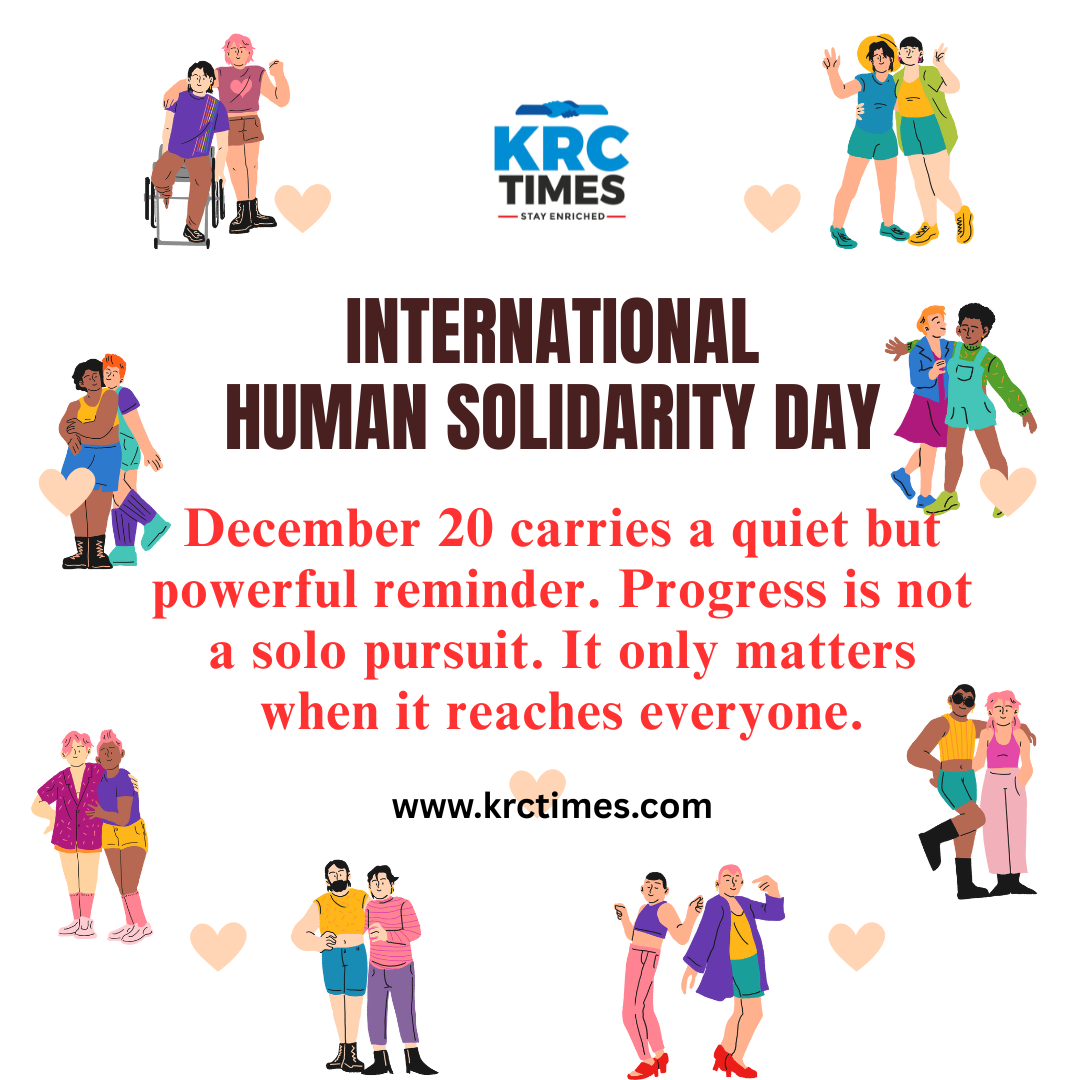
December 20 is not a symbolic date pulled from a calendar. It is a reminder. A sharp one. International Human Solidarity Day asks a simple question that is easy to avoid and hard to answer honestly. How connected are we, really?
Solidarity is often treated as a slogan, something to invoke during speeches or crises. But at its core, it is practical. It is about recognising that no society moves forward alone, and no progress is meaningful if it leaves people behind. What this really means is shared responsibility, not charity. Mutual commitment, not temporary sympathy.
The idea matters now more than ever. The world is marked by widening inequality, climate stress, displacement, conflict, and economic uncertainty. These challenges do not respect borders or social categories. They spill over. They compound. And they expose the limits of individual or isolated action.
Solidarity is not just about responding when things fall apart. It is about building systems that do not collapse on the most vulnerable when pressure hits. Whether it is access to healthcare, education, food security, climate resilience, or dignified work, solidarity shows up in policy choices, budget priorities, and everyday decisions.

At the global level, the concept underlines cooperation between nations, especially in supporting developing regions. But solidarity does not begin in conference halls. It begins locally. In communities. In how societies treat minorities, migrants, women, children, the elderly, and those living on the margins.
Look at moments of crisis. Natural disasters, pandemics, economic shocks. Again and again, the same lesson emerges. Communities that act together recover faster. Societies that protect their weakest members become more resilient overall. Solidarity is not a moral luxury. It is a survival strategy.
International Human Solidarity Day also challenges the growing culture of indifference. In an age of constant information, it is easy to feel overwhelmed and disconnected. Suffering becomes distant. Inequality feels abstract. Solidarity pushes back against that numbness. It insists that empathy must translate into action, and awareness must lead to responsibility.
This does not mean everyone has to do everything. It means everyone has a role. Governments must design inclusive policies. Institutions must ensure fairness and access. Civil society must amplify voices that are often ignored. Individuals must refuse to look away.

What often gets missed is that solidarity benefits everyone, not just those in need. Societies built on cooperation are more stable. Economies that reduce inequality are more sustainable. Communities that value inclusion are better equipped to handle change.
There is also a deeper dimension. Solidarity restores trust. In institutions. In each other. In the idea that collective effort still matters in a fractured world. Without that trust, even the best systems weaken over time.
International Human Solidarity Day is not about idealism detached from reality. It is about realism with conscience. Acknowledging that shared problems require shared solutions, and that dignity is not divisible.
The message is clear. Progress that excludes is fragile. Growth without equity is hollow. Development without compassion is incomplete.
As the world navigates complex challenges, the call of this day is steady and uncompromising. Stand together. Act together. Build together. Together, humanity does not just endure. It moves forward.