


From Korea to Hormuz
 KRC TIMES Desk
By Col (Dr.) Ashwani Kumar, MiD, VSM (Retd.)
Wars are seldom fought on the battlefield alone. They are equally shaped by perception, power hierarchies, and the selective application of global norms. The ongoing confrontation involving the United States, Iran, and Israel has once again exposed a fundamental reality of modern geopolitics, rules are rarely uniform, and responses are rarely equal.
At the heart of this crisis lies not merely military confrontation, but a deeper contest over nuclear legitimacy, strategic comfort, and global influence.
The Question of Nuclear Selectivity.
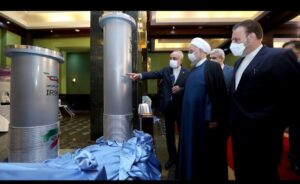
The United States has taken an assertive stance against Iran’s nuclear programme targeting enrichment capabilities and maintaining sustained pressure. Yet this raises a fundamental question, is Iran’s nuclear capability truly a global threat, or a geopolitical concern shaped by perception?
Iran possesses uranium enrichment capability, but this does not equate to a deployed nuclear arsenal. In contrast, several nations already possess operational nuclear weapons. Yet the intensity of global response differs sharply.
The issue, therefore, is not merely capability but who controls it, and how they are perceived.
Fear in global politics is not uniform, it is selective.
Strategic Comfort and Unequal Standards.
The global nuclear order operates on implicit hierarchies. Some states are considered predictable and manageable, while others are treated as disruptive. This explains why, Iran’s nuclear activity invites pressure. Pakistan’s nuclear arsenal does not trigger similar urgency. This disparity reflects strategic comfort, not universal principle. Such selective standards weaken global credibility and reinforce the perception that rules are shaped by power, not equality.
Economic Shock: Who Pays the Price?
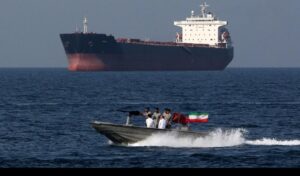
Disruptions in the Strait of Hormuz triggered sharp fluctuations in global oil prices, affecting economies across continents. This raises an unavoidable question. Who pays for this instability? It is not the decision-makers, but ordinary citizens worldwide, through, Rising fuel prices, Inflation,Economic uncertainty,
And yet, a larger question remains. Who will compensate the world for these disruptions?
The answer is stark, No one. Global geopolitics does not function on compensation, it operates on consequence. Who Will Question America?
The question of accountability inevitably turns toward the United States. As the dominant military and financial power, its actions shape both conflict and consequence. But who, in practical terms, can question America? International institutions lack enforcement power.
Allies are strategically aligned. Rivals lack unified leverage. The global system itself is deeply intertwined with American influence. Power, therefore, often operates without immediate accountability. However, this does not imply absence of consequence. Pressure emerges indirectly, through global opinion, economic shifts, and long-term strategic realignments.
Will Americans Ask the Question?
If the world cannot directly question, history suggests that the United States eventually questions itself.
From past conflicts, domestic scrutiny has emerged when, Wars prolong, Costs escalate,Objectives remain unclear.
If the current conflict leads to sustained economic or military strain, the American public may ask:
What is the end-state and at what cost? Lessons from the Korean War. A historical parallel can be drawn from the Korean War. Despite overwhelming military strength, Victory remained elusive.
The conflict stabilised into a stalemate. Peace was replaced by armistice. The war did not end, it froze.
Military power ensured control, but not resolution.
Echoes in the Present Crisis.
The current Iran-US-Israel confrontation reflects similar patterns:
No clearly defined end-state
Controlled escalation without closure
Strategic positioning replacing decisive conflict
Like Korea, the situation risks evolving into a long-term managed tension.
The Rise of Managed Conflict.
Modern warfare is increasingly characterised by,
Pressure without invasion,
Control without
occupation,
Conflict without conclusion.
This model avoids the costs of full-scale war, but creates a new challenge,
conflicts that persist without resolution.
India’s Strategic Perspective.
For India, the implications are immediate. Energy flows, trade routes, and economic stability remain closely tied to developments in Hormuz. India must respond through the following:- Security Measures,
Strengthening maritime capabilities, Securing supply chains, Strategic Positioning, Maintaining diplomatic balance, Enhancing economic resilience. India’s strength lies in navigating complexity without being drawn into conflict.
To sum up: Power Without Resolution. From Korea to Hormuz, history offers a consistent lesson, Wars driven by power may shape events but only clarity can conclude them.
The United States can exert dominance. Iran can endure. Israel can sustain pressure.
Yet none of these guarantee resolution. Until clarity emerges, the world will continue to bear the cost of conflicts it neither starts nor controls.
Author’s Note.
History rarely repeats itself in identical form, but its patterns endure. The Korean War demonstrated how conflicts can stabilise without resolution, creating long-term geopolitical fault lines.
Today, similar dynamics are visible in the Gulf. The challenge before global powers is not merely to manage conflict, but to ensure that temporary stability does not become permanent uncertainty.
In a world defined by selective responses and shifting alliances, the pursuit of lasting peace requires not just strength but consistency, clarity, and strategic foresight.
About the Author.
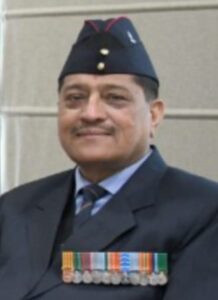
Col (Dr.) Ashwani Kumar, MiD, VSM (Retd.) is a highly decorated Army veteran, twice honoured by the President of India, with extensive experience across operations, intelligence, and military education. A participant in the Indian Peace Keeping Force, he has firsthand exposure to complex peace enforcement and counter-insurgency operations.
He has served in an elite military intelligence organisation and held assignments abroad, offering deep insight into global security dynamics. As Head of Department at a premier military training establishment, he played a key role in shaping military leadership and doctrine.
His writings reflect a rare blend of combat experience, strategic insight, and academic depth, providing authoritative perspectives on contemporary geopolitical and security issues.