

For decades, the economy of the Northeast rested on land, forests and rivers
 North East Integration Rally
RAJKUMMAR
For many years, India’s Northeast stood outside the main economic story of the country. Distance kept it away. Terrain slowed movement. Conflict hurt stability. Weak roads limited growth. All this made progress slow. But something is changing now.
The change is not loud. Not dramatic. Yet it is real.
The region that includes Assam, Meghalaya, Tripura, Manipur, Mizoram, Nagaland, Arunachal Pradesh and Sikkim is slowly shaping a new identity.
It is no longer just a remote frontier. It is beginning to act as a bridge between India and Southeast Asia.
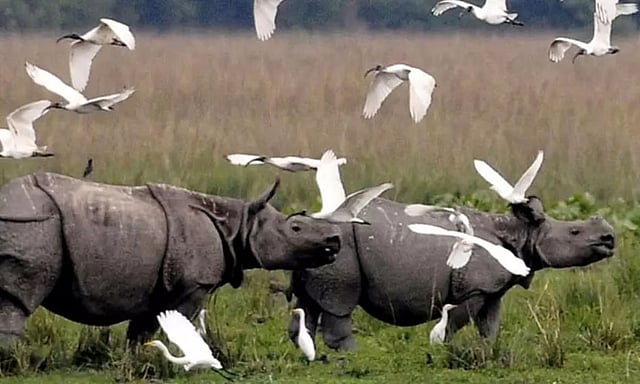
For decades, the economy of the Northeast rested on land, forests and rivers.

Tea from Assam.
Oil from Digboi.
Coal from Meghalaya.
Rice from hill farms.
Bamboo from forests.
Agriculture still supports a large share of the population. In places like Mizoram and Nagaland, traditional shifting cultivation shaped both livelihood and culture.
But this nature based system had limits.
Markets were far away.
Transport was weak.
Industry remained thin.
So growth stayed uneven. Geography has always played a strong role in shaping the region’s fate.
The Northeast connects to mainland India through the narrow Siliguri Corridor. At the same time, it shares long borders with Bhutan, China, Myanmar and Bangladesh.
This should have been an advantage. Instead, for many years, it meant isolation.
Floods in the Brahmaputra valley damaged roads and crops. Hills made railways and highways costly. Border tensions slowed trade.
Even when resources were rich, markets remained out of reach.Today, connectivity is beginning to change this.

Road networks are expanding.
Rail links are growing.
Air connectivity is improving.
Bridges across the Brahmaputra and new highways in hill states are cutting travel time. Trade points like Moreh in Manipur are gaining new importance under India’s Act East policy.
Connectivity is not only about movement.
It lowers costs.
It attracts business.
It creates jobs.
And it links local products to wider markets.
The Northeast is also seeing the rise of new sectors. It is no longer only about tea and timber.
Tourism is growing in Meghalaya and Sikkim. Organic farming is expanding in hill states. Handloom and handicrafts are reaching buyers through digital platforms.
Cities such as Guwahati are witnessing growth in education, services and small technology ventures.
Hydropower in Arunachal Pradesh holds a long term promise. Food processing is slowly picking up across Assam and Tripura.

Each step may seem small. But together they signal change. Border trade could become a major driver in the years ahead.
The Northeast lies close to Southeast Asia. With improved ties with Bangladesh and Myanmar, trade routes are opening.
Access to ports in Bangladesh shortens the route to the sea. This helps exporters and reduces import costs.
If handled well, the region could become India’s gateway to ASEAN markets. Still, challenges remain.
Growth is uneven.
Private industry remains cautious.
Skill gaps persist.
Urban jobs are limited.
Migration continues. Floods and natural disasters still hurt the economy. Political stability varies across states. Progress is not smooth. Yet the region is clearly in transition. The economy is shifting from isolation to connection.
From resource based activity to service linked growth.From subsistence living to market driven enterprise.
Young entrepreneurs are stepping in. Women’s self help groups are building micro businesses. Startups are emerging in travel, food and crafts. The Northeast economy is not blooming yet.
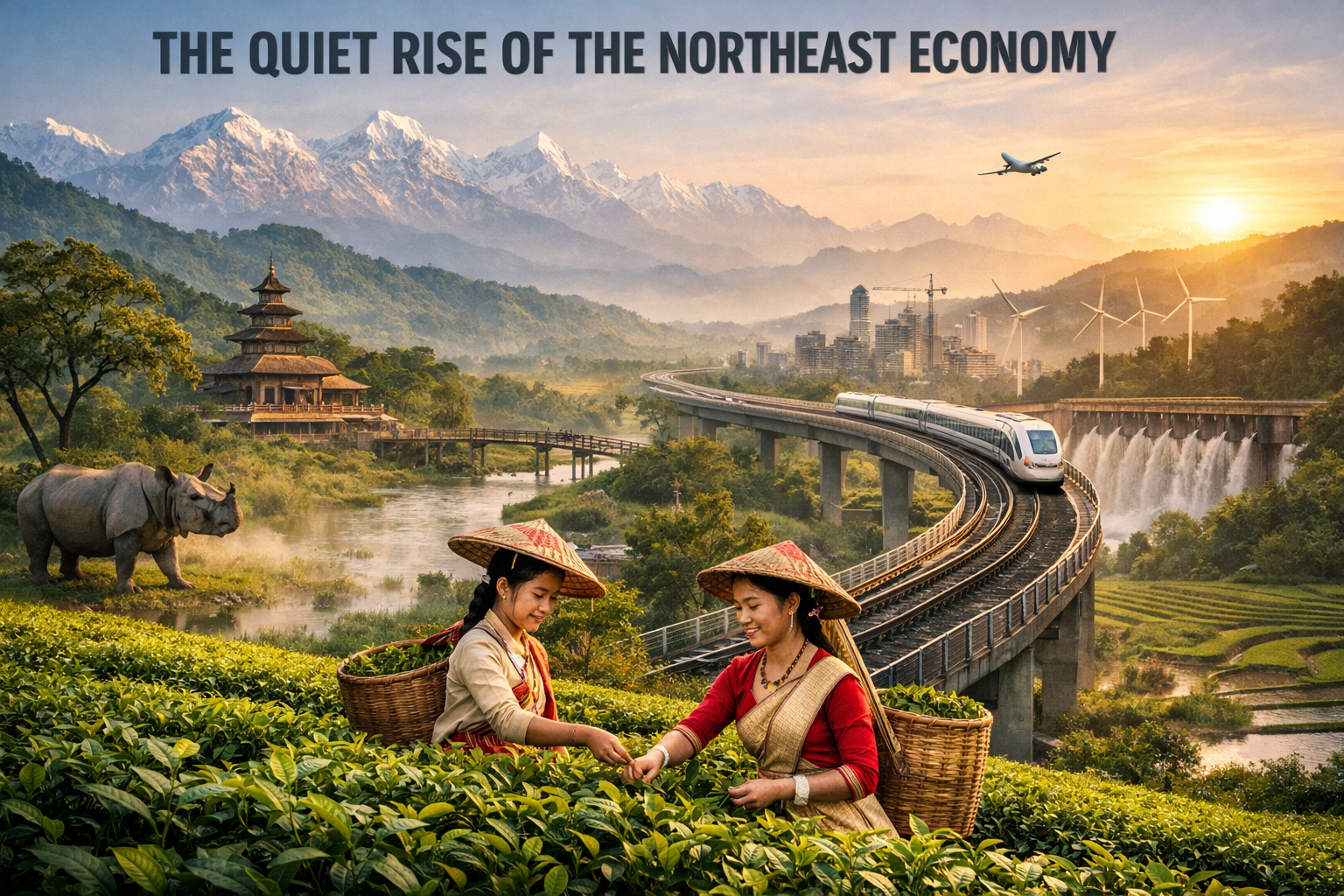
But it is moving. Slowly. Steadily.Road by road.Bridge by bridge.Market by market. A quiet rise is underway.