


A Question Bangladesh Must Ask Itself
 Sangram Datta
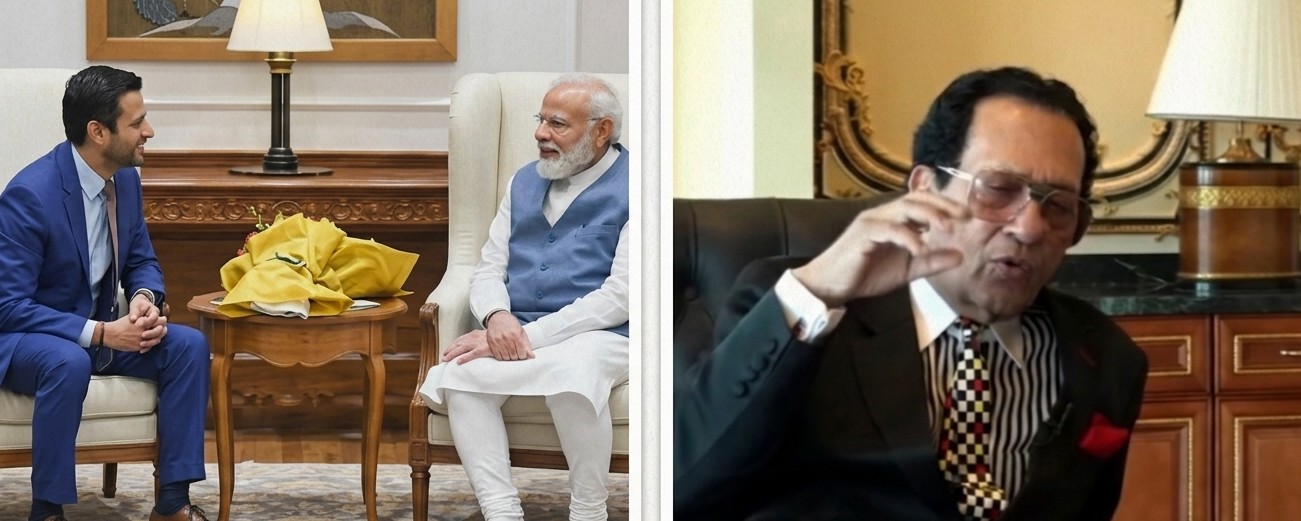
The recent announcement that Bangladeshi-born Australian billionaire Robin Khuda, founder of AirTrunk, plans to invest more than $30 billion in India’s data center sector by 2030 is a remarkable business story. It is also a moment of reflection for Bangladesh.
Khuda’s company intends to build around five gigawatts of data center capacity across India, positioning itself at the heart of the country’s rapidly expanding artificial intelligence and cloud-computing ecosystem. The investment follows meetings with Indian Prime Minister Narendra Modi and senior government officials, highlighting the close engagement between investors and policymakers in shaping the country’s digital future.
For India, the announcement is another vote of confidence from global capital. For Bangladesh, however, it raises a deeper question: Why do some of the world’s most successful individuals of Bangladeshi origin choose to make their largest investments elsewhere rather than in the country of their birth?
This is not a question of patriotism. Business decisions are rarely driven by emotion alone. Investors, whether local or foreign, seek predictable policies, legal certainty, infrastructure readiness, access to markets, and long-term security for their capital.
India has spent years positioning itself as a destination for large-scale technology investment. With a population exceeding 1.4 billion, a rapidly digitizing economy, strong demand for AI infrastructure, and active government engagement, the country offers a scale that few markets can match. Investors view India not merely as a market but as a long-term platform for global growth.

Send your resume:
biswa@jigyasu.co.in
krcfoundation@gmail.com
Robin Khuda himself emphasized that India’s combination of population size, digital adoption, and AI ambitions is difficult to replicate. His assessment reflects the perspective of an entrepreneur evaluating opportunities through the lens of future demand and investment security.
Yet the story becomes even more thought-provoking when viewed alongside another narrative involving a successful businessman of Bangladeshi origin.
According to interviews broadcast by Bangladeshi television channel NTV, Dr. Kali Pradip Datta Chowdhury, originally from Dhakadakhin Dattarail village in Sylhet’s Golapganj Upazila and now based in California, United States, reportedly made repeated visits to Bangladesh over many years with ambitions to establish a large medical university in his ancestral village and develop a major high-rise project in Dhaka’s Purbachal area.
By his own account, he traveled from the United States to Bangladesh dozens of times pursuing these visions. Yet the projects ultimately did not materialize. Meanwhile, he continued to expand business interests in India, the Middle East, Europe, and North America.
Whether one agrees with every aspect of his assessment is beside the point. The broader issue is that such stories are not uncommon among members of the Bangladeshi diaspora. Many retain strong emotional ties to their homeland and express a desire to contribute to its development. Yet significant investments often end up flowing elsewhere.
The contrast between these two examples—Robin Khuda’s multi-billion-dollar commitment to India and Dr. Kali Pradip Datta Chowdhury’s unrealized ambitions in Bangladesh—should not be viewed through a political lens. Rather, it should encourage a national conversation about investment climate and institutional confidence.
The global competition for capital is intense. Countries are no longer competing only with their neighbors; they are competing with the entire world. Investors compare regulatory frameworks, land acquisition processes, infrastructure quality, judicial efficiency, tax regimes, and ease of doing business before making decisions involving billions of dollars.
In today’s economy, capital is highly mobile. Sentiment may influence an investor’s initial interest, but confidence determines whether money is ultimately deployed.

Bangladesh possesses many strengths. It has demonstrated impressive economic resilience over recent decades, a large and youthful workforce, growing digital connectivity, and strategic geographic positioning. The country has also produced an increasingly influential diaspora community whose members hold leadership positions across global business, technology, medicine, and academia.
The challenge is converting that goodwill into investment.
Imagine the transformative impact if even a fraction of the wealth, expertise, and networks accumulated by successful Bangladeshis abroad were invested at home. World-class universities, advanced healthcare facilities, technology parks, research centers, renewable energy projects, and digital infrastructure could emerge across the country.
The question is not whether Bangladeshi-origin entrepreneurs care about Bangladesh. Many clearly do. The more important question is whether Bangladesh can create an environment where they feel equally confident investing at home as they do in India, Singapore, the United States, or the Middle East.
Robin Khuda’s historic investment in India should therefore be seen as more than a business headline. It is also a mirror. It challenges Bangladesh to ask difficult but necessary questions about competitiveness, governance, investor confidence, and long-term economic vision.
If the country can address those questions successfully, the next multi-billion-dollar investment by a Bangladeshi-born entrepreneur may not be announced in Mumbai, Bangalore, or Delhi.
It may be announced in Dhaka, Sylhet, Chattogram, or another corner of the country that helped shape their journey to global success. And that would be a story of national significance far beyond any single investment figure.