

Can a nation truly become great if sections of its people continue to live amidst conflict, mistrust, fear and recurring violence?
 KRC TIMES Desk
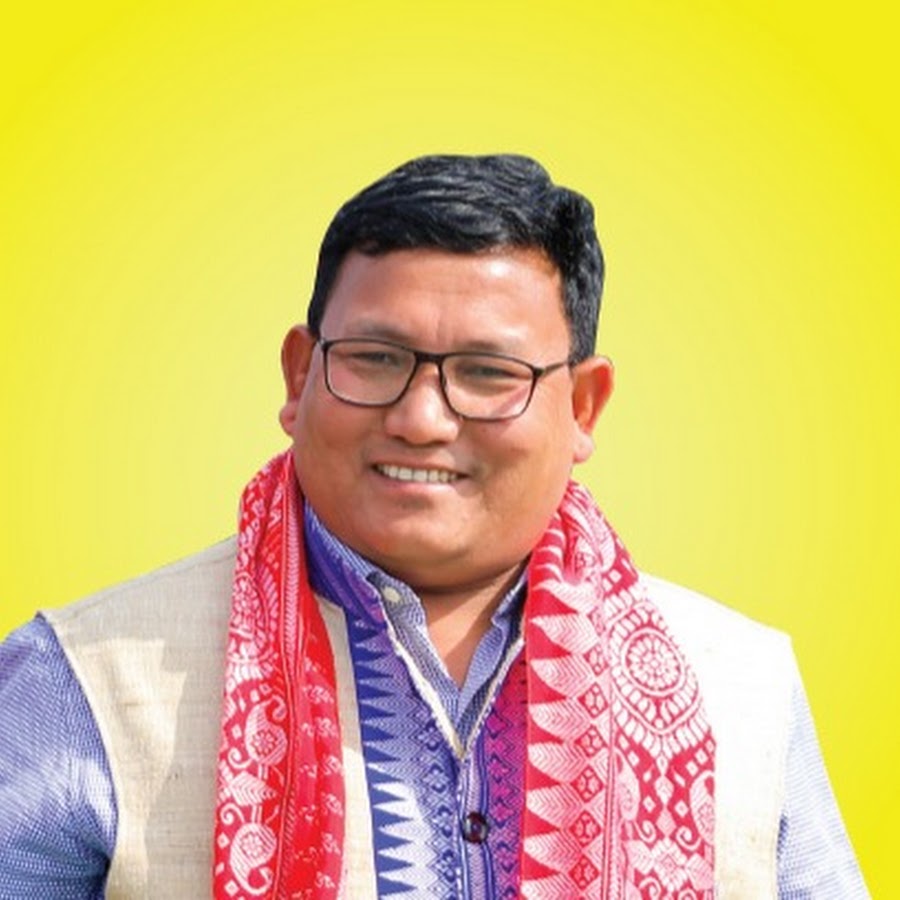
Pramod Boro
India stands at a defining moment in its national journey. Today, we are on course to become a global economic power, a technological leader and a steady voice in an increasingly uncertain world. We are able to speak confidently of a developed India, of innovation, infrastructure and international leadership. Yet, amid these ambitions, a fundamental question still haunts us.
Can a nation truly become great if sections of its people continue to live amidst conflict, mistrust, fear and recurring violence? Our response to this basic, yet overarching questionof the present times, will determine not only the India we live and build today, but also the inheritance we leave to the generations that follow. What shall we bequeath to our children? Would it be the ferocity and vagaries of unresolved conflict or the dignity of peaceful life?
For decades, several regions of India, particularly the Northeast, have endured the consequences of political struggles, insurgent movements, ethnic tension, and social fragmentation. These conflicts emerged from different histories and grievances, mainly owing to feelings of neglect, fear for loss of language and cultural identity, developmental disparities, displacement, and the absence of meaningful dialogue.
Yet their consequences have been always painfully similar with episodes of conflict and violence, loss of lives, displacement, disruption of education, health services and economic activities. Sadly, in the past, generations of young people were seen to have been alreadydenied the opportunity to dream freely.

Send your resume:
biswa@jigyasu.co.in
krcfoundation@gmail.com
Without doubt, India has made significant progress through peace accords, democratic engagement, ceasefires, constitutional arrangements and development initiatives. However, I am afraid that peace cannot remain a temporary project of a particular government.
It must become a permanent national doctrine. Even as our commitment to national unity, justice and the constitutional rights of every citizen, and the pursuit of inclusive development must remain constant.
I have realized, through years of public life,that politicians change, governments change, bureaucrats are transferred or retired, political parties move between government and Opposition. Democracy is designed to accommodate such change, and this periodic renewal is one of its greatest strengths.
But in the midst of these frequent transitions, did peace somewhere and somehow become a casualty? Should the fundamental objectives of the nation change with every political transition or a bureaucratic replacement?
Unfortunately, peace processes are often viewed through partisan or electoral lenses. Unlike knee-jerk responses, peace processes are long-term and very often inter-generational. There is every possibility, as it has so transpired in more than one instance, that one government initiates a negotiation, another signs the agreement, and a third inherits the responsibility of implementation.
With the changes in political leadership, continuity of peace-processes immediately becomes vulnerable. Fluctuations in policy and delays in implementation create frustration, incomplete commitments weaken trust and unresolved grievances begin to return in new forms, sometimes in uglier shape too. Also, it must be noted that a peace agreement cannot be assumed as the destination itself. It must be held only as the beginning of a longer and more demanding journey.
It is true that the success of peace must not be measured only by the signing of Memoranda of Settlements, the laying down of arms or the decline in violent incidents. Its true measure lies in whether children are able to attend school without fear, if the displaced families are able to once again return to their lands with dignity, and whether the youth are able to find gainful employment.
Respect for all communities, and resumption of services, such as, roads, hospitals, educational and financial institutions, particularly, for those who were once excluded, are other key terms that re-stitch a coexistence framework. These are non-negotiable aspects of a peace-building process, if we are to see, previously adversarial parties rebuilding a shared future.

The Northeast offers India some of its most profound lessons in nation-building. It demonstrates both the enormous cost of conflict and the transformative possibilities of dialogue. For instance, the experience of Bodoland shows that replacement of confrontational strategy with dialogue, andpromotion of trust through democratic accommodation enabled communities to move from conflict towards cooperation.
This is also why the continuing pain of Manipur must concern every Indian, too, as the stateyet stands as a warning to the entire nation. It cannot be swept under the carpet. Ourparents, brothers, sisters, and children of Manipur have endured much anger, violence, grief, suffering and the lack of empathy over the years. Have we learnt anything at all from the collective suffering?
The Foundations of a National Peace Doctrine
India needs a long-term peacebuilding framework that can endure changes in political leadership. It should rest on five principles: continuous dialogue, inclusive development, respect for identity and dignity, youth participation, and reconciliation.
Dialogue must never stop: In a diverse nation, differences are natural. What matters is how they are addressed. Dialogue must not begin only after violence erupts but should become a permanent democratic practice. Development, too, must reach every community, because inclusion and opportunity encourage cooperation over conflict. At the same time, no citizen should be forced to choose between preserving their identity and participating in the national mainstream. It is essential to accept that India’s unity is strengthened, not threatened, by its diversity.
The Moral Responsibility of our Generation: Every generation inherits a historical responsibility. Some fought for freedom, whileothers, built institutions or drove economic transformation. Our responsibility is to transform conflict into cooperation. We need to work harder still to bequeath a Northeast India which be remembered not merely for the violence it has endured, but for demonstrating how dialogue, democracy and development could create a lasting peace.

Youth Participation is Key:The future of peace also rests with young people. They must inherit opportunities rather than grievances, and aspirations rather than animosities.
The Nation be always placed above the individual: No politician, bureaucrat or government remains forever, but the nation endures. Peace processes must therefore be larger than individual tenures and protected through institutions, public policy, education and a bipartisan national commitment.
Not another Generation: When Indians fight Indians, clearly, there are no winners. How long shall we continue to fight within one home called “Bharat Mata”? Every life lost diminishes the nation, every conflict delays progress and every act of hatred weakens the very idea of India. India’s civilizational heritage has always emphasized the sanctity of life, coexistence, and respect for human dignity.
A civilized society is not defined by its economic growth, technological advancement, or political power alone. It is defined by the value it places on human life.From the teachings of Buddha to the philosophy of Mahatma Gandhi, from tribal traditions of community living to constitutional values of equality and fraternity, our collective wisdom has consistently affirmed that human life is sacred. It is now time to re-enliven this timeless value for the dignity of human life which has become the biggest casualty by acts of continued violence.
India’s commitment to peace, justice, dignity and national unity must remain permanent. It must,rather, be the foundation of the India we seek to build, and that this foundation must endure even long after all of us are gone.
Pramod Boro, Member of Parliament, Rajya Sabha