


Nagaland Chief Minister Neiphiu Rio and Mizoram Chief Minister Lalduhoma had urged the Centre to refer the Bill to a joint parliamentary committee
 KRC TIMES National Bureau
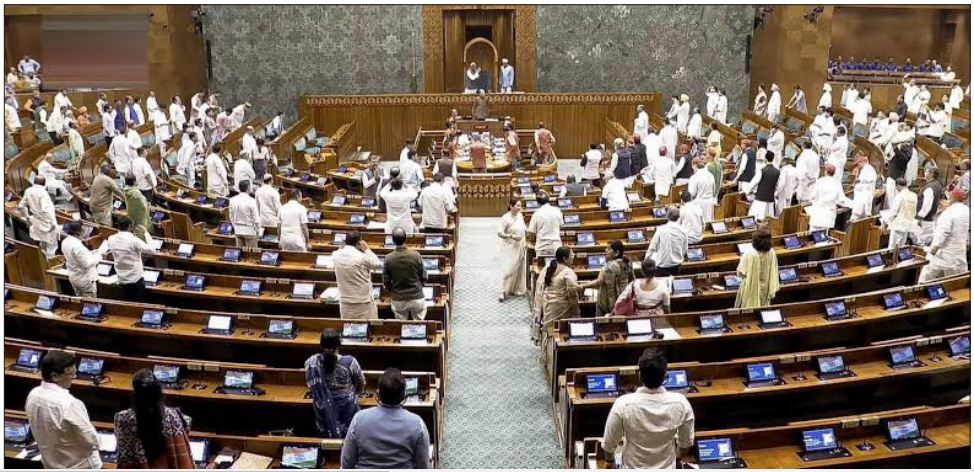
New Delhi : The Lok Sabha on Wednesday approved a motion to refer the Foreign Contribution (Regulation) Amendment Bill, 2026, to a 31-member Joint Parliamentary Committee (JPC) for detailed scrutiny, amid strong Opposition protests and concerns raised by Christian-majority states in the Northeast.
The motion was moved by Minister of State for Home Nityanand Rai amid sloganeering by Opposition MPs demanding the presence of Union Home Minister Amit Shah in the House.
The proposed joint committee will have 21 members from the Lok Sabha and 10 from the Rajya Sabha. Lok Sabha Speaker Om Birla will nominate the members from the lower House, while Rajya Sabha Chairman C P Radhakrishnan will nominate the members from the upper House.
The committee has been asked to submit its report to the Lok Sabha by the last day of the first week of the Winter Session of Parliament in 2026.
The decision came after months of concern over the proposed amendments, particularly in the Northeast, where Nagaland, Mizoram and Meghalaya have raised reservations about provisions relating to foreign-funded NGOs and civil society organisations.

Send your resume:
biswa@jigyasu.co.in
krcfoundation@gmail.com
Before the motion was passed, Congress MP KC Venugopal alleged that the legislation was aimed at minorities and NGOs and demanded its withdrawal. “This is clearly for targeting minorities and NGOs. We demand that the Bill be withdrawn,” Venugopal said.
Parliamentary Affairs Minister Kiren Rijiju rejected the allegation, saying the government had agreed to refer the Bill to a parliamentary committee in response to the Opposition’s demand for greater scrutiny.
“If they have any reservations about the Bill, they can speak in the JPC. This is not targeted at any minority community,” Rijiju said. Samajwadi Party MP Akhilesh Yadav questioned the government’s claim that the legislation was not directed against minorities.
Rijiju defended the government’s position and challenged the Opposition to identify any provision in the Bill that specifically targeted minorities. BJP MP Jagdambika Pal, who was presiding over the proceedings, said the government’s decision to send the Bill to the JPC would allow for a “threadbare discussion” of its provisions.
The Foreign Contribution (Regulation) Amendment Bill was introduced in the Lok Sabha on March 25. It proposes tighter government oversight of non-governmental organisations and entities receiving foreign contributions. The legislation has attracted particular attention in the Northeast, where several state governments have sought detailed parliamentary scrutiny.
Nagaland Chief Minister Neiphiu Rio and Mizoram Chief Minister Lalduhoma had urged the Centre to refer the Bill to a joint parliamentary committee. Meghalaya Chief Minister Conrad K Sangma had also conveyed concerns over provisions of the proposed legislation to the Centre.
The three states have significant Christian populations and a large network of churches, charitable institutions, NGOs and civil society organisations that receive or work with foreign contributions. The proposed amendments have also drawn criticism from some US lawmakers, who expressed concerns over their potential impact on Christian organisations and civil society groups.
With the Bill now before a joint parliamentary panel, representatives of the Northeast are expected to closely watch the committee’s examination of provisions that could affect foreign-funded NGOs, religious organisations and civil society institutions.
The referral is likely to provide state governments, civil society groups and other stakeholders an opportunity to place their concerns before Parliament before the legislation is considered for further passage.

